Why You Can’t Sleep on Sunday Night (and How to Fix It)
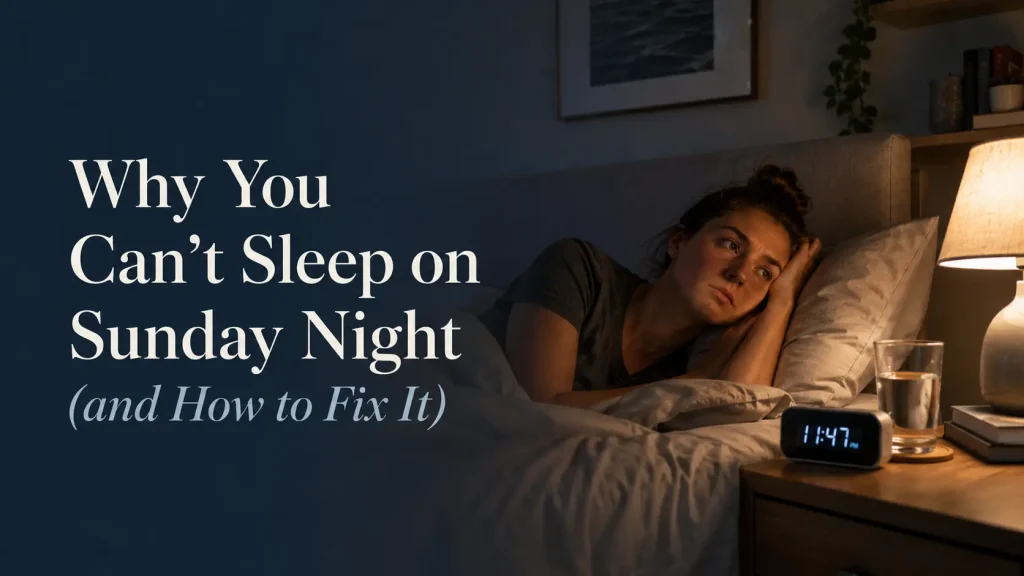
You’re exhausted all week, then Sunday night rolls around and wide awake. Mind racing, dreading Monday, watching the clock tick toward an alarm that suddenly feels very close. “Sunday night insomnia” is incredibly common, and it’s not in your head. Here’s exactly why it happens and how to fix it.
Why Sunday Night Is So Hard for Sleep
Two forces usually team up on a Sunday.
Social jet lag. If you stay up later and sleep in on weekends, you shift your body clock later essentially giving yourself a mini dose of jet lag. By Sunday night, your body isn’t ready for sleep at your usual weekday time, so you lie there wide awake, then feel wrecked on Monday. For a wider look at the underlying science, see this overview.
The “Sunday scaries.” Anticipating the week ahead the meetings, the deadlines, the to-do list triggers anxiety that makes it hard to switch off. Your mind starts pre-living Monday instead of winding down.
A few smaller factors pile on too: weekends often mean less physical activity, later nights, and more alcohol, all of which can disrupt Sunday’s sleep.
How to Fix Sunday Night Sleep
The fixes target both the clock and the anxiety:
Protect a consistent wake time. This is the big one. Try not to sleep in more than about an hour past your weekday wake time on weekends. Keeping your wake time steady prevents the social jet lag that leaves you wired on Sunday night.
Get morning light on the weekend. Bright light soon after waking on Saturday and Sunday keeps your body clock anchored, so it doesn’t drift late.
Tackle the Monday anxiety early. Do your worrying and planning before Sunday night. A quick brain dump or a short plan for the week ideally on Friday or Saturday gets tomorrow’s tasks out of your head so they don’t ambush you at bedtime.
Build a proper Sunday wind-down. Treat Sunday evening as sacred rest time: dim the lights, put screens away, take a warm bath, read, or journal. A calm ritual signals your body it’s time for sleep despite the looming week.
Move your body during the day. A weekend walk or workout builds healthy sleep pressure, so you’re genuinely tired by bedtime.
Ease off weekend excess. Keep late-night alcohol and caffeine in check on the weekend, especially Sunday, so they’re not sabotaging your sleep.
Don’t lie there battling it. If you’re still awake after about 20 minutes, get up, keep the lights low, and do something calm until you feel sleepy fighting it in bed only feeds the anxiety.
The Bottom Line
You can’t sleep on Sunday night because of a one-two punch: social jet lag from weekend lie-ins, and anxiety about the week ahead. Fix it by keeping your wake time consistent all week, getting weekend morning light, handling your Monday planning before Sunday night, and building a genuinely calming Sunday wind-down. Tend to both the clock and the worry, and Sunday nights get a whole lot more restful — and Mondays a whole lot easier.
Frequently Asked Questions

Sophia Bennett specializes in wellness and lifestyle content with a focus on sleep-related topics, stress management, and healthy routines. She creates easy-to-understand articles designed to help readers make more informed sleep and wellness decisions. Sophia covers the wellness side of sleep, stress, mental wellbeing, and the lifestyle changes that make rest more restorative.
All guides by Sophia BennettGeneral guidance, not medical advice. If a sleep problem persists or gets worse, speak to a qualified clinician. Medical disclaimer