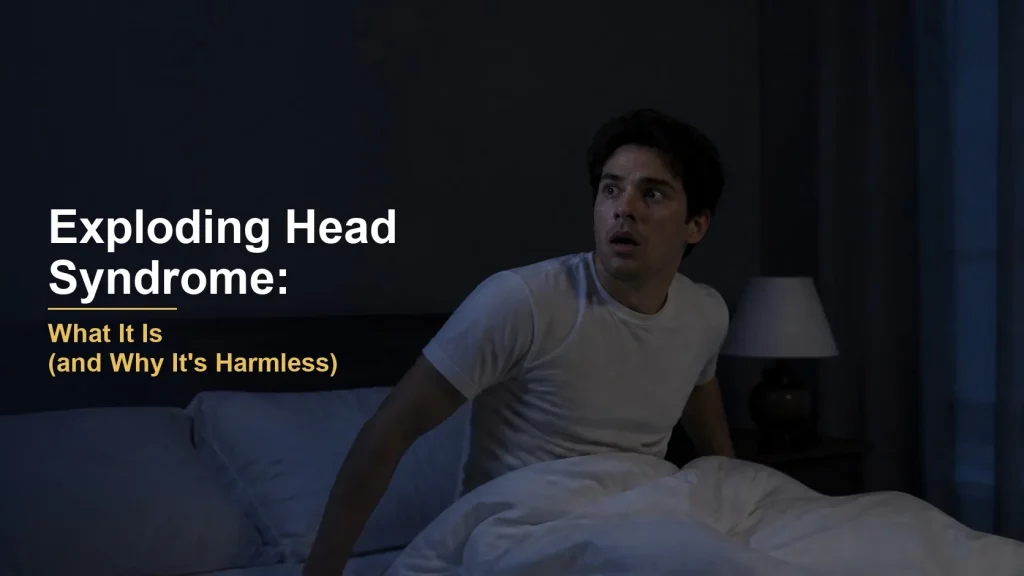
The name sounds terrifying, but the reality is reassuringly harmless. Exploding head syndrome is when you “hear” a sudden, loud noise — like a bang, explosion, or crash — as you’re falling asleep or waking up, even though no real sound exists. It can be startling and strange, but it causes no pain and no danger. Here’s what’s actually going on.
What Is Exploding Head Syndrome?
Exploding head syndrome (EHS) is a parasomnia — a harmless sleep phenomenon — in which you perceive a sudden, loud imagined sound as you’re drifting off to sleep or waking up. People describe it as a bang, explosion, gunshot, clash of cymbals, an electrical buzz, or a loud crack. Sometimes it comes with a flash of light or a jolt of your body. Despite the dramatic name, there’s no actual pain — the “explosion” is entirely a perceived sound inside your head, not a physical event. For a wider look at the underlying science, see this overview.
What It Feels Like
An episode is brief — just a second or two — but can be genuinely startling. People often wake with a racing heart, a sense of fear or alarm, and sometimes a burst of adrenaline, precisely because the noise seems so real and loud. Some also notice a flash of light or a feeling like a jolt. Understandably, a first episode can be frightening or even make people worry something is seriously wrong — which is exactly why understanding it helps so much.
Why Does It Happen?
The exact cause isn’t fully understood, but the leading theory is elegant. As you transition into sleep, your brain normally “powers down” its systems in an orderly way. In exploding head syndrome, researchers think there’s a brief glitch or misfiring in this shutdown process — specifically in the parts of the brain that process sound — producing the sensation of a loud noise that isn’t there. It seems to be more common during times of stress, fatigue, and sleep deprivation, and it can affect anyone, though it’s reported more often with disrupted sleep.
Is It Dangerous?
Here’s the most important part: exploding head syndrome is harmless. It’s not a sign of a brain problem, a stroke, or any serious illness, despite how alarming it feels. It causes no physical damage and no pain. The main impact is the fear and, for some, anxiety about going to sleep if episodes recur. Simply knowing that it’s benign takes much of the fear away — and less anxiety often means fewer episodes.
How to Reduce Episodes
Since stress and being overtired seem to be triggers, the fixes are gentle and familiar: get enough sleep and keep a consistent schedule so you’re not sleep-deprived, manage stress with a calming wind-down routine, and follow good sleep-hygiene habits generally. Reducing evening stimulants like caffeine may help too. For many people, episodes are occasional and fade on their own, especially once the anxiety around them eases.
When to See a Doctor
Exploding head syndrome rarely needs medical treatment. But it’s worth talking to a doctor if episodes are frequent, distressing, or disrupting your sleep, if they’re causing significant anxiety about sleeping, or if you’re at all unsure whether what you’re experiencing fits. A doctor can reassure you, confirm it’s EHS, and rule out anything else. Reassurance alone is often the most effective “treatment.”
The Bottom Line
Exploding head syndrome — perceiving a loud bang or crash as you fall asleep or wake — has an alarming name but is a harmless glitch in the brain’s sleep transition. It’s painless, not dangerous, and not a sign of serious illness, even though it can be startling. Reduce episodes by managing stress and getting enough consistent sleep, and see a doctor if it’s frequent or distressing. Mostly, the best remedy is simply knowing there’s nothing to fear.
Frequently Asked Questions
What is exploding head syndrome?
It’s a harmless parasomnia in which you perceive a sudden, loud imagined noise — like a bang, explosion, or crash — as you fall asleep or wake up, sometimes with a flash of light. Despite the name, it’s painless and not dangerous.
Is exploding head syndrome dangerous?
No. Despite how alarming it feels, it’s harmless — not a sign of a brain problem, stroke, or serious illness, and it causes no physical damage or pain. The main impact is the fear it can cause, which eases once you know it’s benign.
What causes exploding head syndrome?
The exact cause isn’t fully understood, but the leading theory is a brief glitch or misfiring in the brain’s process of shutting down as you fall asleep, in the areas that process sound. It’s more common during stress, fatigue, and sleep deprivation.
How do I stop exploding head syndrome?
Since stress and being overtired are triggers, get enough sleep on a consistent schedule, manage stress with a calming wind-down, and follow good sleep habits. Reducing evening caffeine may help, and easing anxiety about it often reduces episodes.
When should I see a doctor about exploding head syndrome?
See a doctor if episodes are frequent, distressing, disrupting your sleep, or causing anxiety about sleeping, or if you’re unsure what you’re experiencing. A doctor can confirm it’s harmless EHS and rule out other causes — reassurance is often the main help needed.

Michael Reeves covers topics related to sleep quality, bedroom comfort, and modern lifestyle habits. He enjoys researching sleep products, recovery routines, and productivity-focused wellness practices to create informative and reader-friendly content. Michael writes about bedroom setup, recovery, and the connection between sleep quality and how you feel during the day.
All guides by Michael ReevesGeneral guidance, not medical advice. If a sleep problem persists or gets worse, speak to a qualified clinician. Medical disclaimer