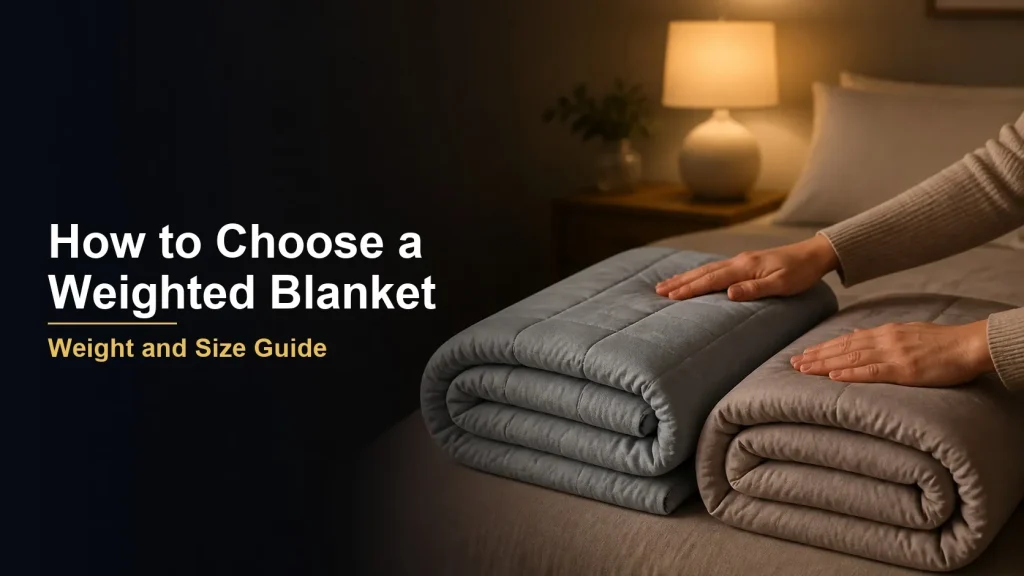
Weighted blankets have become a bedtime favorite for their cozy, calming, “hugged” feeling — but choosing the wrong one can leave you too hot, too squashed, or underwhelmed. Getting the weight, size, and material right makes all the difference. Here’s a simple guide to choosing the perfect weighted blanket.
This article contains affiliate links. If you buy through them, we may earn a small commission at no extra cost to you.
Getting the Weight Right (The 10% Rule)
Weight is the most important choice, and there’s a widely used guideline: aim for a blanket that’s roughly 10% of your body weight. So someone around 150 lbs (about 68 kg) would typically look at a 15 lb blanket. This provides the gentle, even pressure (called deep pressure stimulation) that makes weighted blankets feel calming, without being overwhelming. For a wider look at the underlying science, see this overview.
If you’re between sizes, you can go slightly up or down based on preference — some people like a touch more weight, others less. But avoid going too heavy: a blanket that feels restrictive or makes it hard to move or breathe comfortably is too much. Start near the 10% mark and adjust from there.
Choosing the Right Size
Here’s a key point people often get wrong: a weighted blanket should fit your body, not your bed. Unlike a regular duvet, it’s meant to sit on top of you so the weight stays evenly distributed. If it’s too large and drapes over the sides of the bed, the weight slides off the edges and you lose the effect. So choose a size roughly matching your body length, not your mattress. Couples usually do best with individual blankets, since a shared one shifts to whoever moves.
Fill and Material
Fill: Modern weighted blankets are usually filled with fine glass beads, which are preferred — they’re smaller, quieter, distribute weight more evenly, and add less bulk than the older plastic pellets. Look for glass-bead fill for the smoothest feel.
Cover and fabric: Consider how you sleep temperature-wise. If you sleep hot, choose a breathable cover (cotton or bamboo) or a blanket specifically designed to be cooling, since some weighted blankets trap heat. A removable, machine-washable cover is a big practical plus for keeping it clean.
Who Should Be Cautious
Weighted blankets aren’t right for everyone. They should not be used for babies or young toddlers due to safety risks, and children should only use appropriately sized, lighter versions with guidance. People with certain respiratory conditions, circulatory issues, sleep apnea, or limited mobility should check with a doctor first, since the added weight and restriction may not be suitable. When in doubt, ask a healthcare professional.
The Bottom Line
To choose the right weighted blanket, start with about 10% of your body weight, pick a size that fits your body rather than your bed, and look for glass-bead fill with a breathable, washable cover (especially if you sleep hot). Skip them for babies and young toddlers, and check with a doctor if you have a relevant health condition. Get these right, and you’ll enjoy that signature cozy, calming, well-hugged feeling that makes weighted blankets so beloved.
If you are still deciding whether you want one, this calmer-nights guide is the use-case, and this temperature piece matters if you sleep hot.
Frequently Asked Questions
What weight of weighted blanket should I get?
A common guideline is about 10% of your body weight — so around 15 lbs for a 150 lb person. This gives the calming deep-pressure feeling without being overwhelming. Adjust slightly up or down for preference, but avoid one so heavy it feels restrictive.
What size weighted blanket should I choose?
Choose one that fits your body, not your bed. A weighted blanket should sit on top of you so the weight stays evenly distributed; if it’s too big and hangs over the edges, the weight slides off. Couples usually do best with individual blankets.
What’s the best fill for a weighted blanket?
Fine glass beads are generally preferred — they’re smaller, quieter, distribute weight more evenly, and add less bulk than older plastic pellets. Look for glass-bead fill for the smoothest, most even feel.
Are weighted blankets good for hot sleepers?
They can be, if you choose the right one. Some trap heat, so hot sleepers should pick a breathable cover (cotton or bamboo) or a blanket specifically designed to be cooling, and a removable, washable cover helps too.
Who should not use a weighted blanket?
They should not be used for babies or young toddlers due to safety risks. People with certain respiratory conditions, circulatory issues, sleep apnea, or limited mobility should check with a doctor first, as the added weight may not be suitable.

Daniel Foster reviews mattresses, pillows, and sleep accessories while sharing practical insights on bedroom comfort and sleep setups. His content focuses on usability, comfort, and everyday user experience to help readers explore different sleep products more confidently. Daniel writes the site's hands-on product reviews, buying guides, and head-to-head comparisons.
All guides by Daniel FosterGeneral guidance, not medical advice. If a sleep problem persists or gets worse, speak to a qualified clinician. Medical disclaimer