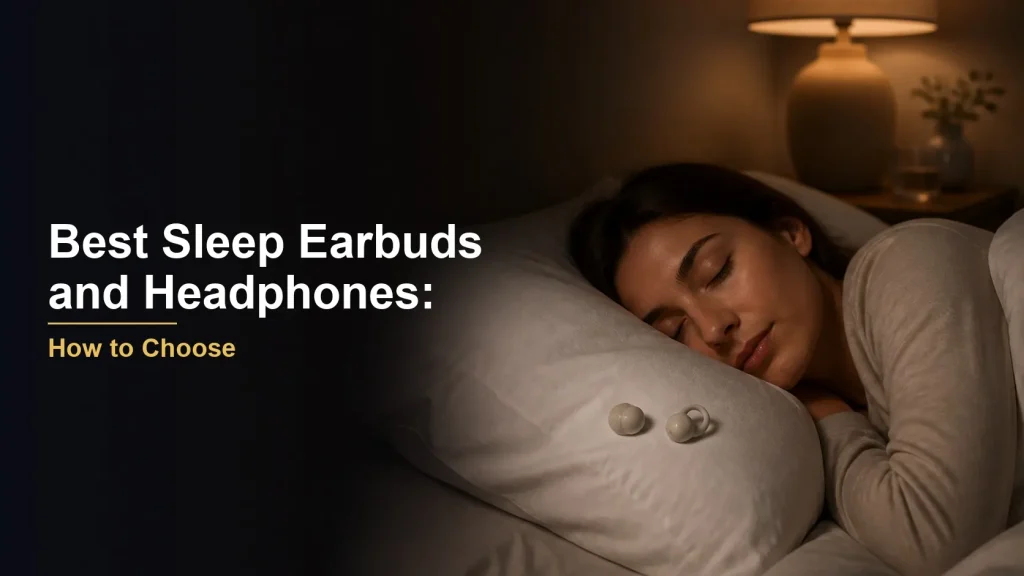
Regular earbuds are a nightmare to sleep in — bulky, prone to falling out, and painful the moment you roll onto your side. But sleep-specific earbuds and headphones solve exactly that, letting you block noise or drift off to white noise, music, or a podcast without disturbing your partner. Here’s how to choose the right pair for how you sleep.
This article contains affiliate links. If you buy through them, we may earn a small commission at no extra cost to you.
Why Use Sleep Earbuds or Headphones?
Sleep audio gear serves a few genuinely useful purposes: blocking or masking noise (traffic, a snoring partner, thin apartment walls), playing soothing sound (white noise, ASMR, rain, calming music, or sleep meditations) right in your ears without filling the room, and privacy — enjoying a podcast or audiobook as you fall asleep without keeping your partner awake. They’re also brilliant for travel, turning a noisy flight or hotel into something restful. For a wider look at the underlying science, see this overview.
The Main Types
Dedicated sleep earbuds. Tiny, ultra-low-profile earbuds designed to sit flush in your ear so they don’t press painfully when you’re on your side. Some are made purely for sleep and even have built-in sleep sounds and masking that work without your phone — a big plus.
Headband/mask headphones. These tuck thin, flat speakers into a soft headband or eye mask. Because there’s nothing inside your ear, they’re often the most comfortable option for side sleepers, and a combined mask version blocks light too. The trade-off is slightly less noise isolation than in-ear buds.
Bone-conduction headphones. These rest on your cheekbones and leave your ear canal open, which some people find comfortable and less isolating, though they’re less discreet lying down and don’t block noise.
Regular earbuds/AirPods. Generally not ideal for sleep — they’re too bulky for side sleeping and tend to fall out. Fine in a pinch, but purpose-built options are far more comfortable.
What to Look For
Prioritize comfort for your sleep position — if you’re a side sleeper, low-profile earbuds or a headband style are essential. Check battery life (ideally enough to last the night, or a design that’s safe to charge/wear as needed), secure fit so they stay put, and sound quality. A few features are especially handy: built-in sleep sounds (so you don’t tie up or need your phone), an auto-off timer, comfortable skin-friendly materials, and good noise masking or blocking, depending on whether you want to cover noise or cut it out.
Comfort and Safety Tips
Keep the volume moderate — loud enough to mask disturbances but low enough to protect your hearing over a full night. Keep earbuds and headbands clean, since they’re against your skin and in your ears nightly. And if you rely on hearing an alarm, make sure your setup still lets you wake up (some sleep earbuds have their own alarm feature).
The Bottom Line
The best sleep earbuds and headphones let you block noise and enjoy soothing sound comfortably all night — a real upgrade for light sleepers, snoring partners, and travelers. Side sleepers usually do best with ultra-low-profile sleep earbuds or a headband/mask style, ideally with built-in sleep sounds, a timer, and a comfortable, secure fit. Keep the volume gentle and the gear clean, and you’ll have your own private, soothing soundscape to fall asleep to.
Frequently Asked Questions
Can you sleep with earbuds in?
You can, but regular earbuds are usually uncomfortable for side sleeping and tend to fall out. Purpose-built sleep earbuds are ultra-low-profile so they don’t press on your ear, making them far more comfortable. Keep the volume moderate to protect your hearing.
What are the best headphones for sleeping?
For side sleepers, dedicated low-profile sleep earbuds or headband/mask-style headphones (with flat speakers and nothing inside your ear) are usually most comfortable. The best choice depends on your sleep position and whether you want to block noise or play soothing sound.
Are headband headphones good for sleep?
Yes, they’re a favorite for side sleepers because the thin, flat speakers sit in a soft headband with nothing inside your ear, so there’s no pressure when you roll over. Mask versions also block light. They isolate noise slightly less than in-ear buds.
Do sleep earbuds block out snoring?
Good sleep earbuds can help by both blocking noise and playing white noise or masking sound to cover a partner’s snoring. In-ear styles isolate more than headband types, so if snoring is your main issue, a well-fitting noise-masking earbud is a strong choice.
Is it safe to wear earbuds all night?
Generally, if you keep the volume moderate to protect your hearing and keep the earbuds clean for ear hygiene. Choose comfortable, low-profile designs to avoid pressure, and make sure your setup still lets you hear an alarm if you need one.

Daniel Foster reviews mattresses, pillows, and sleep accessories while sharing practical insights on bedroom comfort and sleep setups. His content focuses on usability, comfort, and everyday user experience to help readers explore different sleep products more confidently. Daniel writes the site's hands-on product reviews, buying guides, and head-to-head comparisons.
All guides by Daniel FosterGeneral guidance, not medical advice. If a sleep problem persists or gets worse, speak to a qualified clinician. Medical disclaimer