New Mom Sleep Survival Guide: How to Cope With Newborn Sleep Deprivation
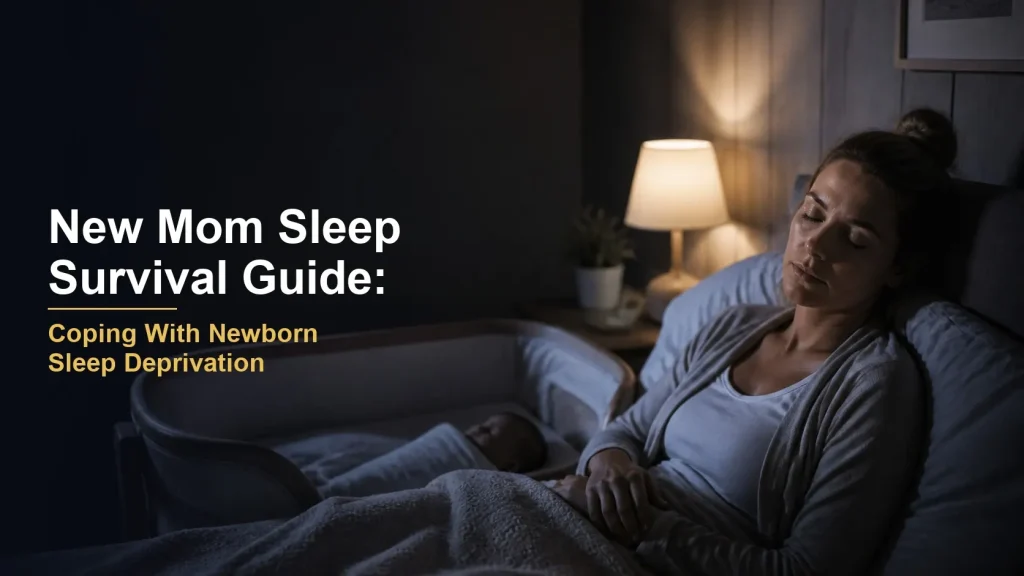
No one quite prepares you for the exhaustion of life with a newborn. Broken nights, endless feeds, and running on fumes are a rite of passage — but that doesn’t make them easy. This survival guide is for you, the parent, with realistic, compassionate ways to cope with sleep deprivation and protect your own rest and wellbeing.
This article is general information, not medical advice. For guidance on your baby’s sleep, follow safe-sleep advice from your pediatrician or official health sources. If you’re struggling to cope, please reach out to your doctor.
First, Be Kind to Yourself
Here’s the most important thing to know: fragmented, insufficient sleep is completely normal with a newborn, and it is temporary. Your baby’s tiny stomach and developing rhythms mean frequent waking for now — it is not a sign you’re doing anything wrong. Lowering your expectations and being gentle with yourself is the foundation of surviving this season. You’re doing an incredible job in genuinely hard conditions. For a wider look at the underlying science, see published guidance.
Realistic Ways to Survive the Sleep Deprivation
Sleep when the baby sleeps. It’s a cliché because it works. Resist the urge to use every nap to clean or catch up — lie down and rest, even a short nap helps enormously.
Share the nights. If you have a partner, tag-team. Take shifts so each of you gets a solid stretch, or split the night in half. If you’re breastfeeding, your partner can still handle diaper changes, settling, and bringing the baby to you — and pumping lets them take a feed so you sleep through one.
Accept (and ask for) help. Let family or friends hold the baby while you nap. When someone offers help, say yes. This isn’t weakness — it’s smart survival.
Lower the bar on everything else. The laundry, the tidy house, the home-cooked meals — let them slide. Your rest matters more than a spotless home right now. Simplify ruthlessly.
Protect the sleep you do get. During night feeds, keep lights dim and avoid scrolling your phone, so you drift back off faster. Keep your room dark, cool, and quiet so your limited sleep is as deep as possible.
Look After Your Body and Rhythm
Small things help you cope with less sleep: get some daylight and fresh air during the day (it supports your body clock and mood), eat regularly and stay hydrated, and go easy on caffeine later in the day so it doesn’t wreck the sleep you can get. Gentle movement, when you’re up to it, helps too. You can’t pour from an empty cup — basic self-care makes the exhaustion more bearable.
Your Mental Health Matters
Sleep deprivation is genuinely hard, and it’s okay to find this overwhelming. Be aware that the exhaustion of new parenthood can sometimes go hand in hand with postpartum depression or anxiety — which is common, real, and very treatable. If you’re feeling persistently low, anxious, hopeless, disconnected from your baby, or you can’t sleep even when you have the chance, please reach out to your doctor, midwife, or health visitor. You’re not alone, it’s not your fault, and support is available. Asking for help is a sign of strength.
Remember: It Gets Better
In the fog of newborn nights, it can feel endless — but it isn’t. Babies gradually sleep for longer stretches, and your nights slowly return. Holding onto the fact that this is a phase can make the hardest nights more bearable. One day, sooner than it feels right now, you’ll sleep again.
The Bottom Line
Surviving newborn sleep deprivation is about grace, not perfection: sleep when the baby sleeps, share the nights, accept help, let non-essentials slide, and protect the sleep you do get. Look after your body with daylight, food, and hydration, and — crucially — watch your mental health, reaching out to a professional if you’re struggling. Above all, be kind to yourself. This exhausting season is temporary, and you’re doing better than you think.
Frequently Asked Questions
How do new moms survive sleep deprivation?
By being realistic and accepting help: sleep when the baby sleeps, share night duties with a partner, let family help so you can nap, lower your standards on chores, and protect the sleep you do get by keeping night feeds dark and calm. Self-care and daylight help you cope too.
How can I get more sleep with a newborn?
Nap when your baby naps, take turns with a partner so each of you gets a longer stretch (pumping lets them take a feed), and accept help from others so you can rest. Keep your room dark, cool, and quiet, and avoid your phone during night feeds so you fall back asleep faster.
Is it normal to be this exhausted with a newborn?
Yes. Frequent night waking and fragmented sleep are completely normal with a newborn because of their tiny stomachs and developing rhythms. It’s exhausting but temporary, and it isn’t a sign you’re doing anything wrong. Be gentle with yourself.
When should I worry about how I’m feeling after having a baby?
If you feel persistently low, anxious, hopeless, disconnected from your baby, or you can’t sleep even when you have the chance, reach out to your doctor, midwife, or health visitor. Postpartum depression and anxiety are common and very treatable — you’re not alone, and support helps.
When will my newborn sleep through the night?
It varies a lot from baby to baby, but babies gradually sleep for longer stretches as they grow, and nights slowly improve over the early months. For specific guidance on your baby’s sleep and safe sleep practices, follow your pediatrician and official health sources.

Sophia Bennett specializes in wellness and lifestyle content with a focus on sleep-related topics, stress management, and healthy routines. She creates easy-to-understand articles designed to help readers make more informed sleep and wellness decisions. Sophia covers the wellness side of sleep, stress, mental wellbeing, and the lifestyle changes that make rest more restorative.
All guides by Sophia BennettGeneral guidance, not medical advice. If a sleep problem persists or gets worse, speak to a qualified clinician. Medical disclaimer