If you’ve ever slept like a rock after a long, active day, you already have a sense of the answer: yes, exercise is one of the most effective natural ways to improve your sleep. Regular movement helps you fall asleep faster, sleep more deeply, and wake up feeling more refreshed no prescription required.
Here’s exactly how exercise improves your sleep, the best types to try, how much you need, and the truth about working out before bed. For a wider look at the underlying science, see this overview.
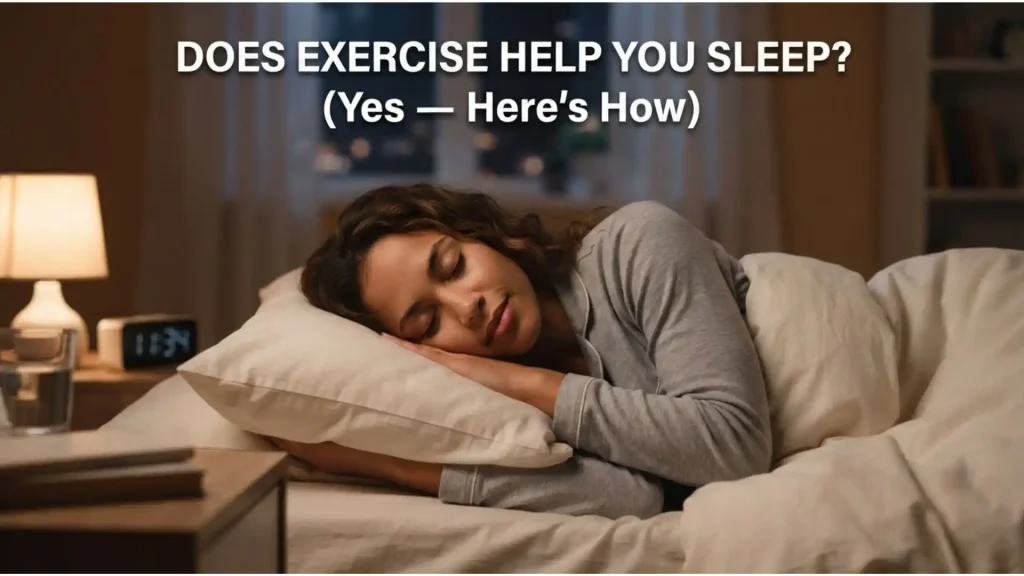
How Exercise Improves Your Sleep
Physical activity helps your sleep on several fronts at once. It helps you fall asleep faster and spend more time in deep, restorative slow-wave sleep. It reduces stress and anxiety by burning off tension and lowering cortisol, quieting the racing mind that keeps so many people awake. It helps regulate your body clock, especially when you exercise outdoors in daylight. And over time it supports a healthy weight, which can ease issues like snoring and sleep apnea. Simply put, a body that’s been well used is more ready to rest.
What the Research Says
The evidence here is strong and consistent: people who exercise regularly report better sleep quality and fewer symptoms of insomnia than those who don’t. Even a single workout can improve that night’s sleep for many people, and moderate aerobic exercise has been shown to increase deep sleep. For people with insomnia, regular exercise can be as meaningful as some other interventions a genuinely powerful, side-effect-free tool.
It’s also a two-way street: better sleep gives you more energy and motivation to exercise, while exercise improves your sleep. Get the cycle going in the right direction and both keep reinforcing each other.
The Best Types of Exercise for Sleep
The good news is that almost any movement helps but a few types stand out:
Aerobic exercise walking, jogging, cycling, swimming, or dancing has the most research behind it for improving sleep quality and deep sleep. Strength training helps too and may support deeper sleep over time. And gentle, calming movement like yoga, Pilates, or stretching is especially good in the evening, easing both body and mind toward rest. The best exercise, ultimately, is the one you’ll actually do consistently.
Does the Timing Matter?
For years the advice was to never exercise in the evening but that’s been softened. For most people, morning or afternoon exercise is ideal, partly because daytime activity and light help set your body clock. Morning workouts outdoors are a double win.
That said, evening exercise is fine for most people, as long as it’s not too intense right before bed. A gentle evening walk or yoga can actually help you wind down. What to avoid is a vigorous, heart-pounding workout in the hour or so before bed, which can leave you too revved up to sleep. If you can only train late, aim to finish at least an hour before lights-out and notice how your own body responds.
How Much Exercise Do You Need?
You don’t need to train like an athlete. The general guideline of about 150 minutes of moderate activity per week roughly 20 to 30 minutes most days — is plenty to see sleep benefits. Even short daily walks make a real difference, and consistency matters far more than intensity. Start where you are and build gradually; your sleep will respond even to modest, regular movement.
The Bottom Line
Exercise is one of the best natural sleep aids there is: it helps you fall asleep faster, deepens your sleep, and calms the stress that keeps you awake. Aim for regular moderate activity a mix of aerobic movement and gentle evening stretching works beautifully ideally earlier in the day, and simply avoid intense workouts right before bed. Keep it consistent, and better sleep will follow naturally.
Frequently Asked Questions

Michael Reeves covers topics related to sleep quality, bedroom comfort, and modern lifestyle habits. He enjoys researching sleep products, recovery routines, and productivity-focused wellness practices to create informative and reader-friendly content. Michael writes about bedroom setup, recovery, and the connection between sleep quality and how you feel during the day.
All guides by Michael ReevesGeneral guidance, not medical advice. If a sleep problem persists or gets worse, speak to a qualified clinician. Medical disclaimer