You already know that a good night sleep makes everything better your mood, your focus, your energy, even your skin. Yet for so many of us, falling asleep and staying asleep feels harder than it should. The good news? Better sleep usually isn’t about one magic trick. It’s about a handful of small, repeatable habits that quietly stack up in your favor.
Below are 12 secrets to a good night sleep that actually work each one simple enough to start tonight. Pick two or three to begin with, give them a week, and watch how much deeper your rest becomes. A cool, dark room does more than most people think — start with the bedroom setup guide if yours is working against you. Late coffee is another quiet saboteur; this timing walkthrough shows how long it lingers. For a wider look at how the body regulates rest, see this overview.
1. Keep a Consistent Sleep Schedule
Your body runs on an internal clock called the circadian rhythm, and it loves predictability. Going to bed and waking up at the same time every day — yes, even on weekends trains your brain to feel sleepy and alert at the right moments.
If your bedtime currently swings wildly, shift it in 15-minute steps every few nights until you land on a schedule you can keep. Consistency is the single most underrated secret to a good night sleep.
2. Make Your Bedroom Dark, Cool, and Quiet
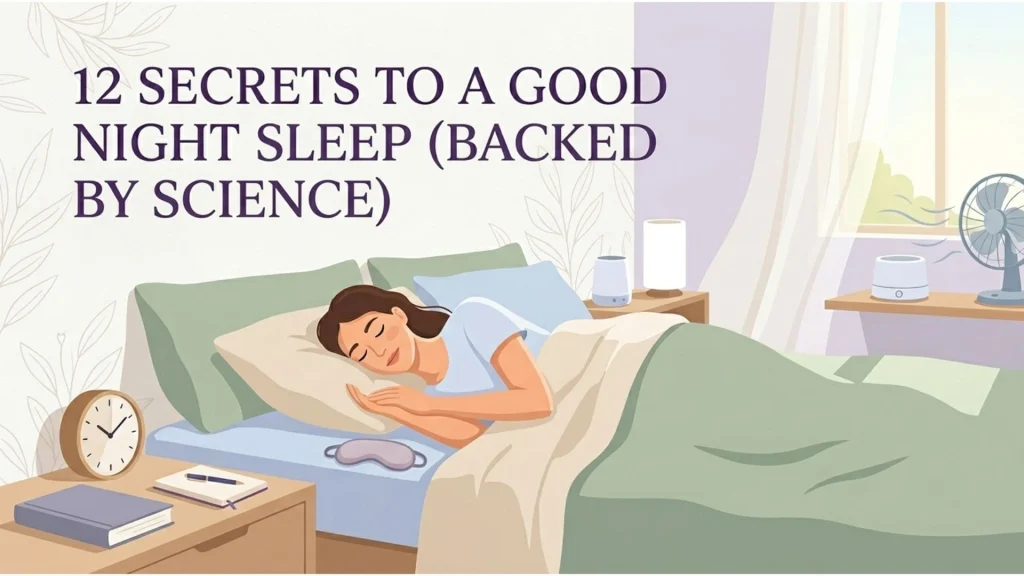
Your sleep environment can either invite rest or sabotage it. The ideal bedroom is cool (around 18°C / 65°F), as dark as you can make it, and free from disruptive noise.
Blackout curtains, a simple eye mask, and a white-noise machine or fan can transform a restless room into a sleep sanctuary. Think of your bedroom as a cave: cool, quiet, and dark.
3. Power Down Screens Before Bed
The blue light from phones, tablets, and TVs tells your brain it’s still daytime, suppressing the sleep hormone melatonin. Beyond the light, endless scrolling keeps your mind wired exactly when it should be winding down.
Aim to switch off screens 30 to 60 minutes before bed. If that feels impossible, enable night mode and keep the phone out of arm’s reach.
4. Watch Your Caffeine and Alcohol
Caffeine can linger in your system for six hours or more, so that late-afternoon coffee may still be working against you at midnight. Try to keep caffeine to the morning and early afternoon.
Alcohol is sneakier it might help you doze off, but it fragments your sleep later in the night, leaving you groggy. A good night sleep is far easier on a clear, settled system.
5. Soak Up Natural Daylight
Bright light during the day is just as important as darkness at night. Morning sunlight anchors your circadian rhythm, boosts daytime alertness, and helps you feel sleepy at the right time in the evening.
Try to get outside within an hour of waking even ten minutes of daylight makes a difference. If natural light is scarce, a daylight lamp is a worthy backup.
6. Move Your Body Regularly
Regular physical activity helps you fall asleep faster and enjoy deeper sleep. You don’t need an intense gym session a brisk daily walk counts.
Just mind the timing. Vigorous exercise too close to bedtime can leave you too energized to settle, so wrap up hard workouts at least a few hours before you turn in.
7. Build a Wind-Down Routine
A calming pre-sleep ritual signals to your body that the day is ending. The routine itself matters less than the consistency your brain learns the pattern and starts releasing the brakes.
Try a warm shower, light stretching, reading a physical book, journaling, or a few minutes of deep breathing. Repeat the same sequence nightly and it becomes a powerful cue for sleep.
8. Avoid Heavy Meals Late at Night
Going to bed on a full stomach forces your body to digest when it should be resting, often leading to discomfort and reflux. Try to finish dinner two to three hours before bed.
If hunger strikes later, reach for a light, sleep-friendly snack — a small banana, a handful of almonds, or a little warm milk rather than something rich or spicy.
9. Quiet a Racing Mind
For many people, the real enemy of a good night sleep isn’t the body — it’s the mind. Worries, to-do lists, and replays of the day all crowd in the moment your head hits the pillow.
Try a “brain dump”: spend five minutes writing down tomorrow’s tasks and lingering thoughts before bed. Pair it with slow breathing or a short meditation to let your nervous system shift into rest mode.
10. Invest in a Comfortable Mattress and Pillows
You spend roughly a third of your life in bed, so the surface you sleep on genuinely matters. A sagging mattress or the wrong pillow can quietly steal your rest night after night.
Choose a mattress that supports your preferred sleeping position, and replace pillows that have lost their shape. Soft, breathable bedding completes a setup your body will thank you for.
11. Be Smart About Naps
A short nap can be a gift but a long or late one can wreck your night. If you nap, keep it to about 20 minutes and finish well before mid-afternoon.
Anything longer can push you into deep sleep, leaving you groggy and far less ready for a good night sleep when bedtime arrives.
12. If You Can’t Sleep, Get Up
Lying in bed frustrated only teaches your brain to associate the bed with stress. If you’ve been awake for more than 20 minutes, get up and do something calm and screen-free in dim light until you feel sleepy again.
This simple reset protects the mental link between your bed and sleep — one of the quietest but most effective secrets to a good night sleep.
Your Good Night Sleep Starts Tonight
You don’t have to overhaul your life to sleep better. Start with the two or three secrets that feel easiest, stay consistent for a week, and layer in more as they become habits. Small, steady changes are what turn restless nights into deep, restorative rest.
Sweet dreams and here’s to waking up genuinely rested.
Frequently Asked Questions

Emily Carter writes about sleep routines, nighttime habits, and wellness-focused lifestyle improvements. Her content at The Way We Sleep focuses on practical sleep tips, relaxation methods, and everyday strategies that can help readers create healthier sleep environments. Emily covers nightly routines, relaxation techniques, and the small lifestyle shifts that add up to better rest.
All guides by Emily CarterGeneral guidance, not medical advice. If a sleep problem persists or gets worse, speak to a qualified clinician. Medical disclaimer