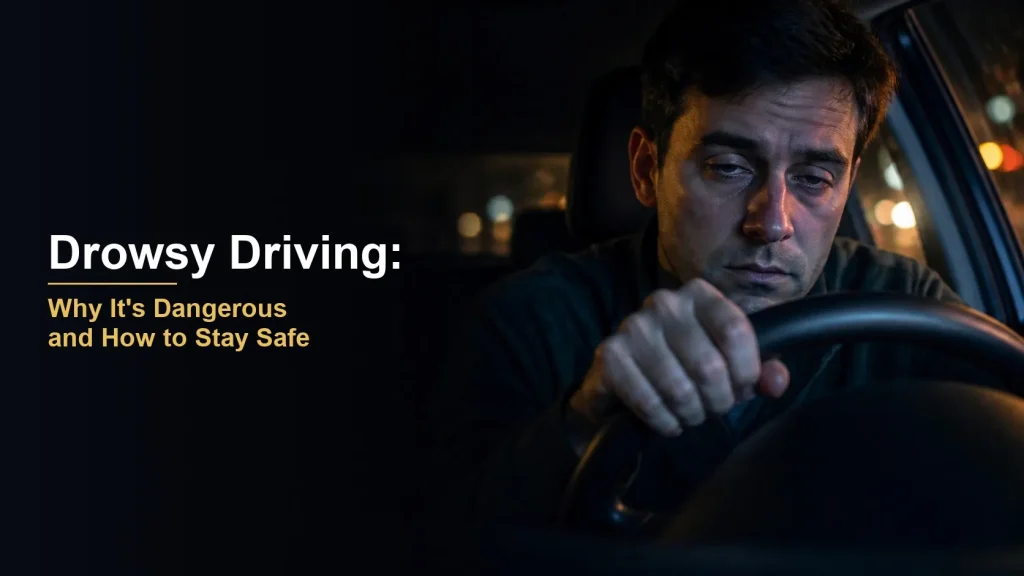
Most of us wouldn’t dream of driving after a few drinks — yet plenty of us get behind the wheel exhausted without a second thought. The truth is, drowsy driving is a serious and underrated danger, responsible for many crashes, injuries, and deaths every year. Here’s why driving tired is so risky, the warning signs to watch for, and how to stay safe.
Why Drowsy Driving Is So Dangerous
Sleepiness impairs you in ways strikingly similar to alcohol. Being tired slows your reaction time, clouds your judgment, and reduces your attention and awareness — all critical for safe driving. Research has found that going long enough without sleep can impair you comparably to being over the legal blood-alcohol limit. For a wider look at the underlying science, see published guidance.
The most frightening part is the microsleep — a brief, involuntary episode of sleep lasting just a few seconds. At highway speeds, a few seconds with your eyes closed means traveling the length of a football field with no one in control. You may not even realize it happened. That’s what makes drowsy driving so insidious: you can fall asleep at the wheel without any warning you’d remember.
Who’s Most at Risk
Drowsy driving can affect anyone who’s tired, but some people are especially vulnerable: those who are sleep-deprived, shift workers (particularly driving home after a night shift), people on long monotonous drives, anyone with an untreated sleep disorder like sleep apnea, those taking sedating medications, and young or newer drivers. Driving during your body’s natural energy dips — the early hours of the morning and the mid-afternoon — also raises the risk.
Warning Signs You’re Too Tired to Drive
Your body sends clear signals. Pull over if you notice: frequent yawning or blinking, heavy eyelids, drifting from your lane or hitting a rumble strip, missing your exit or a traffic sign, trouble keeping your head up, restlessness or irritability, or — the big one — not remembering the last few miles you drove. If any of these hit, treat them as a hard stop, not something to push through.
What to Do If You’re Driving Drowsy
If you feel sleepy at the wheel, the only real fix is to stop driving. Pull over somewhere safe and take a short 15-to-20-minute nap. A “coffee nap” — drinking a coffee right before that short nap — can be especially effective, since the caffeine kicks in as you wake. If you can, swap with another driver, and plan long trips with rest stops and a share of the driving. On a bigger scale, the best fix is prevention: don’t start a drive already exhausted.
The Myths That Don’t Work
Don’t rely on the classic “stay awake” tricks — they don’t overcome real sleepiness. Opening the window, blasting cold air, turning up loud music, or slapping yourself awake might feel like they help for a moment, but they do nothing to address genuine drowsiness and give a false sense of safety. Even caffeine alone can’t defeat serious sleep deprivation for long. If your body needs sleep, the only answer is to stop and rest.
How to Prevent Drowsy Driving
Prevention comes down to arriving well-rested. Get a full night’s sleep before a long or early drive. Avoid driving during your natural low-energy windows when you can. Take regular breaks on long trips (roughly every two hours), and share the driving. Be cautious with medications that cause drowsiness, and if you snore heavily or feel constantly exhausted, get checked for a sleep disorder like apnea, which is a hidden cause of daytime sleepiness behind the wheel.
The Bottom Line
Drowsy driving is far more dangerous than most people realize — it impairs you much like alcohol and can cause microsleeps that lead to devastating crashes. Know the warning signs, and if you feel them, stop and take a short nap rather than pushing on. Don’t trust window-and-music tricks to keep you safe. Above all, get enough sleep before you drive. Being well-rested isn’t just good for you — on the road, it can save lives.
Frequently Asked Questions
Is drowsy driving really as dangerous as drunk driving?
It can be comparable. Research shows that significant sleep deprivation impairs reaction time, judgment, and attention in ways similar to being over the legal alcohol limit. Drowsy driving causes many crashes each year, partly due to microsleeps at the wheel.
What are the warning signs of drowsy driving?
Frequent yawning or blinking, heavy eyelids, drifting from your lane, missing exits or signs, trouble keeping your head up, irritability, and not remembering the last few miles you drove. Any of these means you should stop driving.
What should I do if I feel sleepy while driving?
Pull over somewhere safe and take a 15-to-20-minute nap, ideally with a “coffee nap” (caffeine right before the nap). Swap drivers if you can. The only real fix for drowsiness is to stop and rest — pushing through is dangerous.
Do things like opening the window or loud music keep you awake while driving?
Not really. Tricks like cold air, loud music, or caffeine alone might feel helpful briefly but don’t overcome genuine sleepiness, and they create a false sense of safety. If your body needs sleep, the only safe option is to stop and rest.
How can I prevent drowsy driving?
Get a full night’s sleep before long or early drives, avoid driving during your natural low-energy periods, take breaks every couple of hours, share the driving, be careful with sedating medications, and get checked for sleep disorders like apnea if you’re often exhausted.

Emily Carter writes about sleep routines, nighttime habits, and wellness-focused lifestyle improvements. Her content at The Way We Sleep focuses on practical sleep tips, relaxation methods, and everyday strategies that can help readers create healthier sleep environments. Emily covers nightly routines, relaxation techniques, and the small lifestyle shifts that add up to better rest.
All guides by Emily CarterGeneral guidance, not medical advice. If a sleep problem persists or gets worse, speak to a qualified clinician. Medical disclaimer