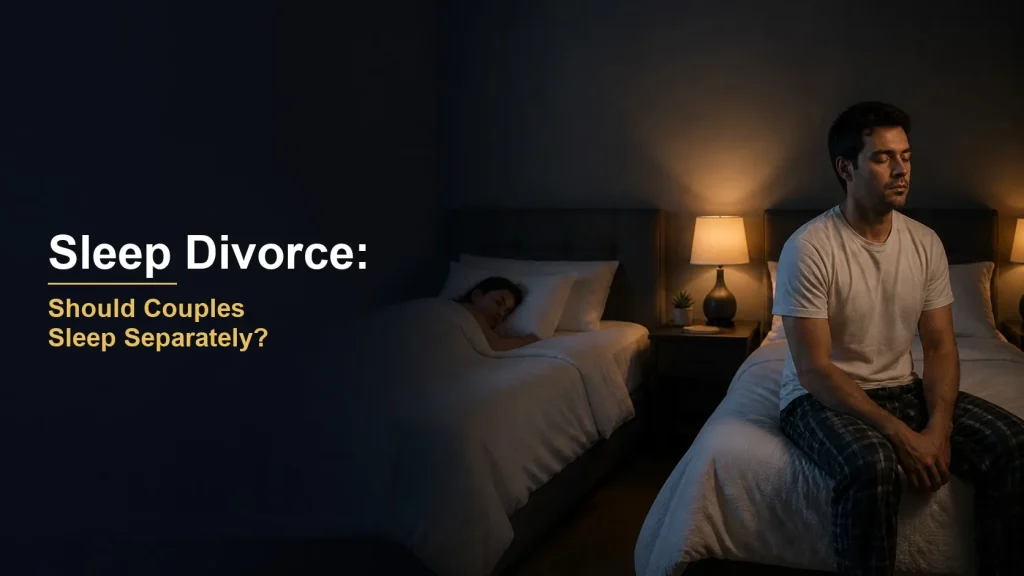
It sounds dramatic, but a “sleep divorce” has nothing to do with ending a relationship — quite the opposite. It simply means partners choosing to sleep in separate beds or rooms to get better rest. Once taboo, it’s now openly embraced by many couples. Here’s what a sleep divorce really is, its pros and cons, and how to do it without losing closeness.
What Is a Sleep Divorce?
A sleep divorce is when a couple decides to sleep apart — either in separate beds in the same room, or in separate bedrooms — some or all nights, specifically to improve their sleep. The name is misleading: it’s a sleep-health decision, not a relationship one. Plenty of happy, deeply connected couples sleep separately, and surveys suggest a significant number of couples already do, with the idea becoming far less stigmatized. For a wider look at the underlying science, see published guidance.
Why Couples Choose to Sleep Apart
The reasons are almost always practical. Sharing a bed can seriously disrupt sleep because of a partner’s snoring, different schedules (one’s an early bird, the other a night owl, or one works shifts), restlessness and tossing and turning, clashing temperature preferences, blanket hogging, or one partner’s insomnia keeping both awake. Since poor sleep harms your health, mood, and — ironically — your relationship, sleeping apart can be the healthier choice for everyone.
The Potential Benefits
The upside is straightforward: better, deeper, more consistent sleep for both partners. And better-rested people tend to be less irritable, more patient, and more present — which can actually improve the relationship rather than harm it. Many couples find that removing the nightly friction of disrupted sleep leaves them with more energy and less resentment for each other during the day. In that sense, a good night apart can make the time together better.
The Concerns (and They’re Valid)
It’s not without trade-offs. Couples often worry about losing intimacy and physical closeness, missing the connection of falling asleep and waking up together, or feeling a sense of emotional distance. There can also be lingering stigma or a worry about what it “means.” These concerns are real and worth taking seriously — which is why how you approach a sleep divorce matters as much as the decision itself.
How to Make It Work
Reframe it together. Agree that this is about protecting your sleep and health, not a sign of trouble. Naming that openly removes the sting.
Communicate without blame. Talk about it kindly and honestly, framing it as a shared solution rather than one person’s “fault” for snoring or tossing.
Be intentional about intimacy and connection. This is the key. Keep rituals that maintain closeness — winding down together, cuddling before heading to separate beds, morning coffee in bed, or “visits.” Intimacy thrives on intention, not just proximity.
Consider lighter versions first. You don’t have to jump straight to separate rooms. Try separate blankets on the same bed (the popular “Scandinavian method”), a larger mattress, or separate beds pushed together, as gentler middle grounds.
Try Fixing the Root Cause Too
Before (or alongside) sleeping apart, it’s worth tackling the specific problem. If snoring is the issue, addressing it can help both of you (and may point to sleep apnea worth checking). Clashing temperatures? Separate blankets and breathable bedding help. Different schedules? A white noise machine and an eye mask can let one sleep while the other reads. Sometimes these fixes make sharing a bed workable again — and sometimes a sleep divorce is simply the best answer.
The Bottom Line
A sleep divorce — sleeping separately for better rest — is a practical, increasingly normal choice that can leave both partners healthier, happier, and less irritable, often improving the relationship rather than straining it. The keys are to frame it as a sleep-health decision, communicate without blame, and stay intentional about intimacy. Try fixing root causes like snoring first, explore lighter options like separate blankets, and remember: there’s no single “right” way for couples to sleep — only what leaves you both well-rested and close.
Frequently Asked Questions
What is a sleep divorce?
A sleep divorce is when a couple chooses to sleep in separate beds or bedrooms, some or all nights, to get better sleep. Despite the name, it’s a sleep-health decision, not a relationship problem — many happy couples sleep separately for better rest.
Is sleeping in separate beds bad for a relationship?
Not necessarily — it can actually help. Better sleep makes both partners less irritable and more present, reducing daytime friction. The key is to stay intentional about intimacy and closeness, and to frame it as a shared sleep-health choice rather than a sign of trouble.
Why do couples get a sleep divorce?
Common reasons include a partner’s snoring, different sleep schedules, restlessness and tossing, clashing temperature preferences, blanket hogging, and one partner’s insomnia disturbing the other. Since poor sleep harms health and mood, sleeping apart can be healthier for both.
How do you have a sleep divorce without hurting your relationship?
Frame it as a sleep-health decision, communicate kindly without blame, and stay intentional about intimacy — keep rituals like winding down together, cuddling before bed, or morning coffee. You can also try lighter options first, like separate blankets on the same bed.
What is the Scandinavian sleep method?
It’s using two separate blankets or duvets on the same bed instead of sharing one. It solves blanket-hogging and lets each partner control their own warmth, offering many benefits of a sleep divorce while still sharing a bed — a popular gentler middle ground.

Michael Reeves covers topics related to sleep quality, bedroom comfort, and modern lifestyle habits. He enjoys researching sleep products, recovery routines, and productivity-focused wellness practices to create informative and reader-friendly content. Michael writes about bedroom setup, recovery, and the connection between sleep quality and how you feel during the day.
All guides by Michael ReevesGeneral guidance, not medical advice. If a sleep problem persists or gets worse, speak to a qualified clinician. Medical disclaimer