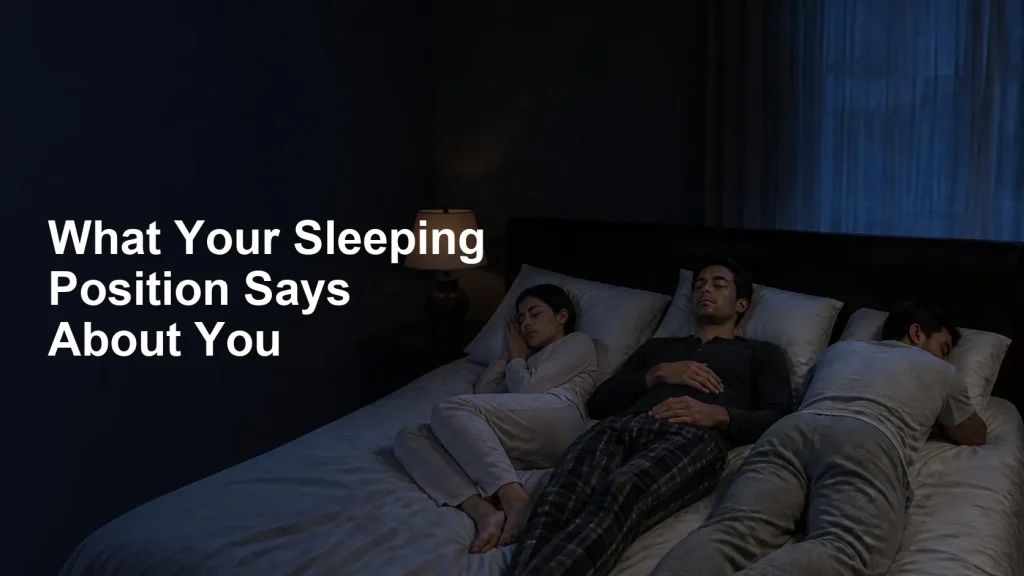
Do you curl up in a tight ball, sprawl out like a starfish, or sleep flat on your back like a soldier? People have long been fascinated by the idea that the way we sleep reveals something about who we are. It’s a fun bit of pop-psychology — and your position genuinely does say something about your health. Here’s a look at both.
A Quick Reality Check
Let’s be honest up front: the “personality” meanings behind sleep positions are for fun, not settled science. They come largely from popular theories and surveys, not rigorous research, so take the personality readings with a wink and a smile. What is well-supported is how different positions affect your body, breathing, and comfort — so we’ll cover both the playful and the practical for each. For a wider look at the underlying science, see this overview.
The Fetal Position
Curled up on your side with knees drawn toward your chest — this is the most common sleep position of all.
The fun theory: Fetal sleepers are often described as tough or shy on the outside but sensitive and warm-hearted underneath.
The health reality: Side sleeping in general is great for keeping airways open and reducing snoring, and the left side is often recommended in pregnancy and for acid reflux. Just avoid curling too tightly, which can strain your neck and back — keep it gently relaxed.
The Log Position
Lying on your side with both arms straight down.
The fun theory: Log sleepers are said to be social, easy-going, and trusting (sometimes a little too trusting).
The health reality: Like all side sleeping, it’s good for breathing and snoring. A pillow between the knees keeps your hips and spine aligned and comfortable.
The Yearner Position
On your side with both arms stretched out in front of you.
The fun theory: Yearners are described as open-minded but a touch cynical or slow to decide.
The health reality: Another side position with the usual airway benefits — comfortable for many, and easy on the back with a supportive pillow setup.
The Soldier Position
Flat on your back with arms straight down by your sides.
The fun theory: Soldier sleepers are said to be quiet, reserved, and to hold themselves (and others) to high standards.
The health reality: Back sleeping keeps your spine neutral and can be great for back and neck alignment — but it’s the worst position for snoring and sleep apnea, since it lets the airway collapse more easily. A pillow under the knees helps your lower back.
The Starfish Position
On your back with arms up around your head.
The fun theory: Starfish sleepers are described as good friends — great listeners who are always ready to help.
The health reality: Same as the soldier — good for spinal alignment, less ideal for snoring. Arms overhead can sometimes contribute to shoulder discomfort.
The Freefaller Position
On your stomach with arms up around the pillow, head turned to one side.
The fun theory: Freefallers are said to be sociable and bold, but not fond of criticism.
The health reality: This is generally the hardest position on your body — it flattens the spine’s natural curve and forces your neck to turn, which can cause back and neck pain. If you love it, use a very thin pillow (or none) and a thin pillow under your pelvis to ease the strain.
What Actually Matters for Your Sleep
Here’s the real takeaway: for your health, what counts isn’t personality — it’s comfort, spinal alignment, and easy breathing. Side sleeping tends to be best for most people (especially snorers), back sleeping suits spinal alignment but not snoring, and stomach sleeping is the toughest on your body. The best position is ultimately the one that lets you sleep comfortably and wake without aches. So enjoy the personality quiz — then choose your position based on how good you feel in the morning.
The Bottom Line
What your sleeping position “says about your personality” is a fun bit of pop-psychology rather than proven fact — whether you’re a curled-up fetal sleeper or a sprawling starfish, enjoy it for entertainment. What genuinely matters is how your position affects your comfort, spine, and breathing: side sleeping is great all-rounder, back sleeping suits your spine but not snoring, and stomach sleeping is hardest on your body. Pick the position that leaves you feeling your best.
Related reading: the bedroom setup guide and calmer ways to fall asleep.
Frequently Asked Questions
What does your sleeping position say about your personality?
Popular theories link positions to traits — fetal sleepers as tough-but-sensitive, log sleepers as social and easy-going, soldiers as reserved with high standards, and so on. It’s fun pop-psychology based on surveys and popular ideas, not rigorous science, so enjoy it lightheartedly.
What is the most common sleeping position?
The fetal position — curled up on your side with knees drawn toward the chest — is the most common. It’s also generally healthy, since side sleeping keeps airways open and reduces snoring, especially on the left side for pregnancy or acid reflux.
What is the healthiest sleeping position?
It depends on your needs, but side sleeping is best for most people, particularly for reducing snoring and sleep apnea. Back sleeping is good for spinal alignment but worsens snoring, and stomach sleeping is generally the hardest on your neck and back.
Is stomach sleeping bad for you?
It’s the toughest position on your body — it flattens your spine’s natural curve and forces your neck to turn, which can cause back and neck pain. If you sleep this way, use a very thin pillow (or none) and a thin pillow under your pelvis to reduce strain.
Does your sleeping position really reflect who you are?
Not in any scientifically proven way — the personality interpretations are for fun. Your position does, however, genuinely affect your health, comfort, and breathing, which is the part actually worth paying attention to.

Sophia Bennett specializes in wellness and lifestyle content with a focus on sleep-related topics, stress management, and healthy routines. She creates easy-to-understand articles designed to help readers make more informed sleep and wellness decisions. Sophia covers the wellness side of sleep, stress, mental wellbeing, and the lifestyle changes that make rest more restorative.
All guides by Sophia BennettGeneral guidance, not medical advice. If a sleep problem persists or gets worse, speak to a qualified clinician. Medical disclaimer