To fall asleep faster tonight, pick one calming technique in bed and stop chasing sleep. If you are still awake after about 20 minutes, get up, keep the lights dim, and do something quiet until you feel sleepy.
The good news is that falling asleep faster is a skill you can learn. It comes down to two things: calming techniques you can use the moment your head hits the pillow, and the conditions that make sleep come naturally. Here’s how to do both starting with what you can try tonight. If you are still awake after twenty minutes, this follow-up walkthrough covers what to do next. A racing mind is usually the real problem; this quieter-mind guide is the better match. For a wider look at why the body winds down at night, see this overview.
Why You Can’t Fall Asleep
Before the fixes, it helps to know what’s keeping you up. For most people it’s a racing mind the day replaying, tomorrow rehearsing, worries surfacing the instant the lights go off. Stress raises cortisol, which keeps your body in alert mode exactly when you want it to power down.
The rest usually comes down to your environment and habits: a room that’s too warm or too bright, screens too close to bedtime, an irregular schedule, or caffeine still working its way through your system. The techniques below tackle the racing mind directly; the habits further down fix the conditions.
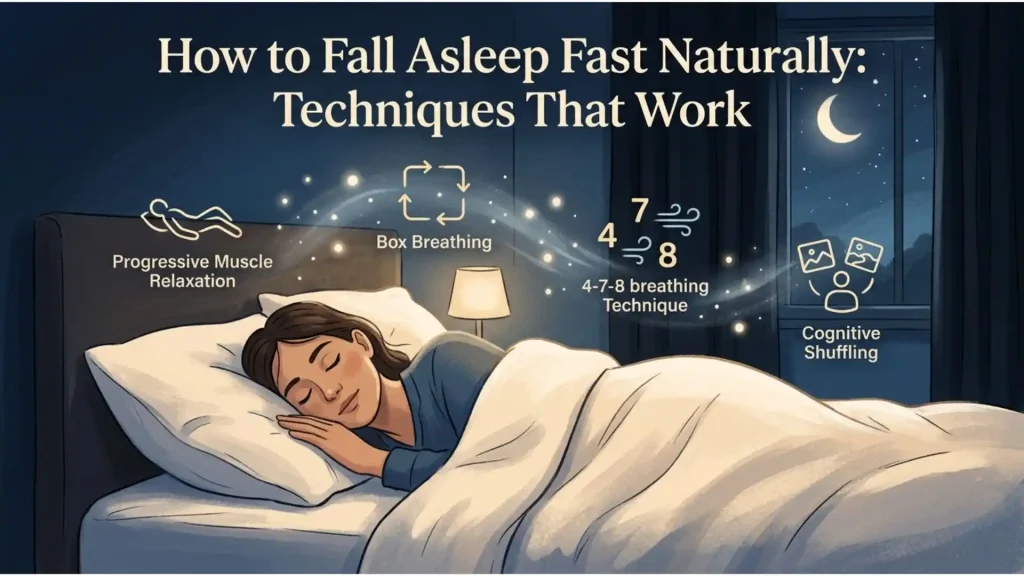
Techniques to Try Right Now (In Bed)
These work by shifting your body out of “alert” mode and giving your busy mind a single, gentle thing to focus on. Pick one and give it a genuine try the calm is the point, not the clock.
1. The 4-7-8 breathing method
Breathe in quietly through your nose for 4 seconds, hold for 7, then exhale slowly through your mouth for 8. Repeat about four times. The long exhale activates your body’s relaxation response and slows a racing heart. It’s the single easiest technique to start with.
2. Box breathing
Inhale for 4 seconds, hold for 4, exhale for 4, hold for 4 like tracing the four sides of a square. It’s simple, rhythmic, and gives your mind a steady pattern to follow instead of spinning. Repeat until you feel your shoulders drop.
3. Progressive muscle relaxation
Starting at your face and working down to your toes, gently tense each muscle group for a few seconds, then release. Feel the tension melt as you let go. By the time you reach your feet, your whole body has physically let go of the day and your mind usually follows.
4. The military method
A popular technique said to help you sleep in around two minutes: relax your entire face, drop your shoulders and let your arms fall loose, exhale and relax your chest, then your legs. Finally, clear your mind for ten seconds by picturing a calm scene. The evidence is more anecdotal than scientific, but as a full-body relaxation sequence, plenty of people swear by it.
5. Cognitive shuffling
If your mind won’t stop *thinking*, give it harmless nonsense to chew on. Picture a random, unrelated word say, “apple” then imagine random images for each letter: an *a*corn, a *p*iano, a *l*adder. The point is to mimic the loose, disconnected thoughts your brain naturally has as it drifts off, which short-circuits the worry-loop.
6. Paradoxical intention
It sounds backwards, but gently telling yourself to stay awake can take the pressure off. Lie calmly with your eyes open and think, “I’ll just rest, I don’t need to sleep.” Removing the stress of trying often lets sleep sneak up on its own.
Set the Stage for Faster Sleep
Techniques work far better when your environment is on your side. These habits make falling asleep the default rather than a fight.
Keep your room cool, dark, and quiet around 65°F (18°C), with blackout curtains or an eye mask, since light suppresses your sleep hormone melatonin. Power down screens 30 to 60 minutes before bed and keep your phone out of arm’s reach. Hold a consistent sleep and wake time, even on weekends, so your body clock knows when to feel sleepy. Skip caffeine after early afternoon and heavy meals late at night. And give yourself a short wind-down dim lights, a warm drink, a few pages of a book so you arrive at bed already calm.
If You’re Still Awake After 20 Minutes
Don’t lie there fighting it. Tossing and turning only teaches your brain to associate bed with frustration. If you’ve been awake for about 20 minutes, get up and do something calm and quiet in dim light read a few pages, listen to soft music, anything but screens. When you feel sleepy again, head back to bed. This simple reset protects the link between your bed and actual sleep.
A Gentle Reminder
Here’s the paradox worth remembering: sleep can’t be forced. If you put too much pressure on falling asleep fast, the anxiety itself keeps you up. Treat these techniques as ways to relax, not a stopwatch challenge. Pick two or three that feel good, use them consistently, and let sleep come to you.
If you regularly take more than half an hour to fall asleep, wake often, or feel exhausted despite enough time in bed, it’s worth talking to your doctor ongoing sleep trouble can have causes worth looking into.
Frequently Asked Questions
How can I fall asleep fast naturally?
Pick one calming technique in bed and take the pressure off. Sleep usually comes slower when you treat it like a race.
What if I am still awake after 20 minutes?
Get up, keep the lights dim, and do something quiet until you feel sleepy. Watching the clock usually makes the night longer.
Do breathing methods knock you out?
No. 4-7-8, box breathing, and similar methods are wind-downs. They can help some people settle; they are not a sedative.
When should I see a clinician?
If it regularly takes more than about 30 minutes to fall asleep, you wake often, or you feel exhausted after enough time in bed, that belongs with a clinician.

Emily Carter writes about sleep routines, nighttime habits, and wellness-focused lifestyle improvements. Her content at The Way We Sleep focuses on practical sleep tips, relaxation methods, and everyday strategies that can help readers create healthier sleep environments. Emily covers nightly routines, relaxation techniques, and the small lifestyle shifts that add up to better rest.
All guides by Emily CarterGeneral guidance, not medical advice. If a sleep problem persists or gets worse, speak to a qualified clinician. Medical disclaimer