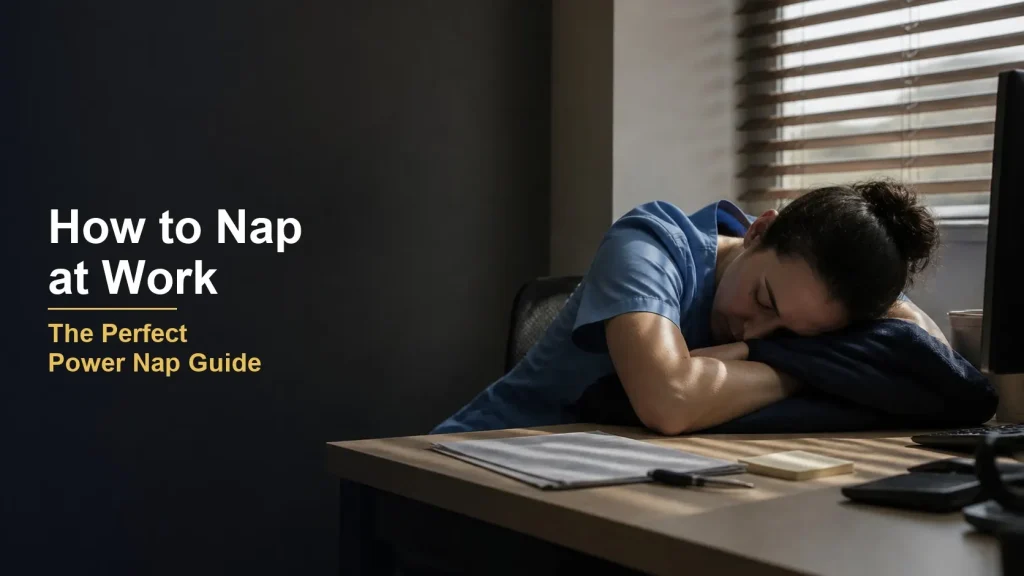
That mid-afternoon wall — heavy eyelids, foggy brain, endless coffee refills — is one of the biggest productivity killers of the workday. The fix might be a well-timed nap. A quick power nap can restore your alertness, focus, and mood far more effectively than another coffee. Here’s how to nap at work the right way.
Why a Workplace Nap Works
A short nap is a genuine performance booster. Research — including famous studies by NASA — has found that brief naps sharply improve alertness, reaction time, focus, and mood, and reduce errors. During that afternoon slump, when your body clock naturally dips, a quick reset can turn a sluggish, unproductive afternoon into a sharp one. Done right, it’s a smart professional tool, not a sign of laziness. For a wider look at the underlying science, see published guidance.
Keep It Short: The 10-20 Minute Rule
The golden rule is to nap for just 10 to 20 minutes. That’s long enough to recharge your alertness but short enough to keep you in light sleep, so you wake up refreshed rather than groggy. Nap longer — into the 30-to-60-minute range — and you risk waking mid-deep-sleep with heavy “sleep inertia” that leaves you worse off than before. So always set an alarm.
Time It for the Slump
Aim for the early afternoon, roughly between 1 and 3 PM, when your natural energy dip hits and a nap won’t interfere with your night’s sleep. A lunch break is often the perfect window. Avoid napping late in the afternoon, as it can make it harder to fall asleep that night.
Where to Nap at Work
You have more options than you’d think: your car (a classic quiet spot), a wellness or nap room if your workplace has one, an empty meeting room, or a quiet break area. Some modern offices even provide nap pods. Wherever you go, make it as comfortable and dim as you can, and use an eye mask and earbuds or white noise to block out light and office chatter.
The Coffee Nap Trick
Here’s a pro move: drink a cup of coffee right before your 20-minute nap. Caffeine takes about 20 minutes to kick in, so you’ll wake just as it hits your system — giving you the combined boost of the nap and the caffeine. It’s the perfect way to power through a demanding afternoon.
Keep It Professional
A workplace nap works best when it’s discreet and within the rules. Use your official break or lunch time, check your company’s policy (some actively encourage it, others don’t), and keep it brief and low-key. Framing it as a genuine productivity tool — because it is — helps too.
If You Can’t Actually Nap
No time or space to sleep? You can still recharge. Simply resting with your eyes closed for a few minutes is restorative. Or take a brisk walk outside — the movement and daylight are natural alertness boosters — and pair it with a coffee for a similar lift.
The Bottom Line
A workplace power nap — 10 to 20 minutes in the early afternoon — is one of the most effective ways to beat the afternoon slump and sharpen your focus. Find a quiet spot, set an alarm, block out light and noise, and try a coffee nap for an extra edge. Keep it short and professional, and you’ll return to your desk refreshed, clearer, and more productive.
Frequently Asked Questions
How long should a nap at work be?
Aim for 10 to 20 minutes. That’s enough to boost alertness while keeping you in light sleep, so you wake refreshed rather than groggy. Napping longer risks deep-sleep grogginess, so set an alarm.
When is the best time to nap at work?
Early afternoon, roughly 1 to 3 PM, during your natural energy dip. A lunch break works well. Avoid napping late in the afternoon, as it can interfere with your sleep that night.
What is a coffee nap?
A coffee nap is drinking a cup of coffee right before a 20-minute nap. Caffeine takes about 20 minutes to take effect, so you wake just as it kicks in, combining the benefits of the nap and the caffeine for extra alertness.
Where can I nap at work?
Common spots include your car, a wellness or nap room, an empty meeting room, or a quiet break area — and some offices have nap pods. Use an eye mask and earbuds or white noise to block light and noise, and keep it within your break time.
Do power naps actually improve work performance?
Yes. Research, including NASA studies, shows short naps improve alertness, focus, reaction time, and mood while reducing errors. A brief early-afternoon nap can meaningfully boost afternoon productivity.

Emily Carter writes about sleep routines, nighttime habits, and wellness-focused lifestyle improvements. Her content at The Way We Sleep focuses on practical sleep tips, relaxation methods, and everyday strategies that can help readers create healthier sleep environments. Emily covers nightly routines, relaxation techniques, and the small lifestyle shifts that add up to better rest.
All guides by Emily CarterGeneral guidance, not medical advice. If a sleep problem persists or gets worse, speak to a qualified clinician. Medical disclaimer