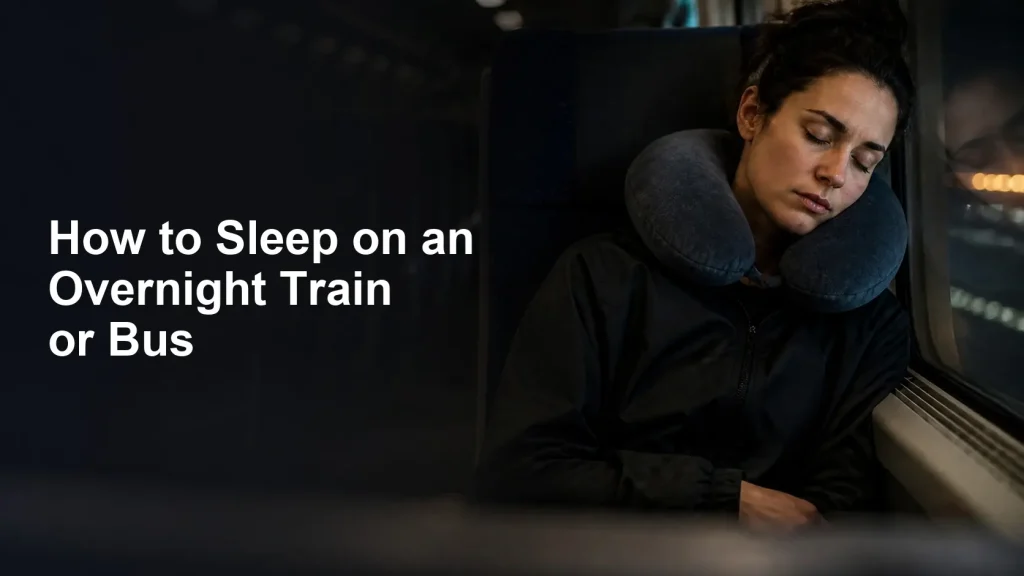
Overnight trains and buses are a budget traveler’s friend — you save on a night’s accommodation and wake up (ideally) at your destination. The catch is actually sleeping while sitting upright and moving. With the right seat, a few key items, and some smart habits, you can get genuine rest on the rails or the road. Here’s how.
Trains vs. Buses: Know Your Setup
The experience varies a lot. Overnight trains are often smoother and quieter, and many offer sleeper berths or couchettes — essentially a small bed, which is by far the best way to sleep while traveling. If you have a berth, treat it like a tiny bedroom (more on securing your things below). Buses and seated train carriages mean sleeping more upright and cramped, so comfort and preparation matter even more. Tailor these tips to whichever you’re on. For a wider look at the underlying science, see published guidance.
Choose Your Seat Wisely
Where you sit makes a big difference. Aim for a window seat — it gives you something to lean against and lets you control the window shade, and you won’t be disturbed by people climbing over you. Try to sit away from the bathroom, doors, and aisle traffic, which are noisy and busy all night. Seats toward the front are often smoother and quieter than those over the wheels or at the back. And recline your seat as far as courtesy allows.
Pack a Comfort Kit
A few small items transform upright sleep:
A travel neck pillow is essential — it stops your head lolling and your neck aching when you nod off sitting up. An eye mask blocks cabin lights, passing streetlights, and other passengers’ screens, while earplugs or noise-cancelling headphones muffle the engine, chatter, and station stops. Bring a blanket, scarf, or hoodie, since trains and buses often get cold at night, and wear loose, comfortable clothing. An inflatable footrest or simply propping your feet up can help too.
Stay Safe and Secure
Sleeping in a public space means guarding your belongings. Keep your passport, phone, wallet, and tickets on your body — in a zipped inside pocket or a money belt — not in the overhead rack or an outer pocket. Loop a strap of your bag around your arm or leg, or keep it on your lap or between your feet. Be a little extra alert around station and rest stops, when people are moving on and off.
Settle In and Relax
Get comfortable: slip off your shoes, loosen tight clothing, and stay hydrated — but don’t overdo fluids right before sleeping, to avoid bathroom trips. Interestingly, the gentle rocking motion of a train or bus is soothing for many people and can actually help you drift off, so lean into it. If you’re prone to motion sickness, choose a forward-facing seat and avoid staring at screens. And keep your usual wind-down cues where you can — a familiar playlist or a few calming breaths signal sleep even in transit.
Don’t Miss Your Stop
One traveler’s nightmare: sleeping through your destination. Set an alarm (with a gentle vibration if you’re near others) for a little before your expected arrival, note the scheduled time, and if you’re worried, let a conductor or driver know your stop so they can give you a heads-up.
The Bottom Line
To sleep on an overnight train or bus, book a berth if you can — otherwise grab a window seat away from the bathroom and doors, recline, and set up a comfort kit with a neck pillow, eye mask, earplugs, and a layer for warmth. Keep your valuables secured on your body, let the gentle motion lull you, and set an alarm so you don’t miss your stop. It won’t quite match your own bed, but you can arrive genuinely rested and ready to explore.
The same kit that helps on a plane mostly works here. Steady sound is the easiest mask for engines and aisles.
Frequently Asked Questions
How can I sleep on an overnight bus?
Choose a window seat away from the bathroom and doors, recline as much as you can, and use a travel neck pillow to support your head. Block light and noise with an eye mask and earplugs, bring a blanket or hoodie for warmth, and keep your valuables secured on your body.
What’s the best seat for sleeping on a train or bus?
A window seat is ideal — you have something to lean on, control over the shade, and won’t be disturbed by others passing. Sit away from the bathroom, doors, and aisle, and toward the front, which tends to be smoother and quieter than seats over the wheels.
How do I stay comfortable sleeping sitting up?
A travel neck pillow is essential to support your head and prevent neck strain. Recline your seat, slip off your shoes, wear loose clothing, use a blanket or hoodie for warmth, and prop your feet up if you can. An eye mask and earplugs help you relax fully.
Is it safe to sleep on an overnight train or bus?
It can be, with precautions. Keep your passport, phone, and wallet on your body in a zipped inside pocket, loop your bag strap around your arm or leg, and stay a little more alert around station stops when people are moving around. Being prepared lets you rest easier.
How do I avoid missing my stop while sleeping?
Set an alarm for shortly before your scheduled arrival (use vibration if you’re near others), note the timetable, and if you’re worried, tell the conductor or driver your stop so they can alert you. Waking a little early gives you time to gather your things.

Sophia Bennett specializes in wellness and lifestyle content with a focus on sleep-related topics, stress management, and healthy routines. She creates easy-to-understand articles designed to help readers make more informed sleep and wellness decisions. Sophia covers the wellness side of sleep, stress, mental wellbeing, and the lifestyle changes that make rest more restorative.
All guides by Sophia BennettGeneral guidance, not medical advice. If a sleep problem persists or gets worse, speak to a qualified clinician. Medical disclaimer