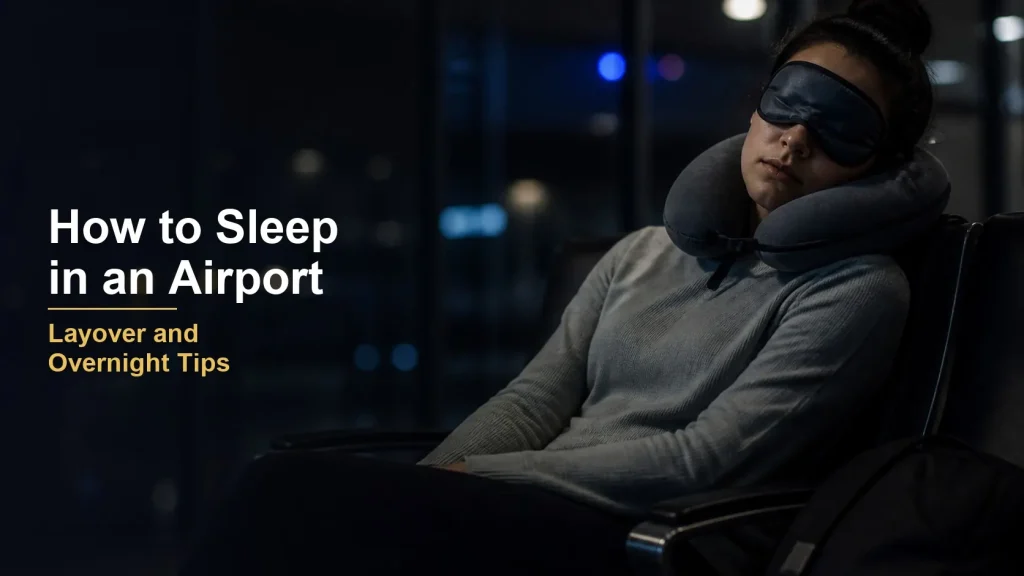
A long layover, an overnight connection, or a delayed flight can leave you facing hours in a terminal with nowhere to stay — and a desperate need to rest. Sleeping in an airport isn’t glamorous, but with a little know-how you can do it safely and get real, restorative sleep. Here’s how.
First: Safety Comes Before Sleep
Before you doze off in a public place, protect yourself and your belongings: For a wider look at the underlying science, see this overview.
Secure your bags. Loop a strap of your bag around your arm or leg, or use your backpack as a pillow so no one can slip it away while you sleep. Keep your passport, phone, wallet, and boarding pass on your body (a money belt or zipped inside pocket is ideal), never in an outer pocket.
Choose a safe, visible spot. Sleep in a well-lit area near other travelers rather than an isolated corner. There’s safety in being around people and in view of security or staff.
Know the airport’s rules. Some airports stay open 24 hours; others close overnight or clear passengers from certain areas, and some require you to stay in specific zones after hours. Check before you settle in, and confirm whether you need to stay airside (past security) for your connection.
Don’t miss your flight. This is the big one — set multiple alarms on your phone (and a backup), and note your gate and boarding time. It’s easy to oversleep, so build in a buffer.
Finding the Best Spot to Sleep
Scout the terminal for somewhere quiet and comfortable. Look for a gate area away from busy walkways, ideally with benches or chairs without armrests so you can lie down (armrests are the enemy of the airport sleeper). Quieter corners, upper floors, or gates with no imminent departures are often calmer.
Many airports now offer better options worth seeking out: dedicated rest zones, nap rooms, reclining lounge chairs, or even sleep pods you can rent by the hour. It’s worth a quick search for your specific airport’s facilities before you travel.
Consider an Airport Lounge
If comfort and security matter to you, an airport lounge is often worth the cost. Lounges are quieter, safer, and more comfortable, usually with reclining seats, food, drinks, charging, and Wi-Fi. You can often pay a one-off entry fee, or access them through certain credit cards or a lounge membership (like Priority Pass). For a long overnight layover, it can be money well spent.
Pack a Simple Comfort Kit
A few small items make airport sleep far more bearable — keep them in your carry-on:
A travel neck pillow for support, an eye mask to block the terminal’s bright lights (which never fully dim), and earplugs or noise-cancelling headphones for the constant announcements and noise. Airports are often cold, so bring a light layer, scarf, or travel blanket, and use a jacket as a blanket or cushion. Comfortable, loose clothing helps too.
A Few Practical Tips
Set up near a power outlet so you can charge your devices while you rest. Stay hydrated but don’t overdo fluids right before sleeping. If you’re crossing time zones, think about jet lag — timing your sleep to your destination can help you adjust. And accept that airport sleep is rarely perfect: even light, broken rest is better than none, and a short nap can leave you far more functional for the next leg.
The Bottom Line
To sleep in an airport, put safety first — secure your belongings, choose a well-lit spot near others, know the airport’s overnight rules, and set multiple alarms so you don’t miss your flight. Find a quiet gate with armrest-free seating (or seek out rest zones, sleep pods, or a lounge), and pack a neck pillow, eye mask, earplugs, and a layer for warmth. It won’t be your comfiest night, but you can absolutely get the rest you need to travel on.
Related reading: the bedroom setup guide and calmer ways to fall asleep.
Frequently Asked Questions
Is it safe to sleep in an airport?
It can be, if you take precautions. Sleep in a well-lit area near other travelers, keep your passport and valuables on your body, secure your bags (use one as a pillow or loop a strap around you), and check the airport’s overnight rules. Being visible and near people adds safety.
How do I sleep during a long layover?
Find a quiet gate away from foot traffic with armrest-free seating, or seek out rest zones, nap rooms, or sleep pods. Use a neck pillow, eye mask, and earplugs, bring a layer for warmth, secure your belongings, and set multiple alarms so you don’t miss your flight.
Can you sleep in an airport overnight?
Often yes, but it depends on the airport — some are open 24 hours while others close or restrict areas overnight, and some require you to stay in specific zones. Check your airport’s rules in advance, and confirm whether you need to remain airside for your connection.
What should I bring to sleep in an airport?
A travel neck pillow, an eye mask (terminals stay bright), earplugs or noise-cancelling headphones, and a light layer or travel blanket, since airports are often cold. Keep valuables secure on your body, and have your phone charged with alarms set.
Are airport lounges good for sleeping?
Yes, they’re often worth it for a long layover. Lounges are quieter, safer, and more comfortable, with reclining seats, food, charging, and Wi-Fi. You can usually pay a one-off fee or get access through certain credit cards or a lounge membership.

Michael Reeves covers topics related to sleep quality, bedroom comfort, and modern lifestyle habits. He enjoys researching sleep products, recovery routines, and productivity-focused wellness practices to create informative and reader-friendly content. Michael writes about bedroom setup, recovery, and the connection between sleep quality and how you feel during the day.
All guides by Michael ReevesGeneral guidance, not medical advice. If a sleep problem persists or gets worse, speak to a qualified clinician. Medical disclaimer