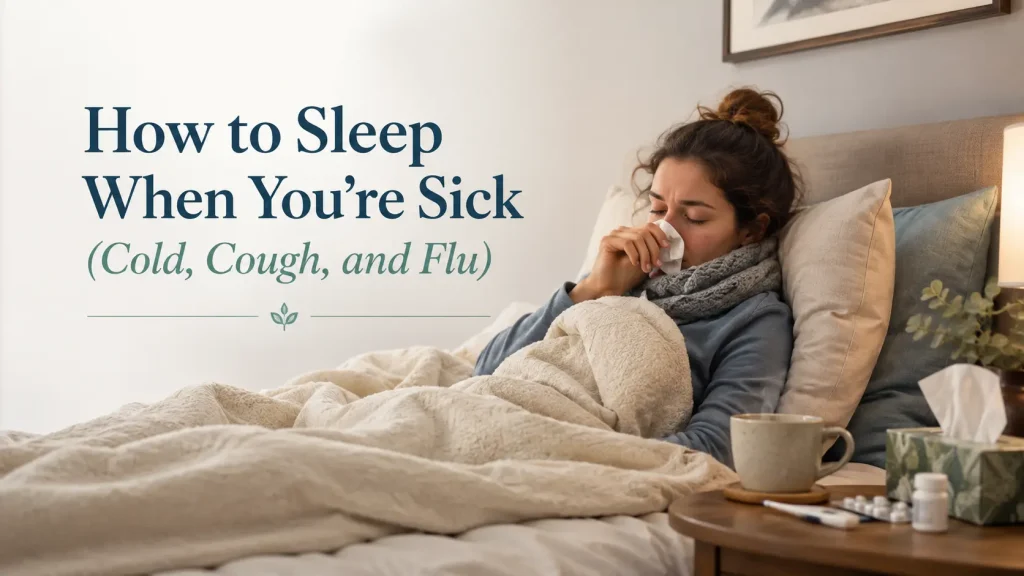
How to Sleep When You’re Sick (Cold, Cough, and Flu)
When you’re battling a cold or the flu, sleep is exactly what your body needs to heal and yet a stuffy nose, hacking cough, aches, and fever can make it maddeningly hard to get. The good news is that a few targeted tweaks can ease your symptoms enough to let you rest. Here’s how to sleep when you’re sick.
Why Sleep Matters So Much When You’re Ill
Sleep isn’t just comforting when you’re sick it’s a core part of recovery. During deep sleep, your immune system does much of its repair work, producing infection-fighting proteins and antibodies. Skimping on rest can slow your recovery and leave you feeling worse. So prioritizing sleep, and napping when you need to, is genuinely part of getting better.
Ease Congestion and a Stuffy Nose
A blocked nose is one of the biggest sleep stealers. To breathe easier: For a wider look at the underlying science, see this overview.
Prop yourself up. Sleep with your head and upper body slightly elevated on extra pillows or a wedge. This helps mucus drain instead of pooling and blocking your airways.
Add moisture to the air. A humidifier or a bowl of steam by the bed loosens congestion, and a hot, steamy shower before bed can clear your nose beautifully.
Rinse and relieve. A saline nasal spray or rinse before bed clears mucus naturally, and nasal strips can open your nostrils. Treating the congestion at the source beats lying there mouth breathing.
Soothe a Cough
A nighttime cough is exhausting. Elevating your head helps here too, since it reduces post nasal drip. For adults and children over one, a spoonful of honey (plain or in warm water or tea) can soothe the throat and calm a cough as effectively as some over the counter remedies. Keep warm fluids and water by the bed, and a lozenge can help you settle.
Manage Fever, Aches, and Chills
Fever and body aches make it hard to get comfortable. An over the counter pain and fever reducer, taken as directed before bed, can bring enough relief to let you drift off check with a pharmacist or doctor if you’re unsure what’s suitable for you. Keep your room comfortably cool and dress in light, breathable layers you can adjust as chills and sweats come and go.
Stay Hydrated (the Smart Way)
Being sick is dehydrating, especially with a fever, and dehydration thickens mucus and worsens a sore throat. Sip water and warm fluids through the day and evening but taper off right before bed so you’re not up for the bathroom. A warm, caffeine free drink like herbal tea with honey is soothing and sleep friendly.
A Few More Comfort Tips
Keep your usual calming bedtime routine as much as you can, and let yourself rest without guilt. Avoid alcohol, which fragments sleep and dehydrates you, and skip caffeine and heavy meals late in the day. Fresh sheets, a cozy but not overheated room, and tissues within reach all make the night more bearable. And remember rest is the treatment, so a duvet day is doing real work.
When to See a Doctor
Most colds and flu pass with rest, but seek medical care if you have a high or persistent fever, difficulty breathing or shortness of breath, chest pain, symptoms that worsen or don’t improve after several days, or if you’re in a higher risk group. Trust your instincts if something feels seriously wrong, get it checked.
The Bottom Line
To sleep when you’re sick, tackle the symptoms keeping you up: prop your head up and add moisture to ease congestion, soothe a cough with honey and elevation, manage fever and aches with appropriate relief, and stay hydrated (easing off fluids just before bed). Keep your room cool and cozy, rest without guilt, and let sleep do its healing work. You’ll bounce back faster for it.
Frequently Asked Questions

Emily Carter writes about sleep routines, nighttime habits, and wellness-focused lifestyle improvements. Her content at The Way We Sleep focuses on practical sleep tips, relaxation methods, and everyday strategies that can help readers create healthier sleep environments. Emily covers nightly routines, relaxation techniques, and the small lifestyle shifts that add up to better rest.
All guides by Emily CarterGeneral guidance, not medical advice. If a sleep problem persists or gets worse, speak to a qualified clinician. Medical disclaimer