How to Sleep With Tinnitus: Simple Ways to Quiet the Ringing at Night
How to sleep with tinnitus: use soft background sound, protect your hearing, calm the stress loop, and know when ringing in your ears needs a checkup.
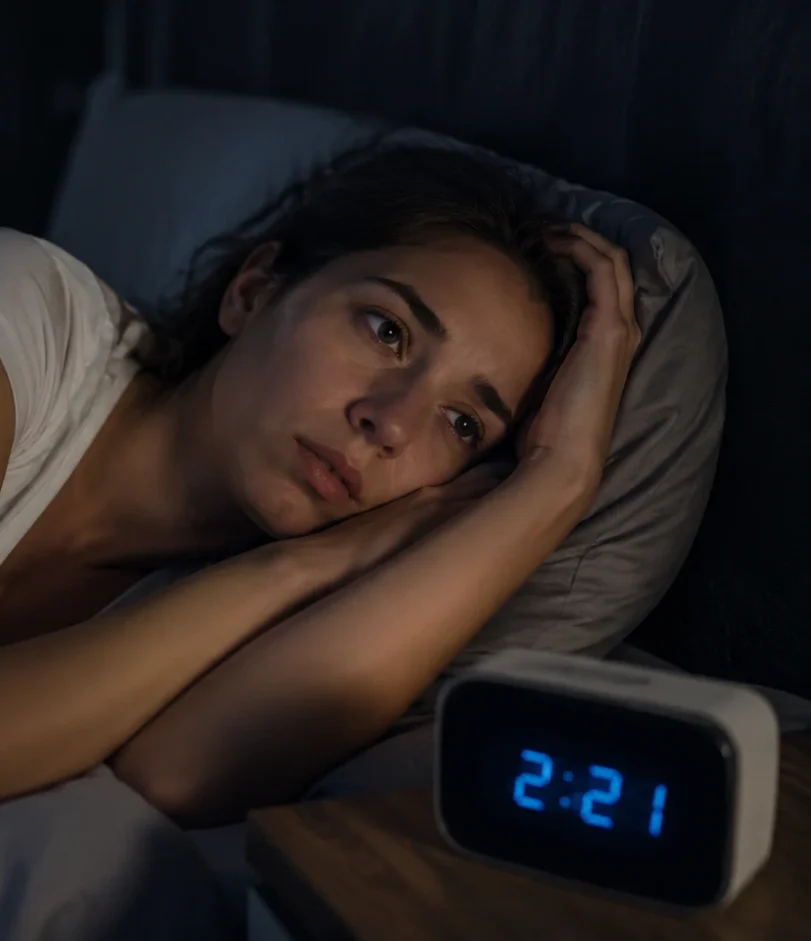
The house finally goes quiet, you turn off the lights, and that is exactly when the ringing gets loud. If you live with tinnitus, you probably know this pattern well. During the day, traffic, voices, and the hum of a busy home cover it up. At night, there is nothing left to compete with it, so your brain locks on to the sound.
You are far from alone. The National Institute on Deafness and Other Communication Disorders (NIDCD) notes that surveys estimate 10 to 25% of adults have tinnitus, and that for some people it affects mood and the ability to sleep. There is no cure yet, but there are proven ways to make it less noticeable at bedtime. This guide covers what actually helps you sleep with tinnitus, what to skip, and when to get your ears checked.
Quick Summary
- Don’t sleep in total silence. A fan, a sound machine, or a soft sound app near the bed can make tinnitus much less noticeable, a step both NIDCD and Mayo Clinic describe.
- Keep the sound soft and steady. Choose a gentle sound you like and keep the volume low, so you protect your hearing while you sleep.
- Calm the stress loop. Stress can make tinnitus feel worse, and cognitive behavioral therapy (CBT) helps many people feel less bothered by it.
- Get checked if it’s new, one-sided, pulsing, or comes with hearing loss or dizziness. Some causes, like earwax or a medicine side effect, are treatable.
Why Tinnitus Feels Louder at Night
Tinnitus is the perception of sound that does not have an outside source, so no one else can hear it. NIDCD describes it as ringing for many people, but it can also buzz, roar, hiss, hum, click, or whistle, in one ear, both ears, or inside your head.
The sound itself usually doesn’t change much at bedtime. What changes is the background. In a quiet bedroom, your brain has nothing else to listen to, so the tinnitus stands out. Add the worry that you won’t fall asleep, and you get a loop: the ringing makes you anxious, the anxiety keeps you alert, and an alert brain notices the ringing even more.
The goal at night is not to make tinnitus disappear. It’s to make it less interesting to your brain, so you can drift off the way you would on a night without it.
Add Gentle Background Sound
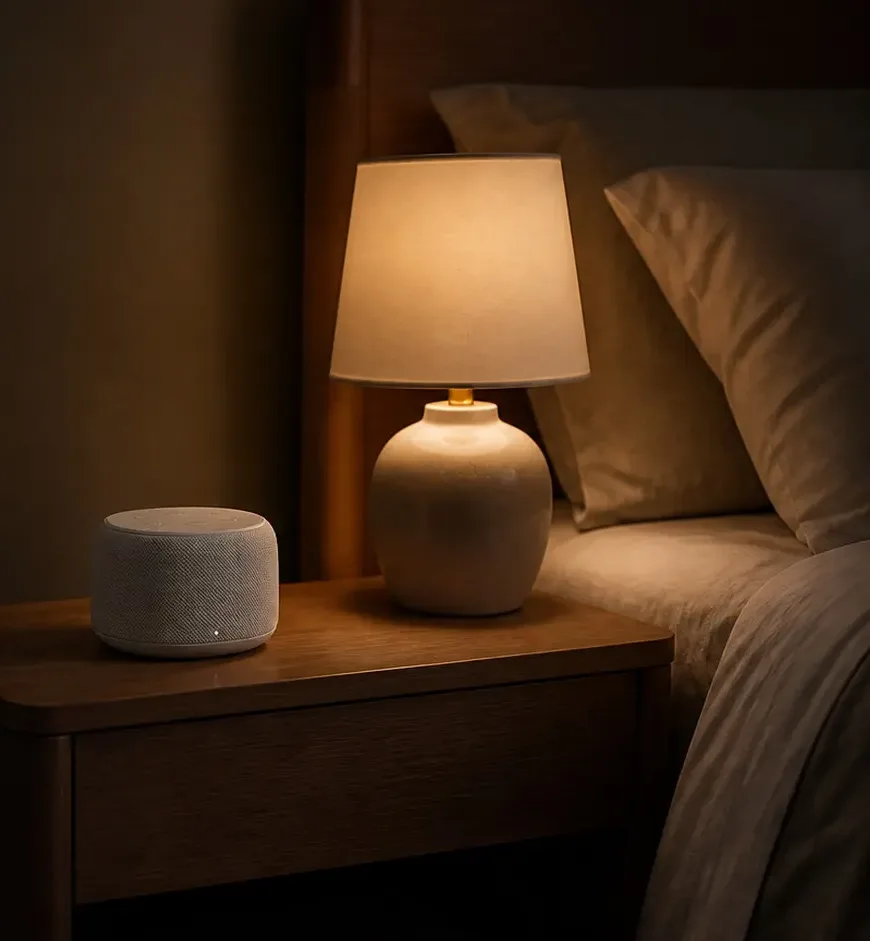
Sound therapy is the first thing most experts suggest for nighttime tinnitus. NIDCD explains that tabletop or smartphone sound generators are commonly used as a relaxation or sleep aid. You can set one near your bed to play waves, rain, a waterfall, or summer-night sounds. For mild tinnitus, NIDCD says this may be all you need to fall asleep.
Mayo Clinic adds that fans, humidifiers, dehumidifiers, and air conditioners also create white noise that can make tinnitus less bothersome at night. Some people like a white noise machine with pillow speakers, so the sound stays close to their ears without filling the whole room.
A few tips make background sound work better:
- Pick a sound you actually like. If a sound annoys you, it adds stress instead of easing it. Try rain, ocean waves, a fan, or soft white, pink, or brown noise for a few nights each.
- Keep it low. Many people find it works best when the sound blends with the tinnitus rather than drowning it out. You should still be able to hear the background sound and your tinnitus a little, without either one taking over.
- Let it run all night. A timer that shuts off at 1 a.m. can leave you suddenly noticing the ringing if you wake up. A steady, continuous sound is usually easier.
If you want help choosing a device, our guide to the best white noise machines walks through fans, speakers, and app-based options.
Protect Your Hearing While You Sleep
Background sound helps, but louder is not better. Long or repeated exposure to sounds at or above 85 A-weighted decibels (dBA) can cause hearing loss, according to NIDCD, while sounds at or below 70 dBA are unlikely to cause harm even after long exposure. Normal conversation is about 60 to 70 dBA, so your bedtime sound should be quieter than a regular chat.
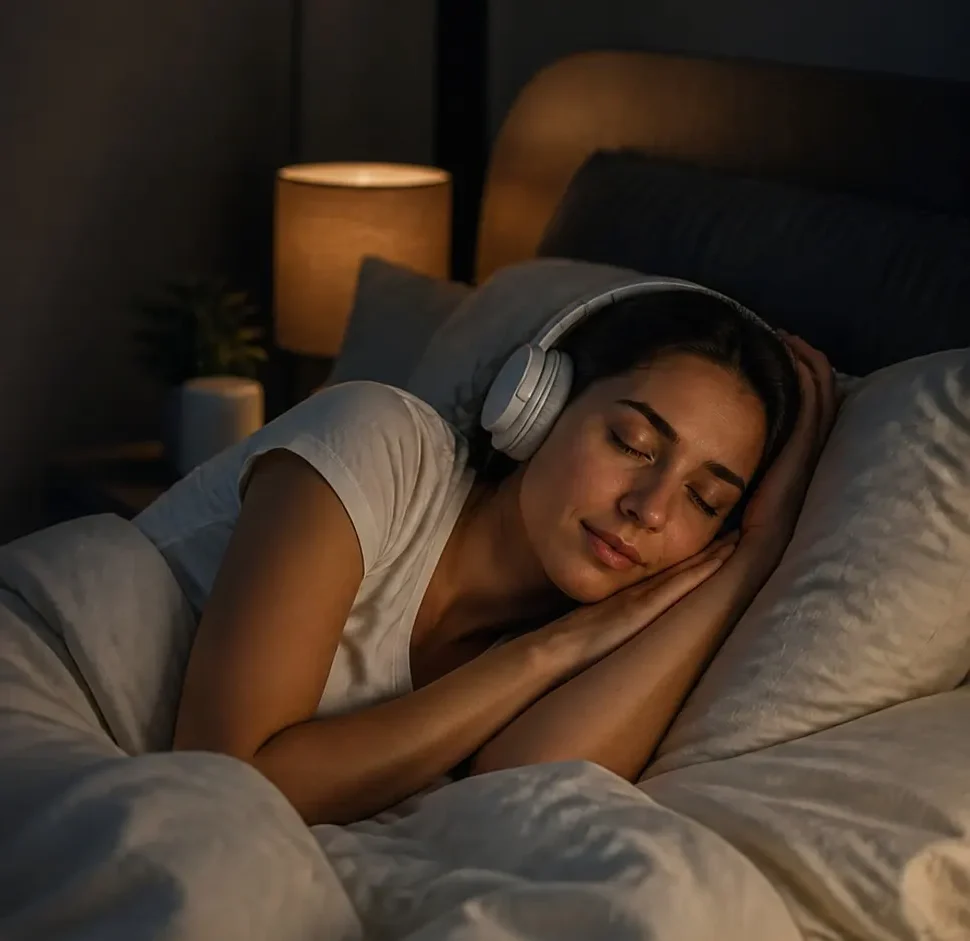
If you use earbuds or headphones in bed, keep the volume low and choose a pair designed for sleep. Our guide to sleep earbuds and headphones covers comfort for side sleepers and features like soft bands and sleep timers. A speaker on the nightstand is often the simpler choice, since it puts less pressure on your ears and keeps the sound at a distance.
Calm the Stress Loop Before Bed
Mayo Clinic notes that stress can make tinnitus worse, and that many people with tinnitus also deal with anxiety, depression, or insomnia. That’s why winding down matters as much as the sound machine.
Try a short, repeatable routine in the last 30 to 60 minutes before bed:
- Dim the lights and put your phone on the charger across the room.
- Do a calming exercise such as box breathing or progressive muscle relaxation.
- Listen to something quiet and familiar, like a low audiobook, a calm podcast, or a sleep meditation.
- Get into bed when you feel sleepy, not just because it’s a certain time.
If your mind tends to spin about the ringing, it helps to name the thought (“there it is again”) and gently bring your attention back to your breath or the background sound. Our guide to sleeping with anxiety has more techniques for a racing mind.
Watch Caffeine, Alcohol, and Nicotine
Mayo Clinic lists limiting alcohol, caffeine, and nicotine among its self-care tips, since these substances, especially in excess, can affect blood flow and make tinnitus worse. They also hurt sleep on their own.
- Caffeine: Many sleep experts suggest a cutoff about eight hours before bed. Our guide to caffeine and sleep explains why the afternoon latte matters.
- Alcohol: A nightcap may make you drowsy, but it tends to break up sleep in the second half of the night. See alcohol and sleep.
- Nicotine: It’s a stimulant, so smoking or vaping close to bedtime can keep you more alert.
Everyone is different, so notice your own patterns. Some people find that a salty dinner, a long day of loud noise, or poor sleep the night before makes their tinnitus louder the next evening.
What to Do When You Wake Up and Hear It
Waking at 2 or 3 a.m. and hearing the ringing loud and clear is one of the hardest parts of tinnitus. Try not to check the clock, since doing the math on how much sleep you have left adds pressure. Make sure your background sound is still on, take a few slow breaths, and let your body stay heavy.
If you’re still wide awake after what feels like 20 minutes, get up and do something calm in dim light, then return to bed when you feel sleepy. Our guide to waking up in the middle of the night explains why this works better than lying there trying to force sleep.
Treatments That Can Help Long Term
If tinnitus regularly keeps you up, talk with a healthcare provider or an audiologist. Mayo Clinic and NIDCD describe several options:
- Treating the cause. Earwax removal, changing a medicine that causes tinnitus, or treating a blood vessel condition such as high blood pressure can ease symptoms for some people.
- Hearing aids. NIDCD calls hearing aids one of the main treatment options for people with tinnitus who also have hearing loss. They make outside sounds easier to hear, which can make tinnitus less noticeable.
- Cognitive behavioral therapy (CBT). CBT teaches you to change how you think and react to tinnitus. It’s offered in person, in groups, and online, and it can also help with insomnia and anxiety.
- Tinnitus retraining therapy (TRT). This combines a sound device with counseling from a trained professional, so over time you notice the tinnitus less.
- Masking devices. Worn in the ear like a hearing aid, these make a steady, low-level sound that suppresses tinnitus.
Mayo Clinic notes there’s little evidence that alternative remedies such as ginkgo biloba, melatonin, zinc, or acupuncture help tinnitus. If you’re thinking about a supplement for sleep, ask your doctor first. Our guide to melatonin for sleep explains when it may help sleep timing in general.
When to See a Doctor
Most tinnitus isn’t a sign of anything serious, but some patterns are worth a prompt checkup. Talk with a healthcare provider if your tinnitus:
- Started suddenly or recently, especially after a cold, an injury, or a loud event
- Is only in one ear
- Pulses or whooshes in time with your heartbeat
- Comes with hearing loss, dizziness, or a feeling of fullness in the ear
- Is making you anxious, low, or unable to sleep most nights
Sudden hearing loss in one ear should be checked right away, since quick treatment matters. An ear, nose, and throat doctor (otolaryngologist) or an audiologist can test your hearing and look for a cause.
The Bottom Line
You can sleep with tinnitus. The most useful steps are simple: don’t sleep in silence, keep the background sound soft and steady, wind down in a way that calms your nervous system, and go easy on caffeine and alcohol. If the ringing is new, one-sided, pulsing, or wearing you down, see a professional. Hearing aids, CBT, and sound therapy help many people notice tinnitus less and sleep better.
For more ways to build a calm, sleep-friendly room, see our guide to the perfect sleep environment.
FAQ: How to Sleep With Tinnitus
What is the best sound to sleep with tinnitus?
There’s no single best sound. Many people like rain, ocean waves, a fan, or soft white or pink noise. Pick a steady sound you find pleasant, keep it low, and let it run all night.
Should I sleep with earplugs if I have tinnitus?
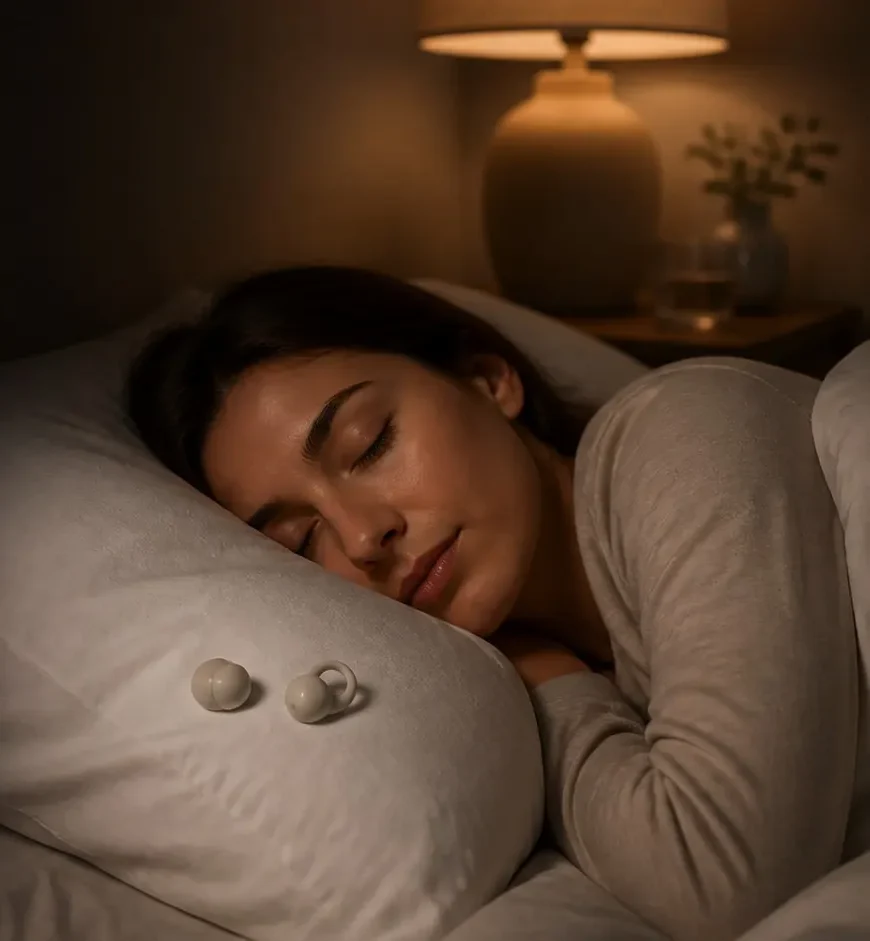
Earplugs block outside sound, which can make tinnitus seem louder in a quiet room. If you need earplugs for a snoring partner or street noise, pair them with a low sound source, or talk with an audiologist about the best option for you.
Can tinnitus go away on its own?
Sometimes. Tinnitus after a loud concert or a cold often fades, and tinnitus caused by earwax or a medicine may improve when the cause is treated. Long-lasting tinnitus often has no cure, but treatments like sound therapy, hearing aids, and CBT can make it much less bothersome.
Does melatonin help tinnitus?
Mayo Clinic says there’s little evidence that melatonin treats tinnitus itself. It may help some people with sleep timing, but talk with your doctor before starting any supplement.
Is it safe to fall asleep with headphones on?
It can be if the volume is low and the headphones are comfortable. Keep the sound well below conversation level and choose sleep-friendly earbuds or a soft headband, or use a bedside speaker instead.
This article is for general information only and isn’t a substitute for medical advice. If your tinnitus is new, in one ear, pulsing, or comes with hearing loss, dizziness, or ear pain, talk with a healthcare provider. Seek prompt care for sudden hearing loss.
General guidance, not medical advice. If a sleep problem persists or gets worse, speak to a qualified clinician. Medical disclaimer