Magnesium has quietly become the internet’s favourite bedtime supplement stirred into mocktails, sold in dreamy powders, and recommended all over social media. But does it actually help you sleep, or is it just clever marketing?
The honest answer: for many people it can help, modestly especially if you’re not getting enough magnesium to begin with. Here’s what the science really says, the best type of magnesium for sleep, how much to take and when, and the products worth considering. It shows up in the viral bedtime drink too; this recipe page is the practical version. Melatonin is a different tool with different timing; this safer-use guide keeps the two from getting mixed. For a wider look at the mineral itself, see this overview.
This article contains affiliate links. If you buy through them, we may earn a small commission at no extra cost to you.
How Magnesium Helps You Sleep
Magnesium is an essential mineral involved in hundreds of processes in your body including several that directly affect sleep. It helps calm your nervous system by activating the “rest-and-digest” (parasympathetic) side of things, shifting you out of fight-or-flight mode. It also supports GABA, a calming brain chemical that helps quiet a racing mind and ease you toward sleep, and it relaxes tense muscles.
There’s also a simple reason it helps so many people: a lot of us are running low. An estimated half of adults in developed countries get less magnesium than recommended, and low levels are linked to poorer, more restless sleep. If you’re in that group, topping up can make a real difference.
Does Magnesium Actually Work for Sleep?
Here’s the honest, evidence-based picture: magnesium can modestly improve sleep for some people particularly older adults and anyone who is deficient. Small controlled studies and a 2022 review have found improvements in how quickly people fall asleep and in overall sleep quality, with the strongest effects in those with low magnesium to begin with.
That said, the overall evidence is still mixed, and magnesium is not a knockout sleeping pill. Think of it as a gentle support that works best alongside good sleep habits not a cure for genuine insomnia. Keep your expectations realistic and give it time, because the effects build gradually rather than hitting on night one.
The Best Type of Magnesium for Sleep
This is where most people go wrong the form of magnesium matters more than the number on the front of the bottle.
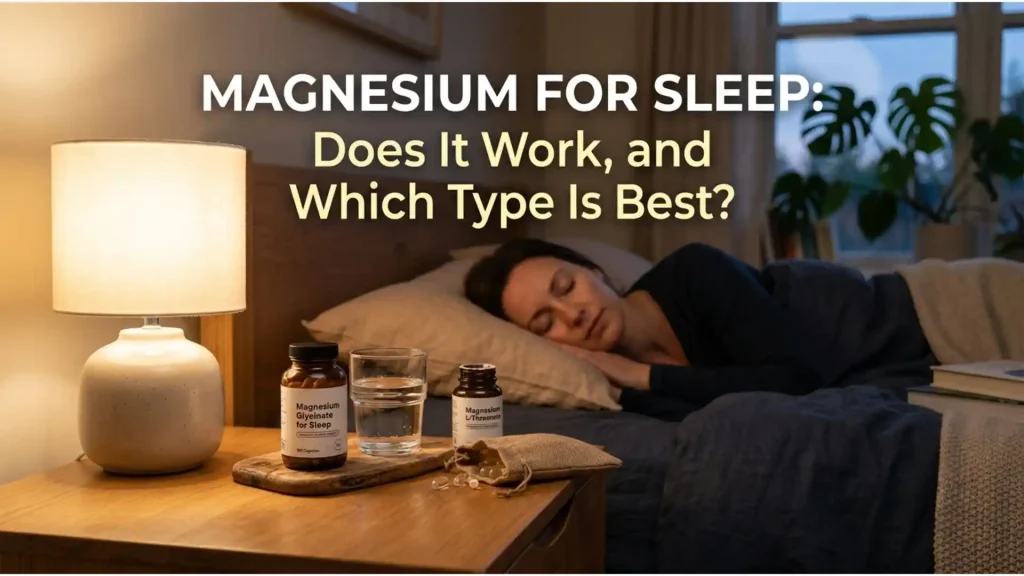
Magnesium glycinate (also sold as bisglycinate) is the top choice for sleep. It’s well absorbed, gentle on the stomach, and bound to glycine an amino acid that has its own calming, sleep-promoting effect. That double action makes it ideal for nightly use and for stress-related, racing-mind sleeplessness.
Magnesium citrate is also well absorbed and has solid evidence, but it has a noticeable laxative effect, so it’s better suited to people who also deal with constipation.
Magnesium L-threonate is a newer form marketed for crossing the blood-brain barrier and calming an overactive mind. It’s promising for mental “can’t switch off” sleeplessness, though the sleep evidence is still limited.
Magnesium oxide is cheap but poorly absorbed fine for occasional constipation, not the best pick for sleep. And topical magnesium sprays and lotions are popular but absorb poorly through the skin; experts generally recommend an oral supplement instead.
In short: for most people chasing better sleep, magnesium glycinate is the one to start with.
How Much Magnesium Should You Take for Sleep?
A typical sleep dose is 200–400 mg of elemental magnesium, taken about 30 to 120 minutes before bed. It’s smart to start low around 100–200 mg and increase gradually over a week or two only if you need to.
Two important notes: First, check the label carefully: it often lists the total compound weight, not the elemental magnesium, which is the number that matters. Second, most adults should stay at or below 350 mg per day from supplements unless a doctor advises otherwise. And be patient some people notice a difference within days, but the full effect usually builds over two to four weeks of consistent use.
Best Magnesium Supplements for Sleep
Look for a glycinate (or bisglycinate) form from a reputable brand, ideally third-party tested, with the elemental dose clearly stated. A few popular, well-reviewed options:
Powders that double as a bedtime ritual, like Moon Juice Magnesi-Om and Natural Vitality CALM, dissolve into a drink and often blend several forms. Capsule glycinate formulas from trusted supplement brands are great if you prefer something simple and flavourless. And blends that pair magnesium with L-theanine, glycine, or a little melatonin can add extra wind-down support for racing minds just use melatonin short-term.
Whichever you choose, start with a lower serving to see how your body responds.
Safety and Who Should Be Careful
Magnesium is safe for most healthy adults at sensible doses, but a little caution goes a long way. Too much at once or the wrong form can cause loose stools or stomach upset, which is why glycinate (gentler) and a low starting dose are wise. Magnesium can also interact with certain medications, including some antibiotics and blood-pressure drugs. If you’re pregnant or breastfeeding, take regular medication, or have kidney issues, talk to your doctor before starting. As always, a supplement supports good habits — it doesn’t replace them.
The Bottom Line
Magnesium can be a gentle, genuinely helpful sleep aid especially if you’re low on it even if it’s no miracle cure. For most people, magnesium glycinate at 200–400 mg of elemental magnesium, taken 30–120 minutes before bed, is the best place to start. Give it a few weeks, pair it with solid sleep habits, and check with your doctor if you take other medications. Done right, it’s an easy, affordable addition to your nighttime routine.
Frequently Asked Questions

Daniel Foster reviews mattresses, pillows, and sleep accessories while sharing practical insights on bedroom comfort and sleep setups. His content focuses on usability, comfort, and everyday user experience to help readers explore different sleep products more confidently. Daniel writes the site's hands-on product reviews, buying guides, and head-to-head comparisons.
All guides by Daniel FosterGeneral guidance, not medical advice. If a sleep problem persists or gets worse, speak to a qualified clinician. Medical disclaimer