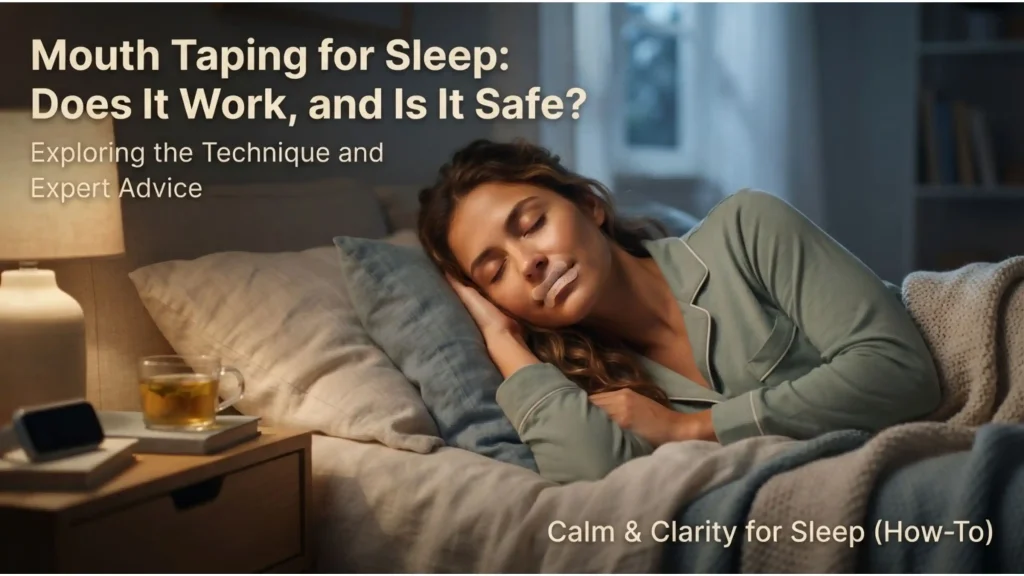
Mouth taping literally taping your lips shut at night to force nasal breathing has gone viral on social media, with fans claiming it stops snoring, cures dry mouth, and transforms sleep. But behind the hype, sleep experts have real concerns. Before you tape anything to your face, here’s an honest look at what the evidence says, and the risks you absolutely need to know.
Important: this article is general information, not medical advice. Mouth taping can be dangerous for some people. Talk to a doctor before trying it especially if you snore or have any breathing issues.
The Idea Behind Mouth Taping
The theory is that breathing through your nose (rather than your mouth) is healthier it filters and humidifies air, may support better oxygen use, and could reduce snoring and dry mouth. Mouth taping aims to force nasal breathing by keeping your lips closed overnight. That’s the pitch, anyway.
What the Evidence Actually Says
Here’s the honest truth: the science is thin. There’s little high-quality research showing mouth taping meaningfully improves sleep, and most of the enthusiasm comes from social media testimonials rather than solid studies. A few small studies have looked at it in specific groups, but the overall evidence is limited and far from convincing. In short, the benefits are largely unproven.
The Real Risks (Read This First)
This is where caution matters most, because mouth taping isn’t harmless: For a wider look at the underlying science, see this overview.
It can be dangerous for people with sleep apnea. This is the big one. If you have obstructive sleep apnea diagnosed or undiagnosed taping your mouth shut can block a vital backup airway and make dangerous breathing pauses worse. Since many people with apnea don’t know they have it, and loud snoring is a key sign, this risk is easy to stumble into.
It’s a problem if your nose is blocked. With congestion, a cold, allergies, or a structural issue like a deviated septum, taping your mouth can leave you struggling to breathe.
Other downsides. Skin irritation from the adhesive, anxiety or panic from the restricted feeling, and a risk of choking if you feel nauseous or vomit.
Because of these risks, a number of sleep specialists advise against mouth taping, particularly without medical guidance.
Who Should Never Try It
Steer clear entirely if you have (or might have) sleep apnea, if you snore loudly, if you have nasal congestion or trouble breathing through your nose, or if you have heart or breathing conditions. It should never be used on children. If any of these apply, mouth taping isn’t a shortcut it’s a hazard.
Safer Ways to Get the Same Goals
The good news is you can chase the actual benefits less snoring, less dry mouth, better breathing far more safely. Treat nasal congestion and allergies so you can breathe through your nose naturally. Try side sleeping and raising the head of your bed to reduce snoring. Use a humidifier for dry mouth, and stay hydrated. And most importantly, if you snore or wake up unrefreshed, see a doctor to check for sleep apnea rather than taping over the symptom.
The Bottom Line
Mouth taping is a viral trend with plenty of confident claims but little solid evidence — and real, potentially serious risks, especially for anyone with sleep apnea or nasal issues. It’s not a safe DIY fix for snoring. If nasal breathing, snoring, or dry mouth is your concern, pursue the safer strategies above and talk to a doctor first. When it comes to your airway at night, caution isn’t optional.

Michael Reeves covers topics related to sleep quality, bedroom comfort, and modern lifestyle habits. He enjoys researching sleep products, recovery routines, and productivity-focused wellness practices to create informative and reader-friendly content. Michael writes about bedroom setup, recovery, and the connection between sleep quality and how you feel during the day.
All guides by Michael ReevesGeneral guidance, not medical advice. If a sleep problem persists or gets worse, speak to a qualified clinician. Medical disclaimer