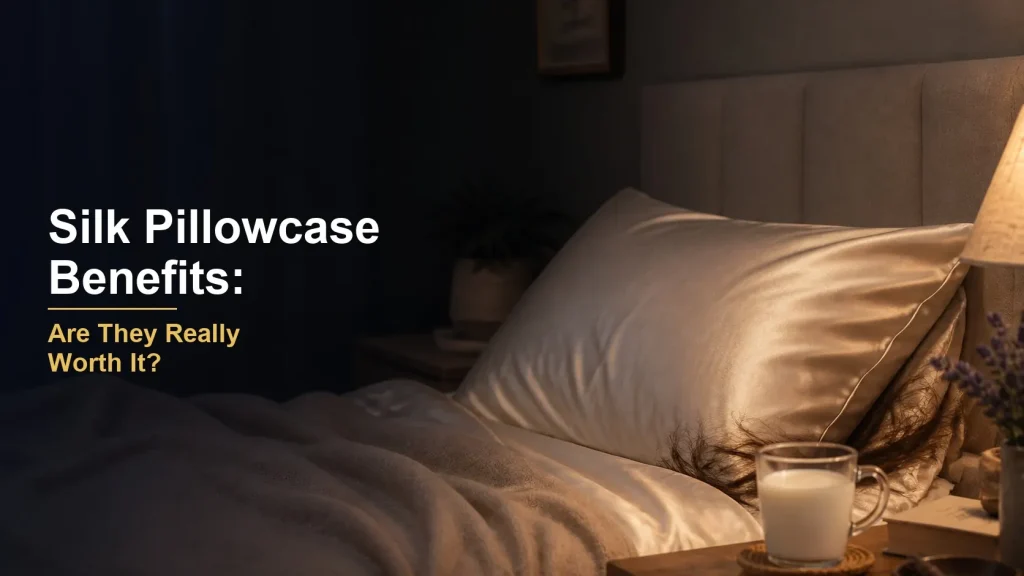
Silk pillowcases are everywhere — praised by dermatologists, hairstylists, and beauty influencers alike. But are they genuinely worth the higher price, or is it just luxury marketing? The truth is there are real, practical benefits behind the hype. Here’s what a silk pillowcase actually does for your skin, hair, and sleep, and how to choose one.
This article contains affiliate links. If you buy through them, we may earn a small commission at no extra cost to you.
The Real Benefits of a Silk Pillowcase
It’s gentler on your skin. This is the headline benefit. Silk’s smooth surface creates far less friction than cotton, so your skin glides rather than drags against it. That means fewer “sleep creases” pressed into your face and less tugging on delicate skin — which is why many people find silk gentler and less likely to contribute to lines over time. Silk is also less absorbent than cotton, so it won’t wick away as much of your skin’s (and your skincare’s) moisture overnight. For a wider look at the underlying science, see this overview.
It’s kinder to your hair. For hair, the reduced friction is a game-changer. Silk causes less breakage, frizz, tangling, and static than cotton, helping your hair stay smoother and more hydrated — a particular win for curly, textured, long, or fragile hair, and for preserving a blow-dry or hairstyle overnight.
It helps regulate temperature. Silk is naturally breathable and temperature-regulating, so it tends to feel cool and comfortable — a nice bonus for hot sleepers.
It’s gentle and low-irritation. Because silk is smooth and less absorbent, it’s often favored by people with sensitive or acne-prone skin, and it can be a good choice for allergy-conscious sleepers.
What to Realistically Expect
Let’s be honest about the claims. The friction-related benefits are real — less creasing, less hair breakage, smoother skin and hair. Some of the bigger “anti-aging” claims are more modest; a pillowcase won’t erase wrinkles. But as a small, low-effort upgrade that genuinely helps your skin and hair while feeling lovely, a silk pillowcase earns its place for many people.
Silk vs. Satin: What’s the Difference?
This trips a lot of people up. Silk is a natural protein fibre — luxurious, breathable, and pricier. Satin is a weave, not a fibre, and is often made from polyester or other synthetics, making it much more affordable. The good news: satin offers a lot of the same smooth, low-friction benefits for hair and skin at a lower price, though silk is more breathable, natural, and durable. If budget is a concern, a satin pillowcase is a solid, wallet-friendly alternative.
How to Choose (and Care for) a Silk Pillowcase
Look for 100% mulberry silk, which is the highest quality, and check the momme (a measure of silk weight) — around 19 to 25 momme is durable and luxurious. To care for it, wash gently (cool water, mild detergent, a laundry bag or hand-wash) and air dry, avoiding harsh heat, to keep it smooth and long-lasting.
The Bottom Line
A silk pillowcase is one of those rare upgrades that’s both indulgent and genuinely useful: its smooth, low-friction surface is kinder to your skin (fewer creases, less irritation) and your hair (less breakage and frizz), and it feels cool and luxurious. The anti-aging claims are modest, but the everyday benefits are real. If it’s out of budget, a satin pillowcase delivers much of the same friction benefit for less. Either way, it’s a small change that makes waking up a little nicer.
It still has to sit on the right pillow, and it works better in a cooler, darker room.
Frequently Asked Questions
Are silk pillowcases worth it?
For many people, yes. Silk’s smooth, low-friction surface is genuinely gentler on skin (fewer sleep creases and less irritation) and hair (less breakage, frizz, and tangling), and it feels cool and luxurious. The anti-aging claims are modest, but the everyday benefits are real.
What are the benefits of a silk pillowcase for hair?
Silk causes much less friction than cotton, so it reduces hair breakage, frizz, tangling, and static, and helps hair retain moisture. It’s especially beneficial for curly, textured, long, or fragile hair, and for preserving a hairstyle overnight.
Are silk pillowcases good for your skin?
Yes. The smooth surface reduces friction and sleep creases, and silk is less absorbent than cotton, so it draws less moisture from your skin and skincare. Many people with sensitive or acne-prone skin prefer it, though it won’t erase wrinkles.
Silk or satin pillowcase — which is better?
Silk is a natural fibre that’s breathable, durable, and pricier; satin is a weave (often polyester) that’s more affordable. Satin offers much of the same low-friction benefit for hair and skin at a lower cost, while silk is more breathable and natural. Both are good choices.
How do I choose a good silk pillowcase?
Look for 100% mulberry silk with a momme weight of around 19–25 for durability and quality. Wash it gently in cool water with mild detergent (a laundry bag or hand-washing helps) and air dry to keep it smooth and long-lasting.

Daniel Foster reviews mattresses, pillows, and sleep accessories while sharing practical insights on bedroom comfort and sleep setups. His content focuses on usability, comfort, and everyday user experience to help readers explore different sleep products more confidently. Daniel writes the site's hands-on product reviews, buying guides, and head-to-head comparisons.
All guides by Daniel FosterGeneral guidance, not medical advice. If a sleep problem persists or gets worse, speak to a qualified clinician. Medical disclaimer