Scroll social media lately and you’ll see it everywhere: people taping their mouths, sipping “sleepy girl mocktails,” and stacking gadget after gadget in pursuit of the perfect night’s rest. Welcome to sleepmaxxing — the viral trend of optimizing your sleep to the max. But which of these hacks actually work, which are hype, and can you take it too far? Here’s an honest guide.
What Is Sleepmaxxing?
Sleepmaxxing is exactly what it sounds like: maximizing your sleep using every tactic, habit, and product you can, to get the best possible quantity and quality of rest. Fueled by social media, it’s turned sleep into a wellness project, with people sharing elaborate nighttime routines and gadgets. At its core, it reflects something genuinely positive — people finally taking sleep seriously as a pillar of health. The trick is separating the science from the fads. For a wider look at the underlying science, see published guidance.
Sleepmaxxing Techniques That Actually Work
The good news: many popular sleepmaxxing habits are genuinely backed by evidence. These are the ones worth your energy:
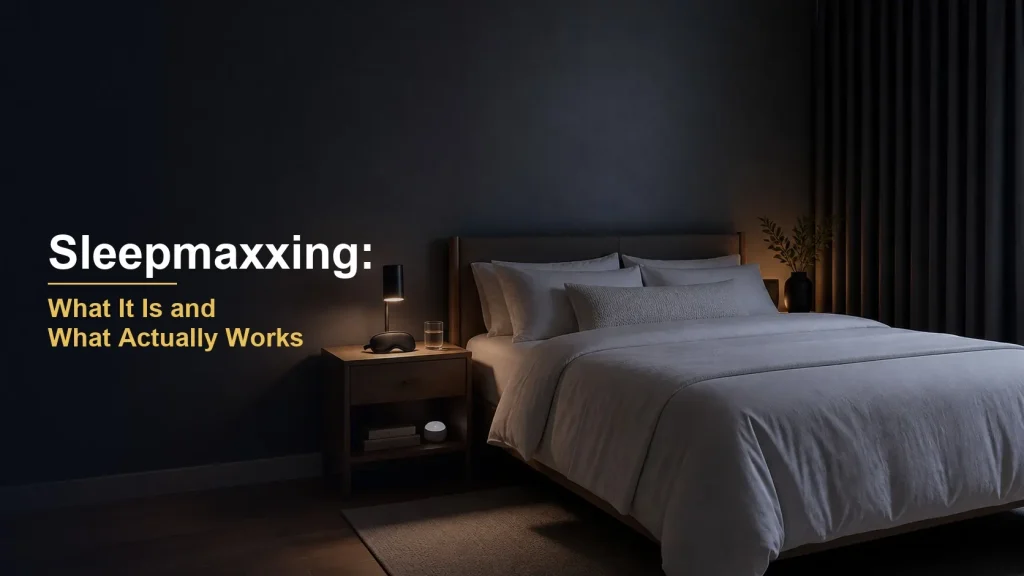
A consistent sleep schedule — the single most powerful sleep habit there is. A cool, dark, quiet bedroom — blackout curtains, a comfortable temperature, and an eye mask genuinely improve sleep. Morning light exposure to anchor your body clock. A screen-free wind-down before bed. Limiting caffeine and alcohol, especially later in the day. Magnesium (helpful particularly if you’re low in it) and sleep-supporting foods like kiwi or tart cherry. And relaxing rituals like a warm shower, breathing exercises, or a calming bedtime drink. In short, the best of sleepmaxxing is simply good sleep hygiene, done consistently.
The Hype (and the Risky Stuff)
Not everything trending is worth doing — and some of it can backfire:
Mouth taping is hugely popular but has limited evidence and real risks, especially for anyone with undiagnosed sleep apnea. It’s one to approach with caution and a doctor’s input, not because a video told you to.
Gadget overload can be more marketing than magic. Plenty of pricey “sleep tech” delivers little beyond what a dark, cool room already does.
Obsessing over sleep trackers can genuinely backfire. There’s even a term — orthosomnia — for the anxiety people develop chasing “perfect” sleep scores. Fixating on your data can make you more stressed about sleep, which harms it.
The Biggest Risk: Sleep Anxiety
Here’s the irony at the heart of sleepmaxxing: trying too hard to sleep perfectly can wreck your sleep. Sleep is a relaxed, passive process — the more pressure and perfectionism you pile onto it, the harder it becomes. If your nightly routine turns into a stressful checklist, or you lie awake worrying about optimizing every metric, you’ve missed the point. The goal is restful sleep, not a perfect performance.
How to Sleepmaxx the Smart Way
Take the best of the trend and leave the rest. Build your routine on the proven fundamentals — consistent schedule, dark cool room, wind-down, morning light, sensible caffeine limits. Add one or two extras you genuinely enjoy (a calming drink, magnesium, an eye mask) if they help. Skip the risky or unproven fads, and check with a doctor before anything involving your breathing or health. And most importantly, keep it relaxed and sustainable — a few solid habits you actually stick to beat an elaborate routine that stresses you out.
The Bottom Line
Sleepmaxxing, at its best, is a great thing: it’s people taking sleep seriously and building genuinely healthy habits. The proven fundamentals — consistent timing, a cool dark room, a calm wind-down, and morning light — are absolutely worth “maxxing.” But skip the risky fads like unsupervised mouth taping, don’t get lost in gadgets and tracker anxiety, and never let optimizing sleep become a source of stress. The best sleepmaxxing is simple, evidence-based, and relaxed.
Frequently Asked Questions
What is sleepmaxxing?
Sleepmaxxing is the trend of maximizing your sleep quality and quantity using a range of habits, techniques, and products. Popularized on social media, it reflects people taking sleep seriously as part of their health — though not every trending hack is worth doing.
Does sleepmaxxing actually work?
The evidence-based parts do. Habits like a consistent schedule, a cool dark room, morning light, a screen-free wind-down, and limiting caffeine genuinely improve sleep. Other trends are hype or even risky, so it’s about choosing the proven techniques and skipping the fads.
Is mouth taping a good sleepmaxxing technique?
It’s popular but questionable. Mouth taping has limited evidence and real risks, particularly for people with undiagnosed sleep apnea. It’s best approached cautiously and with a doctor’s input rather than because it’s trending.
Can sleepmaxxing be bad for you?
It can backfire if taken too far. Obsessing over sleep trackers can cause anxiety about achieving “perfect” sleep (called orthosomnia), and turning your routine into a stressful checklist can make sleep harder. Sleep works best when it’s relaxed, not forced.
What’s the best way to sleepmaxx?
Focus on the proven fundamentals — a consistent schedule, a cool dark quiet room, a calm wind-down, morning light, and sensible caffeine and alcohol limits. Add a couple of extras you enjoy, skip risky fads, and keep the whole thing relaxed and sustainable.

Michael Reeves covers topics related to sleep quality, bedroom comfort, and modern lifestyle habits. He enjoys researching sleep products, recovery routines, and productivity-focused wellness practices to create informative and reader-friendly content. Michael writes about bedroom setup, recovery, and the connection between sleep quality and how you feel during the day.
All guides by Michael ReevesGeneral guidance, not medical advice. If a sleep problem persists or gets worse, speak to a qualified clinician. Medical disclaimer