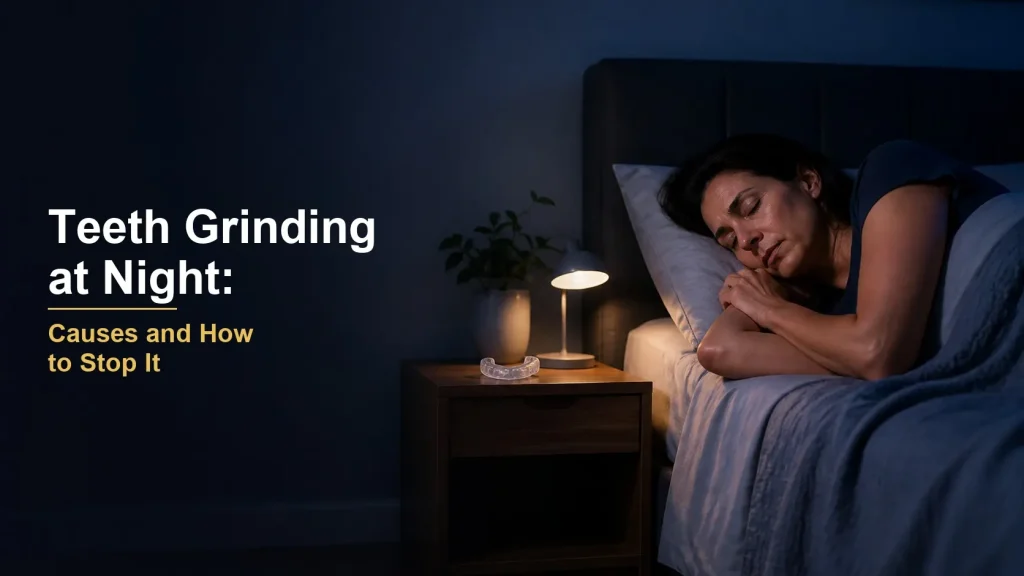
Waking with a sore jaw, a dull headache, or sensitive teeth? You might be grinding or clenching your teeth in your sleep without even knowing it. Nighttime teeth grinding — known as sleep bruxism — is surprisingly common, and left unchecked it can damage your teeth and disrupt your rest. Here’s what causes it and how to stop.
This article is general information, not medical or dental advice. For teeth grinding, see your dentist for proper assessment and treatment.
What Is Sleep Bruxism?
Sleep bruxism is the involuntary grinding or clenching of your teeth during sleep. Because it happens while you’re unconscious, many people don’t realize they do it until a partner hears the grinding or a dentist spots the wear. It’s considered a sleep-related movement behavior, and it can range from occasional to frequent and forceful. For a wider look at the underlying science, see this overview.
Signs You Might Be Grinding Your Teeth
Common clues include a sore or tight jaw (especially in the morning), headaches around your temples, tooth pain or sensitivity, worn-down or chipped teeth, clicking or aching in the jaw joint, disrupted sleep, and a partner reporting the sound of grinding at night. If several of these sound familiar, bruxism could be the cause.
What Causes Teeth Grinding at Night?
The causes aren’t fully pinned down, but several factors are strongly linked:
Stress and anxiety. This is the most common driver — tension and worry often translate into nighttime clenching.
Sleep-related arousals. Bruxism tends to occur alongside brief awakenings during sleep, and it’s associated with sleep disorders, including sleep apnea.
Lifestyle factors. Caffeine, alcohol, smoking, and some recreational substances can increase grinding.
Certain medications. A few, including some antidepressants, list teeth grinding as a possible side effect.
Interestingly, sleep bruxism is also a common physical trigger behind those unsettling “teeth falling out” dreams — the real jaw pressure gets woven into the dream.
Why It’s Worth Addressing
Bruxism isn’t just annoying. Over time, the forceful grinding can wear down, crack, or damage teeth, cause jaw pain and TMJ problems, trigger chronic headaches, and disrupt your (and your partner’s) sleep. Catching and managing it early protects both your teeth and your rest.
How to Stop Grinding Your Teeth
See your dentist about a night guard. This is the frontline solution. A custom-fitted mouth guard (or splint) worn at night cushions your teeth and protects them from the damage of grinding. Your dentist can also check for wear and rule out other issues.
Manage stress. Since stress is the biggest trigger, a calming bedtime routine, relaxation techniques, journaling, or breathing exercises can genuinely reduce grinding.
Cut back on triggers. Reducing caffeine, alcohol, and smoking, especially in the evening, often helps.
Relax your jaw. Consciously unclenching during the day (lips together, teeth apart) and gentle jaw stretches or a warm compress before bed can ease tension.
Treat underlying sleep issues. If bruxism comes with loud snoring or daytime exhaustion, get checked for sleep apnea, since treating it may reduce the grinding.
When to See a Dentist or Doctor
See your dentist if you notice tooth wear, damage, sensitivity, jaw pain, or frequent morning headaches, or if a partner hears you grinding. They can fit a night guard and protect your teeth, and help identify the cause. If grinding comes with signs of a sleep disorder like apnea, a doctor should be involved too. Don’t ignore ongoing grinding — early action prevents lasting damage.
The Bottom Line
Sleep bruxism — grinding or clenching your teeth at night — is common, often stress-driven, and easy to miss, but it can damage your teeth and disrupt your sleep. The main protection is a dentist-fitted night guard, alongside managing stress, cutting evening caffeine and alcohol, relaxing your jaw, and treating any underlying sleep disorder. If you suspect you’re grinding, see your dentist — your teeth and your rest are worth protecting.
Frequently Asked Questions
How do I know if I grind my teeth in my sleep?
Common signs include a sore jaw, morning headaches around the temples, tooth pain or sensitivity, worn or chipped teeth, jaw clicking, and a partner hearing grinding at night. A dentist can confirm it by spotting characteristic wear on your teeth.
What causes teeth grinding at night?
The most common trigger is stress and anxiety. It’s also linked to brief sleep arousals and sleep disorders like apnea, and can be increased by caffeine, alcohol, smoking, and certain medications. The exact cause isn’t fully understood.
How do I stop grinding my teeth at night?
See your dentist about a custom night guard to protect your teeth, and manage stress with a calming routine and relaxation techniques. Cutting evening caffeine and alcohol, relaxing your jaw, and treating any underlying sleep disorder also help.
Is teeth grinding harmful?
It can be. Over time, grinding can wear down, crack, or damage teeth, cause jaw pain and TMJ problems, trigger chronic headaches, and disrupt sleep. That’s why it’s worth addressing early with a dentist.
Can stress cause teeth grinding?
Yes — stress and anxiety are the most common triggers for sleep bruxism. Tension often translates into nighttime clenching and grinding, which is why stress-reduction techniques can meaningfully reduce it.

Emily Carter writes about sleep routines, nighttime habits, and wellness-focused lifestyle improvements. Her content at The Way We Sleep focuses on practical sleep tips, relaxation methods, and everyday strategies that can help readers create healthier sleep environments. Emily covers nightly routines, relaxation techniques, and the small lifestyle shifts that add up to better rest.
All guides by Emily CarterGeneral guidance, not medical advice. If a sleep problem persists or gets worse, speak to a qualified clinician. Medical disclaimer