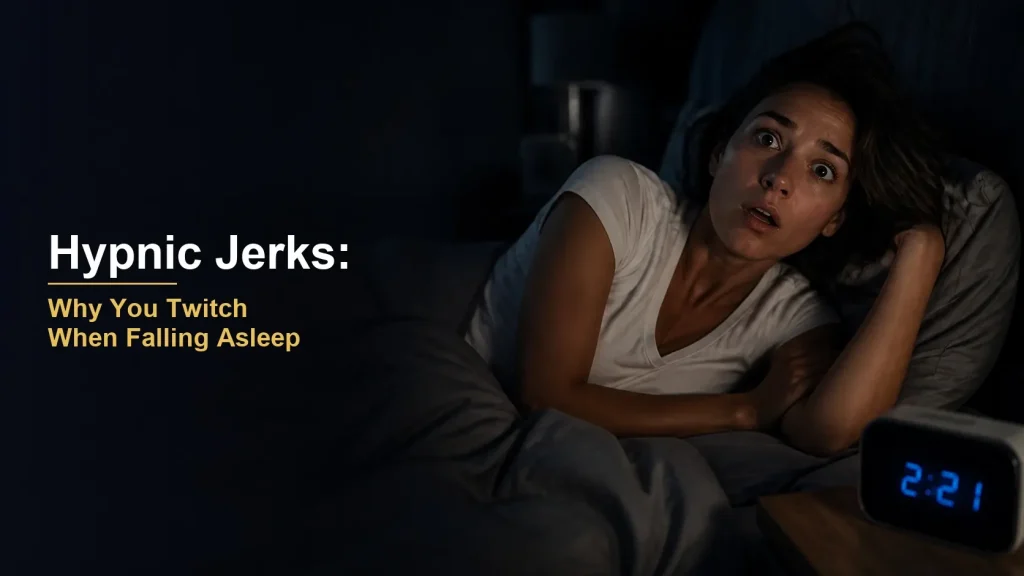
You’re just drifting off when — jolt! — your whole body twitches, often with a startling sensation of falling, and you’re suddenly wide awake again. If this happens to you, don’t worry: it’s incredibly common, has a name, and is almost always completely harmless. Here’s what a hypnic jerk is, why it happens, and how to have fewer of them.
What Is a Hypnic Jerk?
A hypnic jerk (also called a hypnagogic jerk or “sleep start”) is a sudden, involuntary muscle contraction that happens as you’re falling asleep. It often involves your legs or your whole body, and is frequently accompanied by a vivid sensation of falling, a flash of light or sound, or a dream-like image of tripping or slipping. Then you jolt awake. It’s a normal event that most people experience from time to time — surveys suggest the majority of people get them occasionally. For a wider look at the underlying science, see this overview.
Why Do Hypnic Jerks Happen?
Scientists aren’t 100% certain, but the leading explanation is elegant. As you drift toward sleep, your muscles relax and your body’s systems slow down. Sometimes your brain, in that hazy transition between wakefulness and sleep, seems to misread the deep relaxation as falling — and fires off a sudden muscle jerk as a kind of protective “catch yourself” reflex. That’s why the twitch so often comes bundled with a falling sensation and a jolt of alarm. It’s essentially a small hiccup at the border between waking and sleep, and it’s not a sign that anything is wrong.
Are Hypnic Jerks Harmful?
No — hypnic jerks are benign and harmless. They’re not a sign of a health problem or a sleep disorder, and they don’t damage anything. The only real downside is that a strong one can startle you awake and briefly delay you from falling asleep. For most people they’re just an occasional, harmless quirk of drifting off.
What Makes Them Worse?
While you can’t always prevent them, certain things seem to make hypnic jerks more frequent or intense:
Caffeine and stimulants, especially later in the day. Stress and anxiety, which keep your nervous system revved up. Sleep deprivation and being overtired. Vigorous exercise late in the evening, which can leave your body too stimulated to settle. And sometimes an uncomfortable or awkward sleeping position. Notice a pattern? These are mostly things that keep your body and mind aroused when they should be winding down.
How to Reduce Hypnic Jerks
Since the triggers are mostly about being wired or overtired, the fixes are gentle lifestyle tweaks: cut back on caffeine, particularly in the afternoon and evening. Manage stress with a calming wind-down routine. Get enough sleep so you’re not overtired. Avoid intense workouts too close to bedtime, opting for earlier exercise or gentle stretching at night. And create a comfortable, relaxing sleep setup. None of these guarantee a jerk-free night, but together they often reduce how often the jolts strike.
When to See a Doctor
Hypnic jerks almost never need medical attention. However, if you experience frequent, violent, or repetitive muscle movements or twitching during sleep (as opposed to the occasional single jerk as you fall asleep), or if movements are disrupting your sleep regularly, it’s worth mentioning to a doctor to rule out other conditions. For the classic occasional jolt as you drift off, though, there’s nothing to worry about.
The Bottom Line
That sudden twitch and falling sensation as you fall asleep is a hypnic jerk — a common, harmless hiccup at the boundary between waking and sleep, likely caused by your brain briefly misreading relaxation as falling. It’s nothing to worry about, though cutting back on caffeine, managing stress, getting enough sleep, and avoiding late intense exercise can make them less frequent. So the next time you jolt awake, you can relax: it’s just your brain being a little overprotective on the way to dreamland.
Frequently Asked Questions
What is a hypnic jerk?
A hypnic jerk (or “sleep start”) is a sudden, involuntary muscle twitch that happens as you fall asleep, often with a sensation of falling and a jolt awake. It’s very common and completely harmless — most people experience them occasionally.
Why do I twitch when falling asleep?
The leading theory is that as your muscles relax toward sleep, your brain briefly misreads the deep relaxation as falling and fires a protective muscle jerk to “catch” you. That’s why the twitch often comes with a falling sensation. It’s a normal quirk of the sleep transition.
Are hypnic jerks dangerous?
No. Hypnic jerks are benign and not a sign of any health problem or sleep disorder. The only downside is that a strong one can startle you awake and briefly delay sleep.
What causes hypnic jerks to get worse?
They can be more frequent or intense with caffeine and stimulants, stress and anxiety, sleep deprivation, vigorous late-evening exercise, and sometimes an awkward sleeping position — mostly things that keep your body and mind aroused at bedtime.
How do I stop hypnic jerks?
You can’t always prevent them, but reducing caffeine, managing stress, getting enough sleep, avoiding intense workouts close to bedtime, and creating a comfortable sleep setup often make them less frequent. Occasional jerks are harmless and need no treatment.

Sophia Bennett specializes in wellness and lifestyle content with a focus on sleep-related topics, stress management, and healthy routines. She creates easy-to-understand articles designed to help readers make more informed sleep and wellness decisions. Sophia covers the wellness side of sleep, stress, mental wellbeing, and the lifestyle changes that make rest more restorative.
All guides by Sophia BennettGeneral guidance, not medical advice. If a sleep problem persists or gets worse, speak to a qualified clinician. Medical disclaimer