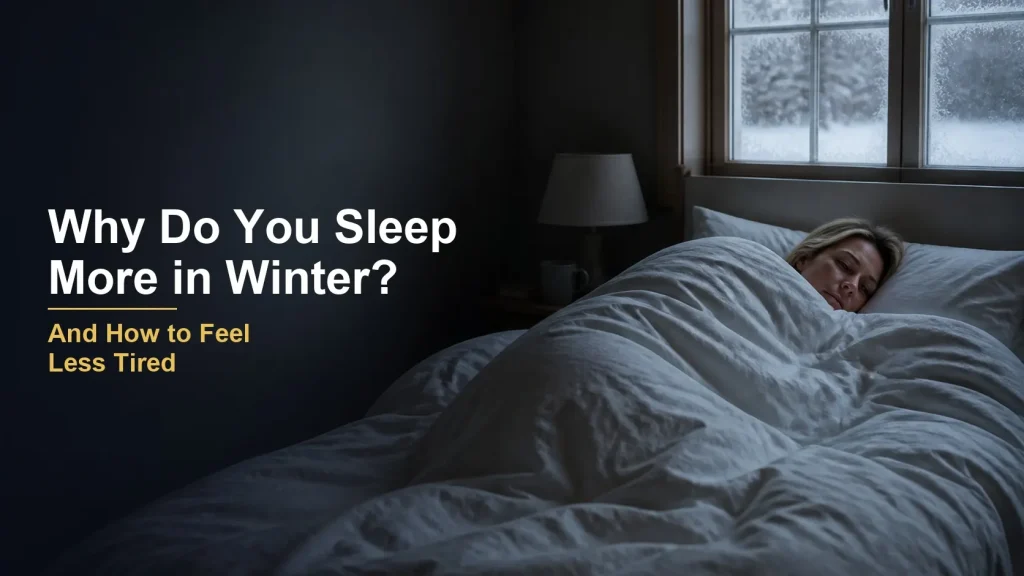
As the days grow short and dark, many of us feel an almost bearlike urge to sleep more, linger under the covers, and slow right down. If winter leaves you constantly tired and craving extra hours in bed, you’re not imagining it — there are real biological reasons behind that seasonal sleepiness. Here’s what’s going on, and how to keep your energy up.
Do People Really Sleep More in Winter?
Yes — to some degree, it seems we do. Many people report sleeping longer and feeling sleepier in the winter months, and some research suggests we may get slightly more sleep, and possibly more REM sleep, when nights are long and dark. While humans don’t hibernate, our bodies do respond to the changing seasons, and a pull toward more rest in winter is a common and natural experience. For a wider look at the underlying science, see this overview.
Why Winter Makes You Sleepy
The main driver is light — or the lack of it.
Less daylight disrupts your body clock. Your circadian rhythm relies on light to keep time. In winter, shorter days and darker mornings mean less of the bright light that signals “wake up and be alert,” which can leave your internal clock sluggish and your energy low.
More darkness means more melatonin. Darkness triggers the release of melatonin, your sleep hormone. With longer, darker evenings (and dim days), your body may produce melatonin for longer stretches, making you feel drowsy earlier and for more of the day.
Dark mornings make waking harder. Waking up before sunrise means rousing in darkness, without the natural morning light that helps you feel alert — so you feel groggy and reluctant to get up.
Cold and cozy cues. The cold weather and cozy environment naturally encourage us to slow down, stay in, and rest more.
When It’s More Than Just Winter Tiredness
For some people, winter brings more than mild sleepiness. Seasonal affective disorder (SAD) is a form of depression tied to the darker months, and it can cause excessive sleepiness, oversleeping, low energy, low mood, and carbohydrate cravings. If your winter tiredness comes with persistent low mood, difficulty functioning, or a significant change in sleep or appetite, it’s worth speaking to a doctor — SAD is common and very treatable, often with approaches like light therapy.
How to Feel More Energized in Winter
You can counter a lot of the winter slump by giving your body clock the signals it’s missing:
Get morning light. This is the most powerful fix. Open the curtains as soon as you wake, and get outside in natural daylight early in the day, even when it’s grey. A light therapy lamp can help when sunlight is scarce.
Keep a consistent schedule. Resist the urge to drastically oversleep; steady sleep and wake times keep your rhythm stable and your energy more even.
Stay active. Regular movement, ideally outdoors in daylight, boosts energy and mood and helps combat the seasonal slump.
Mind your mood and diet. Eat well (winter cravings tend toward heavy carbs), stay social, and consider talking to your doctor about vitamin D, since levels often dip in winter.
The Bottom Line
Feeling sleepier in winter is a real, natural response to shorter, darker days: less daylight disrupts your body clock and boosts melatonin, leaving you drowsier and slower to wake. A little extra rest is fine, but you can fight the slump by maximizing morning light (or using a light lamp), keeping a steady schedule, and staying active. And if winter brings persistent low mood and heavy fatigue, talk to a doctor about seasonal affective disorder — help is available.
Frequently Asked Questions
Why do I sleep more in winter?
Mainly because of reduced daylight. Shorter, darker days disrupt your body clock and increase melatonin (your sleep hormone), making you feel drowsier and slower to wake. Cold, cozy conditions add to the pull toward rest. Some research suggests we do get slightly more sleep in winter.
Is it normal to feel tired all the time in winter?
Feeling more tired in winter is common and largely natural, driven by less light and a sluggish body clock. But constant, significant fatigue — especially with low mood — can signal seasonal affective disorder (SAD) or low vitamin D, which are worth discussing with a doctor.
What is seasonal affective disorder (SAD)?
SAD is a form of depression linked to the darker months. It can cause excessive sleepiness, oversleeping, low energy and mood, and carbohydrate cravings. It’s common and treatable, often with light therapy and other approaches, so see a doctor if you suspect it.
How can I have more energy in winter?
Get bright morning light (open curtains immediately, go outside early, or use a light therapy lamp), keep a consistent sleep schedule, stay physically active, eat well, and consider checking your vitamin D with a doctor. Morning light is the single most effective step.
Do humans hibernate or sleep more in winter?
Humans don’t hibernate, but our bodies do respond to the seasons, and many people naturally sleep a little more and feel sleepier in winter due to the longer, darker nights. A modest increase in rest is normal.

Sophia Bennett specializes in wellness and lifestyle content with a focus on sleep-related topics, stress management, and healthy routines. She creates easy-to-understand articles designed to help readers make more informed sleep and wellness decisions. Sophia covers the wellness side of sleep, stress, mental wellbeing, and the lifestyle changes that make rest more restorative.
All guides by Sophia BennettGeneral guidance, not medical advice. If a sleep problem persists or gets worse, speak to a qualified clinician. Medical disclaimer