Sleeping With the TV On: Is It Bad, and How to Stop
Is sleeping with the TV on bad for you? Research links light and noise at night to poorer sleep and weight gain. Here's why it happens and how to cut back.
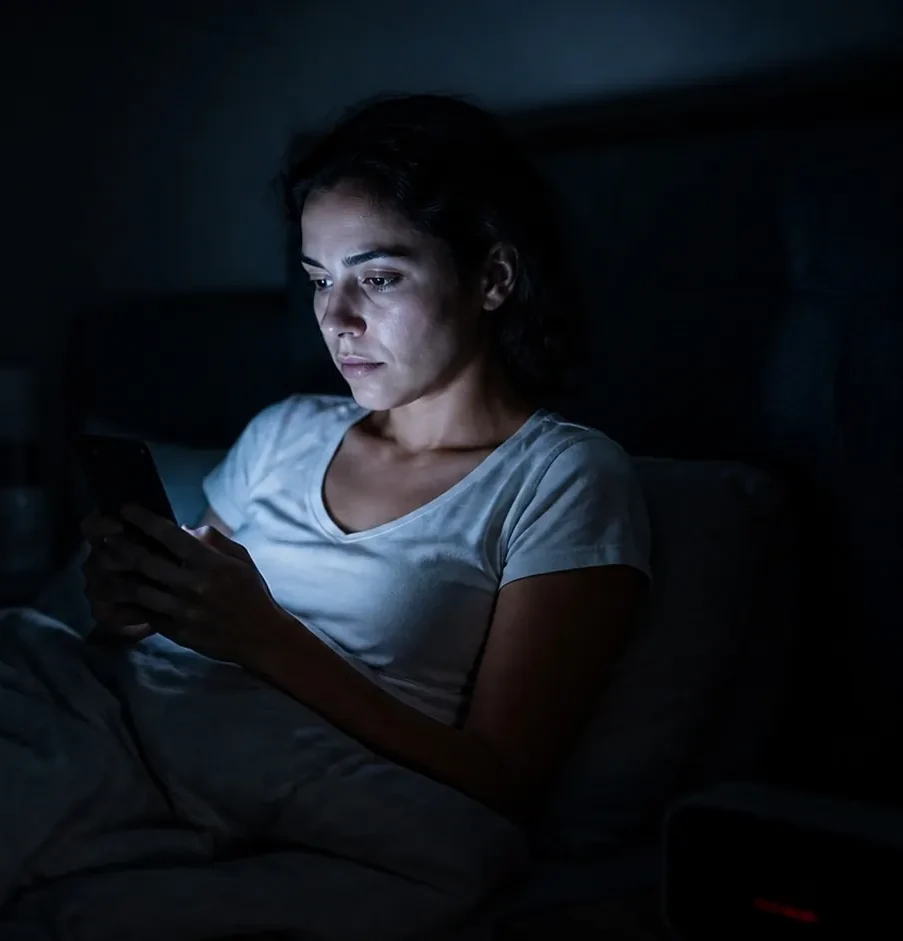
You queue up a comfort show, set the volume low, and tell yourself you’ll turn it off in a minute. Next thing you know, it’s 3 a.m., the screen is asking “Are you still watching?”, and the room is lit up blue. If that sounds familiar, you’re in good company. Watching TV is the most popular bedtime habit in America.
But is sleeping with the TV on actually bad for you? The short answer is that the light and sound can make your sleep lighter and more broken, even if you don’t remember waking up. Here’s what the research says, why so many people need the TV to fall asleep, and how to wean off it without lying awake in the quiet.
Quick Summary
- It’s the No. 1 bedtime habit. A Sleep Foundation poll found 52.7% of U.S. adults say watching TV is their go-to bedtime routine.
- Light while you sleep matters. A large NIH-led study linked sleeping with a TV or light on in the room to a higher risk of weight gain in women.
- You can keep the comfort without the screen. Use a sleep timer, swap in audio or white noise, and keep the screen out of your line of sight.
Why So Many People Sleep With the TV On
It’s mostly habit. In the same Sleep Foundation survey, 73.1% of adults who watch TV before bed said they do it simply because it’s a habit, and 72.6% watch on an actual TV set rather than a phone or tablet. For a lot of people, the TV does a few jobs at once:
- It quiets a busy mind. A familiar show gives your brain something easy to follow, so you’re not replaying your day or worrying about tomorrow.
- It fills the silence. If you live alone, work odd hours, or grew up in a noisy house, a quiet room can feel uncomfortable.
- It masks other sounds. Traffic, neighbors, or a partner’s snoring are easier to ignore with a little background noise.
Those are real needs. The problem isn’t wanting comfort at bedtime. It’s that a TV brings light, changing volume, and attention-grabbing content along with it.
Is It Bad to Sleep With the TV On?
The light can disrupt your sleep and body clock
Your brain uses darkness as a signal that it’s time to sleep. According to the Sleep Foundation, artificial light at night, especially blue light, can suppress melatonin, the hormone that helps regulate your sleep-wake cycle. A TV screen also flickers and changes brightness from scene to scene, which can nudge you toward lighter sleep even when your eyes are closed. We go deeper on this in our guide to sleeping with the lights on.
It’s linked to weight gain
In a study of nearly 44,000 women published in JAMA Internal Medicine, researchers from the National Institutes of Health compared women who slept in total darkness with those exposed to light at night. Women who slept with a TV or light on in the room were 17% more likely to gain about 11 pounds (5 kilograms) or more over about six years of follow-up, and 33% more likely to develop obesity. The study shows a link, not proof that the TV caused the weight gain, but the pattern held up after the researchers accounted for diet, activity, and sleep length. See how sleep affects your weight for more on that connection.
It can affect your heart and blood sugar
A small lab study from Northwestern University, published in PNAS, had healthy adults sleep one night with moderate overhead light on. Compared with a dim room, the light raised their heart rate during the night and made their bodies more resistant to insulin the next morning. That’s after a single night. A TV isn’t the same as a ceiling light, but it’s another reason to keep screens dark while you sleep. Learn more about sleep and blood sugar.
The sound can wake you up
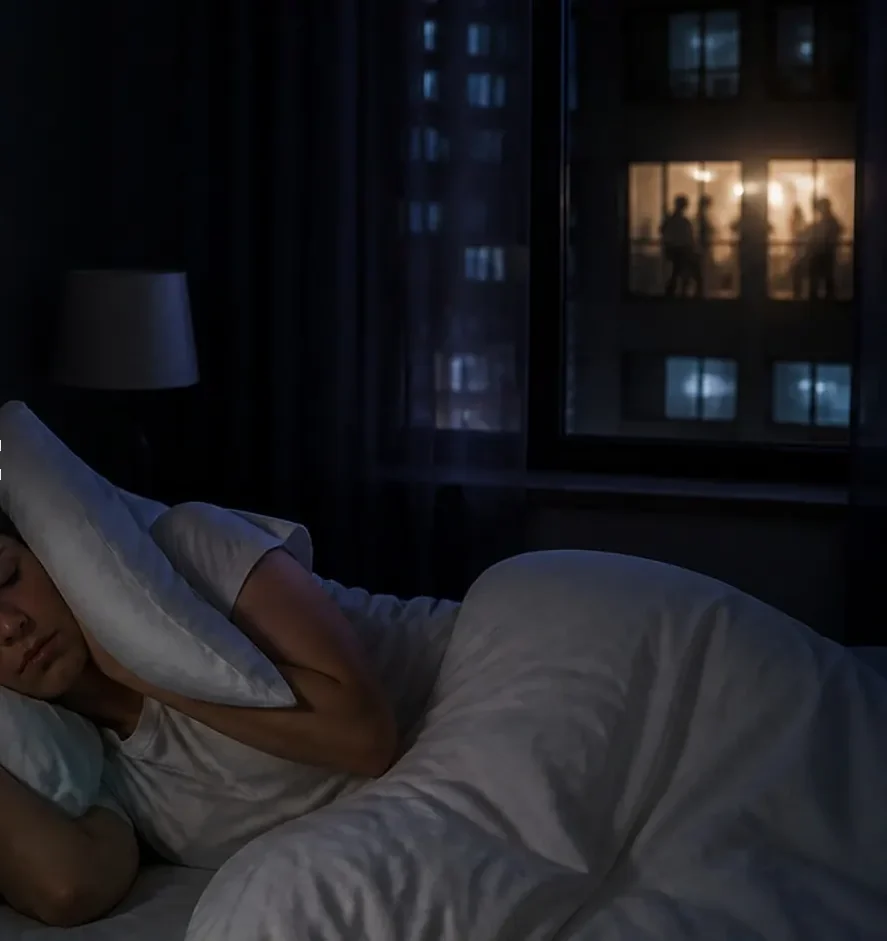
Dialogue, music, and commercials don’t stay at one steady volume. A sudden laugh track, an action scene, or an ad that’s louder than the show can pull you out of deep sleep, even if you don’t fully wake. Steady, unchanging sound is much easier for your brain to tune out.
Binge-watching keeps your brain switched on
What you watch matters too. In a study of young adults in the Journal of Clinical Sleep Medicine, people who binge-watched more often had worse sleep quality, more fatigue, and more insomnia symptoms. Regular TV watching wasn’t linked to these problems. The difference came down to mental arousal: gripping, cliffhanger shows keep your mind busy right when it should be winding down. If “one more episode” is a nightly battle, our post on revenge bedtime procrastination may hit home.
It can teach your brain to need it
When the TV is the only way you fall asleep, your brain starts to treat it as a requirement. That’s a problem when you travel, share a room with someone who wants quiet, or the TV keeps you up instead of putting you to sleep.
What About Kids?
Kids are even more sensitive to evening screens. In a long-term study of nearly 1,900 children published in Pediatrics, every extra hour of daily TV was tied to about seven fewer minutes of sleep per night. Among racial and ethnic minority children, having a TV in the bedroom was linked to about 31 fewer minutes of sleep a night. The simplest fix is to keep TVs out of kids’ bedrooms and make the last hour before bed screen-free. Our bedtime routine for kids can help.
How to Stop Sleeping With the TV On
Going from TV every night to total silence is a big jump. Most people do better cutting back in steps:
- Set the sleep timer. Almost every TV has one. Start with 60 minutes, then shorten it to 30, then 15. The TV shuts off once you’re asleep, so you get the comfort without hours of light and noise.
- Turn the brightness way down. Lower the backlight, switch on a warm or night picture mode, and keep the volume steady and low.
- Choose boring, familiar shows. Reruns you know by heart are far less stimulating than a new thriller. Skip anything with cliffhangers after 9 p.m.
- Move the screen out of your line of sight. Turn the TV away from the bed or face the other way so the light isn’t hitting your eyes.
- Swap the picture for audio. Many people really just want the voices. Try a podcast, an audiobook, or a quiet show you can listen to without watching. ASMR and sleep meditation tracks work well too.
- Use steady background sound. A fan or white noise machine masks outside noise without sudden volume spikes. Here’s how white, pink, and brown noise compare.
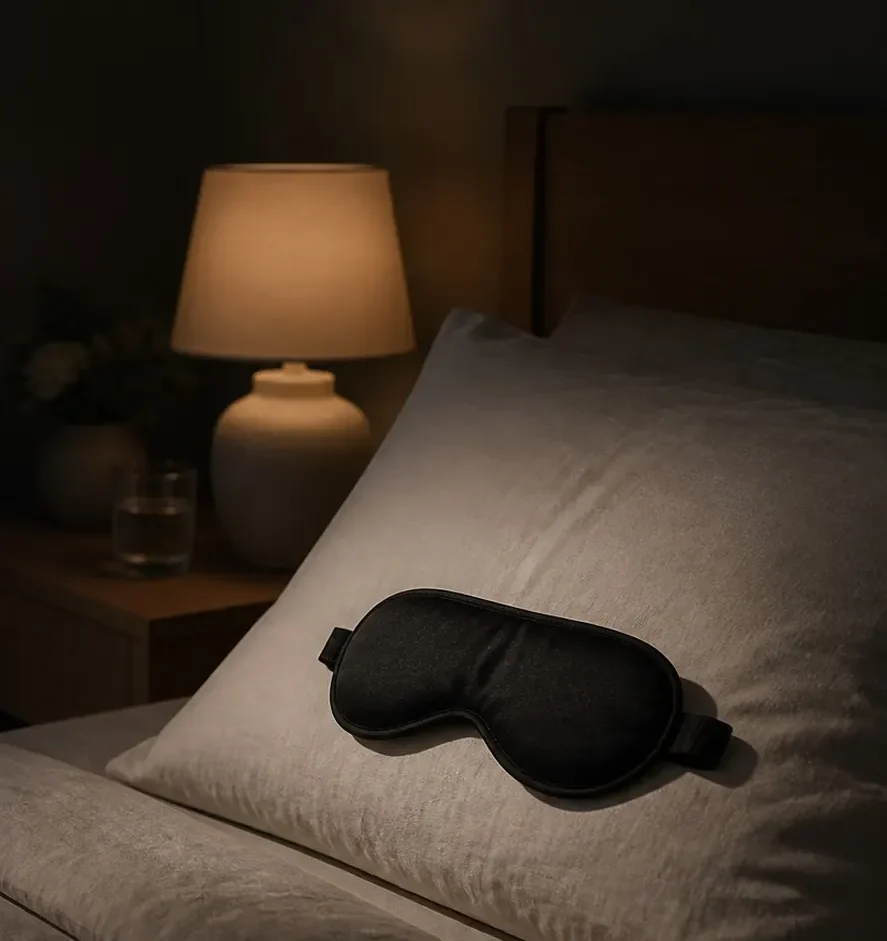
- Wear an eye mask in the meantime. If you share a room with someone who keeps the TV on, a comfortable mask blocks most of the glow. See our picks for the best eye masks for sleep.
- Build a new wind-down routine. The Sleep Foundation suggests setting consistent “screens off” and “lights out” times and keeping something to read on your nightstand.
What to Do Instead of Watching TV in Bed
If the TV has been your way to shut off your brain, you’ll want something to take its place. A few ideas that don’t light up the room:
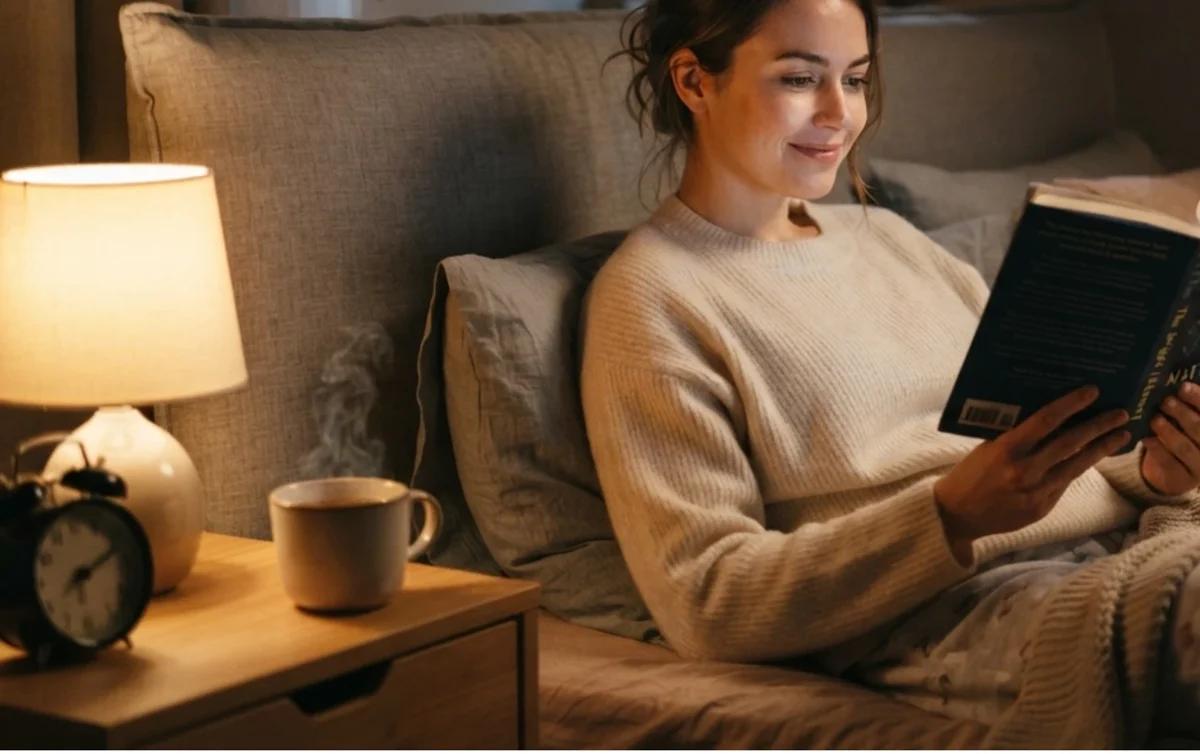
- Read a paper book or magazine under a warm, dim lamp. Here’s why reading before bed helps.
- Write down tomorrow’s to-do list or a few thoughts in a journal.
- Do a few gentle stretches or a body scan.
- Try slow breathing, like a 4-7-8 or box breathing pattern.
If your mind races the moment the room goes quiet, our guide on how to stop overthinking at night walks you through what helps.
FAQ: Sleeping With the TV On
Is it bad to fall asleep with the TV on?
Falling asleep to the TV once in a while isn’t a big deal. Doing it every night means hours of light and changing sound while you sleep, which research links to lighter sleep and other health effects. A sleep timer is an easy middle ground.
Why can’t I sleep without the TV on?
Usually it’s habit and comfort. The TV distracts you from racing thoughts and fills the silence. Your brain learns to link it with sleep, so quiet can feel strange at first. Cutting back slowly with a timer and audio-only options helps.
Does sleeping with the TV on affect sleep quality?
It can. Light can suppress melatonin, and sudden sounds can pull you out of deeper sleep. Many people don’t realize how often they partly wake because they don’t remember it the next morning.
Is listening to TV without the picture better?
Yes. Covering the screen, turning it away, or switching to audio-only removes the light, which is the bigger concern. Keep the volume low and steady.
How long should I set the TV sleep timer?
Start with about 30 to 60 minutes. Most people fall asleep within that window, and the TV turns off before you hit deeper sleep.
This article is for general information only and isn’t a substitute for medical advice. If you regularly have trouble falling or staying asleep, talk with your healthcare provider or a sleep specialist.
General guidance, not medical advice. If a sleep problem persists or gets worse, speak to a qualified clinician. Medical disclaimer