Alcohol and Sleep: Does a Nightcap Really Help?
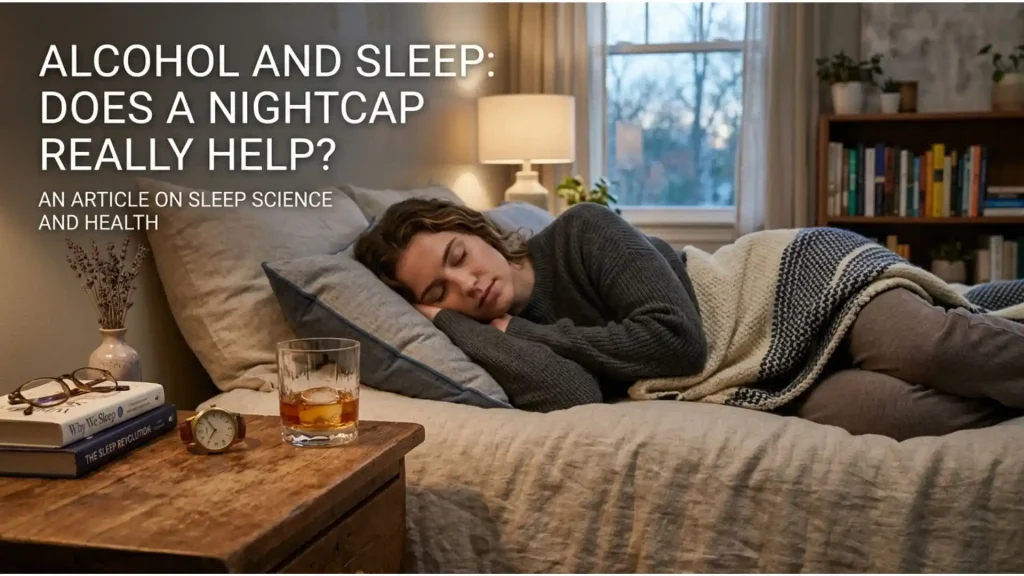
A glass of wine to unwind, a “nightcap” to help you drift off it’s one of the most common bedtime rituals there is. Around a third of adults use alcohol to help them fall asleep, and most people who do are convinced it works. The catch? While alcohol can help you fall asleep faster, it quietly sabotages the quality of the sleep that follows.
Here’s what alcohol really does to your sleep, why that nightcap backfires, and how to drink smarter if you do. For a wider look at the underlying science, see this overview.
Why a Nightcap Feels Like It Works
Alcohol is a sedative, so it does what sedatives do: it relaxes you and shortens the time it takes to fall asleep. That initial drowsy, heavy-limbed feeling is real which is exactly why the nightcap myth is so persistent. The problem is that falling asleep quickly is only half the story. What alcohol gives you at the start of the night, it takes back with interest in the second half.
What Alcohol Actually Does to Your Sleep
As your body metabolizes the alcohol over the night, your sleep changes dramatically:
It suppresses REM sleep. REM the dream-rich stage tied to memory, learning, and mood gets pushed aside early in the night. Since REM is concentrated in the second half of your sleep, less of it means you wake up feeling foggy and unrefreshed, even after a full eight hours.
It fragments the second half of the night. Once the alcohol wears off, your body rebounds into lighter, choppier sleep. This is why a few drinks often leave you wide awake at 2 or 3am, tossing and turning, sometimes with vivid or strange dreams.
The result is a night that looks like enough sleep on paper but leaves you tired, irritable, and unfocused the next day. As the experts put it, it’s a matter of quality, not quantity.
The Hidden Costs
Beyond the broken sleep, alcohol before bed brings a few more problems. It relaxes the muscles in your throat, which worsens snoring and obstructive sleep apnea heavy evening drinking is linked to a meaningfully higher risk of apnea episodes. It’s also a diuretic, so it sends you to the bathroom more often and leaves you dehydrated, adding to that groggy, headachy morning feeling. And it suppresses melatonin, nudging your body clock off schedule. To top it off, your body builds tolerance to alcohol’s sedative effect quickly, so the “nightcap” tends to creep larger over time while your sleep keeps getting worse.
“But I Sleep Fine After Drinking”
Many people genuinely feel they sleep well after a drink because they fall asleep fast and don’t remember the fragmented stretches later. But sleep tracking and studies consistently show reduced REM, more awakenings, and lower sleep efficiency after evening alcohol, even when you don’t consciously notice it. It also tends to affect you more as you get older. So “I drop off easily” isn’t the same as “I sleep well.”
How to Drink Smarter
You don’t necessarily have to give up alcohol to protect your sleep timing and moderation do most of the work:
Watch the clock. Finish your last drink at least 3 to 4 hours before bed so your body can metabolize most of it before you sleep. A drink with dinner affects your sleep far less than a nightcap.
Keep it moderate. The less you drink, the smaller the impact. Aim low many nights with none, and a cap of one to two drinks on social nights.
Hydrate. Have a glass of water alongside each drink to offset the dehydration.
Don’t use it as a sleep aid. If you’re reaching for alcohol specifically to fall asleep, that’s a sign to build other wind-down habits instead a warm shower, herbal tea, reading, or a calming routine.
When to Seek Help
If you find you can’t fall asleep without a drink, or you’re using alcohol most nights to cope with insomnia, it’s worth talking to a doctor. This “nightcap-insomnia loop” tends to worsen over time, and there are far more effective, lasting treatments for insomnia like CBT-I that don’t cost you your REM sleep.
The Bottom Line
A nightcap is a classic case of short-term gain, long-term pain: alcohol helps you fall asleep faster but suppresses REM, fragments the second half of your night, worsens snoring, and leaves you unrested. If you drink, finish up 3 to 4 hours before bed, keep it moderate, and lean on real wind-down habits rather than the bottle to ease into sleep. Your mornings will feel the difference.
Frequently Asked Questions

Sophia Bennett specializes in wellness and lifestyle content with a focus on sleep-related topics, stress management, and healthy routines. She creates easy-to-understand articles designed to help readers make more informed sleep and wellness decisions. Sophia covers the wellness side of sleep, stress, mental wellbeing, and the lifestyle changes that make rest more restorative.
All guides by Sophia BennettGeneral guidance, not medical advice. If a sleep problem persists or gets worse, speak to a qualified clinician. Medical disclaimer