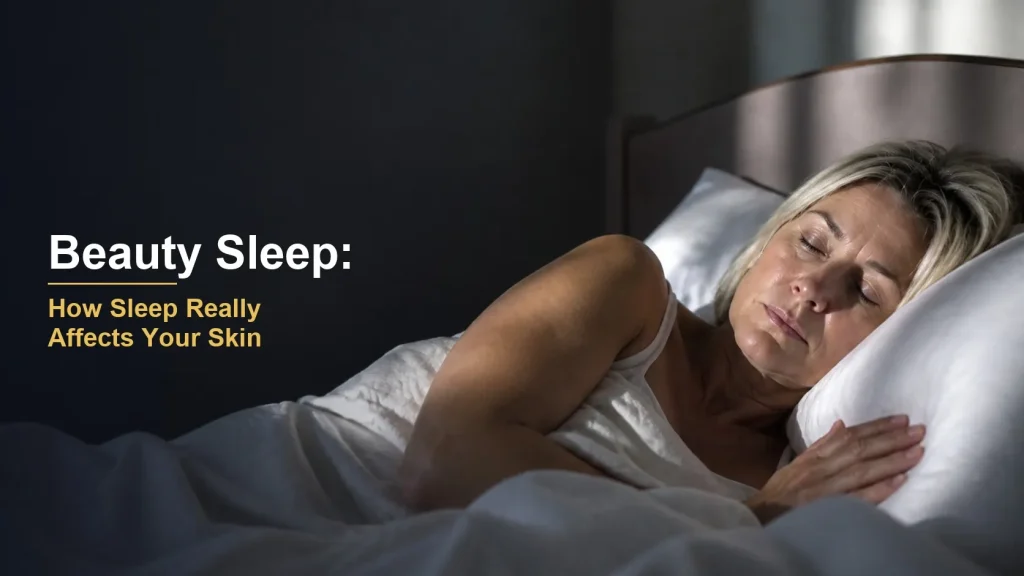
It turns out “beauty sleep” isn’t just a saying — it’s science. While you sleep, your skin does some of its most important repair and renewal work, and skimping on rest shows up on your face faster than almost anywhere else. Here’s how sleep affects your skin, what happens when you don’t get enough, and how to make the most of your skin’s overnight glow-up.
This article contains affiliate links. If you buy through them, we may earn a small commission at no extra cost to you.
Why “Beauty Sleep” Is Real
Overnight, your skin shifts into repair mode. Blood flow to the skin increases, and your body ramps up cell regeneration and collagen production — the protein that keeps skin firm and smooth. Growth hormone released during deep sleep drives tissue repair, your skin barrier recovers and rehydrates, and levels of the stress hormone cortisol drop. In short, sleep is when your skin rebuilds itself. That’s why a good night genuinely leaves you looking fresher, and a bad one shows. For a wider look at the underlying science, see this overview.
What Poor Sleep Does to Your Skin
Cut your sleep short and the effects are quick to appear. In the short term, you get a dull, tired complexion and those tell-tale dark circles and puffy under-eyes. Over the longer term, chronic poor sleep is linked to more visible fine lines and signs of aging, a weaker skin barrier (leading to dryness and sensitivity), slower healing, and even more breakouts, since raised cortisol and inflammation can trigger oil production and flare-ups. Research has found that poor sleepers show more signs of skin aging and slower recovery than those who sleep well.
How to Maximize Your Beauty Sleep
Give your skin the best overnight conditions with these steps:
Get enough sleep. The foundation of it all — aim for seven to nine hours so your skin gets the full repair cycle. No cream can fully replace it.
Try a silk pillowcase (or sleep on your back). Pressing your face into a rough pillowcase night after night can cause creases and friction. A smooth silk or satin pillowcase is gentler on skin (and hair), and back-sleeping avoids smooshing your face altogether.
Do a nighttime skincare routine. Skin loses water overnight, so cleanse and apply a good moisturizer before bed. Nighttime is also when active ingredients work well, since skin is in repair mode.
Hydrate — inside and out. Stay hydrated through the day, and consider a humidifier if your bedroom air is dry, to help your skin retain moisture overnight.
Manage stress and elevate your head. Lowering stress helps keep cortisol-related breakouts down, and sleeping with your head slightly elevated can reduce fluid pooling and morning under-eye puffiness.
The Bottom Line
Beauty sleep is real: while you rest, your skin boosts blood flow, produces collagen, repairs its barrier, and regenerates cells — so good sleep leaves you glowing, while poor sleep brings dullness, dark circles, and, over time, faster aging and more breakouts. To make the most of it, get your seven to nine hours, sleep on a silk pillowcase, moisturize before bed, stay hydrated, and manage stress. The best skincare routine, it turns out, starts with a good night’s sleep.
Rest also shows up in appetite and weight, and in whether you actually got enough hours for your age.
Frequently Asked Questions
Is beauty sleep actually real?
Yes. During sleep your skin increases blood flow, produces collagen, repairs its barrier, and regenerates cells, while cortisol drops. This overnight repair genuinely affects how your skin looks, so good sleep leaves you fresher and poor sleep shows on your face.
How does lack of sleep affect your skin?
Short term, it causes a dull complexion, dark circles, and puffy under-eyes. Long term, poor sleep is linked to more fine lines and signs of aging, a weaker skin barrier (dryness and sensitivity), slower healing, and more breakouts due to raised cortisol and inflammation.
Does sleep cause wrinkles or prevent them?
Good sleep supports collagen production, which helps keep skin firm and smooth, while chronic poor sleep is associated with more visible signs of aging. Sleeping on your back or a silk pillowcase can also reduce sleep creases over time.
Does a silk pillowcase really help your skin?
It can help. A smooth silk or satin pillowcase creates less friction and pressure on your skin than rougher fabrics, which may reduce creases and irritation. It’s gentle on hair too. Sleeping on your back avoids facial pressure altogether.
How many hours of sleep do you need for good skin?
Aim for seven to nine hours, like the general adult recommendation, so your skin gets its full overnight repair cycle. Consistent, good-quality sleep matters more for your skin than any single night.

Sophia Bennett specializes in wellness and lifestyle content with a focus on sleep-related topics, stress management, and healthy routines. She creates easy-to-understand articles designed to help readers make more informed sleep and wellness decisions. Sophia covers the wellness side of sleep, stress, mental wellbeing, and the lifestyle changes that make rest more restorative.
All guides by Sophia BennettGeneral guidance, not medical advice. If a sleep problem persists or gets worse, speak to a qualified clinician. Medical disclaimer