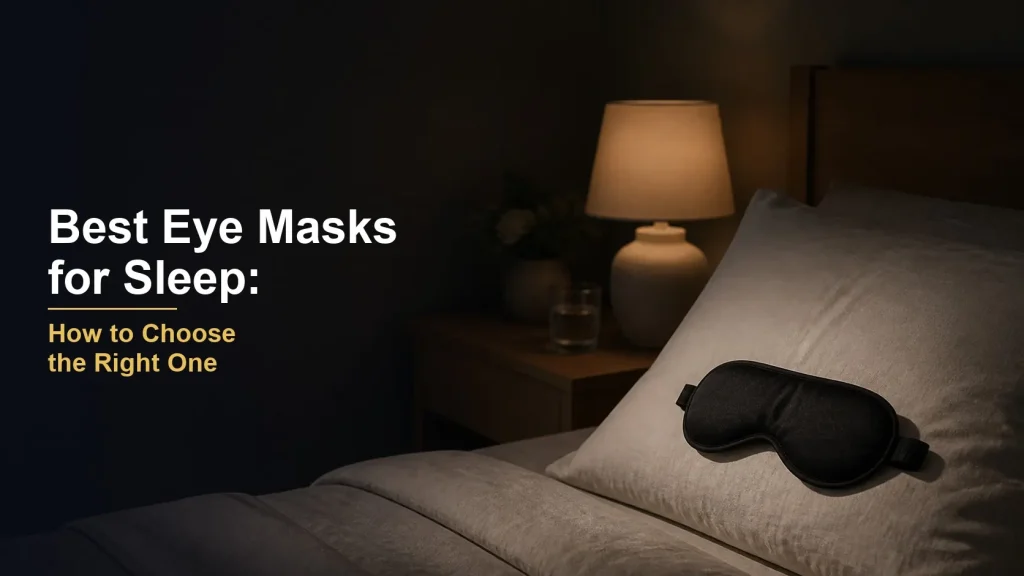
Light is one of the biggest enemies of good sleep — and a simple eye mask is one of the cheapest, most effective ways to defeat it. But not all sleep masks are equal, and the wrong one can press on your eyes or slip off all night. Here’s how to choose the best eye mask for deep, dark, restful sleep.
This article contains affiliate links. If you buy through them, we may earn a small commission at no extra cost to you.
Why Use a Sleep Mask?
Your body relies on darkness to produce melatonin and stay in deep, restorative sleep — even small amounts of light can disrupt it. A good eye mask creates total darkness wherever you are, which is why they’re brilliant for light sleepers, shift workers sleeping in the day, travelers, bright city bedrooms, early sunrises, and couples on different schedules (when one wants the light on). For many people, it’s a tiny, inexpensive upgrade that noticeably deepens sleep. For a wider look at the underlying science, see published guidance.
Types of Sleep Masks
Flat/basic masks. The classic cheap option. They block light and work fine, but the flat fabric can press against your eyes and eyelashes, which some people find uncomfortable — especially if you move your eyes a lot during REM.
Contoured (3D) masks. These have molded eye cavities that create space around your eyes, so nothing touches your eyelids or lashes. They’re a favorite for comfort, ideal for side sleepers, lash extensions, and anyone who dislikes pressure on their eyes, while still blocking light well.
Weighted eye masks. A trendier option that adds gentle, even pressure across your eyes and forehead. Many people find the light weight calming and grounding (similar to a weighted blanket), and it may help with relaxation and tension headaches. Great for winding down, though not everyone loves the sensation.
Silk masks. Made from smooth silk, these are gentle on your skin (less friction and creasing) and feel luxurious and cool — a nice pick if skin-friendliness matters to you.
What to Look For
When choosing, prioritize: complete light blocking (a good nose flap or contoured design stops light leaking in at the bottom), a comfortable, adjustable strap that stays put without being too tight, breathable, soft material, and a shape that suits your sleep position (contoured masks are especially good for side sleepers). If you have sensitive skin or lash extensions, lean toward contoured or silk. And if you like the idea of gentle, calming pressure, try a weighted mask.
A Few Tips
Make sure the strap is adjustable so the mask doesn’t slip off or leave marks. Keep it clean by washing per the care label, since it sits on your face nightly. And pair your mask with other darkness upgrades — like blackout curtains and covering glowing electronics — for a genuinely dark sleep environment.
The Bottom Line
A sleep mask is a simple, affordable way to block light and sleep more deeply — perfect for light sleepers, travel, shift work, and bright bedrooms. For the best experience, a contoured mask offers comfort with no pressure on your eyes, a weighted mask adds calming pressure, and a silk mask is gentle on skin. Choose one that fully blocks light, fits comfortably, and suits your sleep position, and you’ll have darkness on demand wherever you rest.
Frequently Asked Questions
Do sleep masks really help you sleep?
Yes. Your body needs darkness to produce melatonin and maintain deep sleep, and even small amounts of light can disrupt it. A good eye mask creates total darkness anywhere, which can noticeably deepen sleep — especially for light sleepers, travelers, and shift workers.
What is the best type of sleep mask?
It depends on your preference. Contoured (3D) masks are the most comfortable for many, with no pressure on the eyes. Weighted masks add calming pressure, silk masks are gentle on skin, and flat masks are the cheapest but can press on your eyes. Contoured is a great all-rounder.
Are weighted eye masks good?
Many people love them. The gentle, even pressure can feel calming and grounding (like a weighted blanket) and may help with relaxation and tension headaches. Not everyone enjoys the sensation, so it comes down to personal preference.
What should I look for in a sleep mask?
Complete light blocking (a nose flap or contoured shape prevents light leaks), a comfortable adjustable strap that stays put, breathable soft material, and a shape suited to your sleep position. Contoured or silk masks are best for sensitive skin or lash extensions.
Are sleep masks better than blackout curtains?
They serve different needs and work well together. Blackout curtains darken the whole room, while a sleep mask gives you portable darkness anywhere — ideal for travel, daytime sleep, or when you can’t control the room’s light. Using both gives the darkest environment.

Daniel Foster reviews mattresses, pillows, and sleep accessories while sharing practical insights on bedroom comfort and sleep setups. His content focuses on usability, comfort, and everyday user experience to help readers explore different sleep products more confidently. Daniel writes the site's hands-on product reviews, buying guides, and head-to-head comparisons.
All guides by Daniel FosterGeneral guidance, not medical advice. If a sleep problem persists or gets worse, speak to a qualified clinician. Medical disclaimer