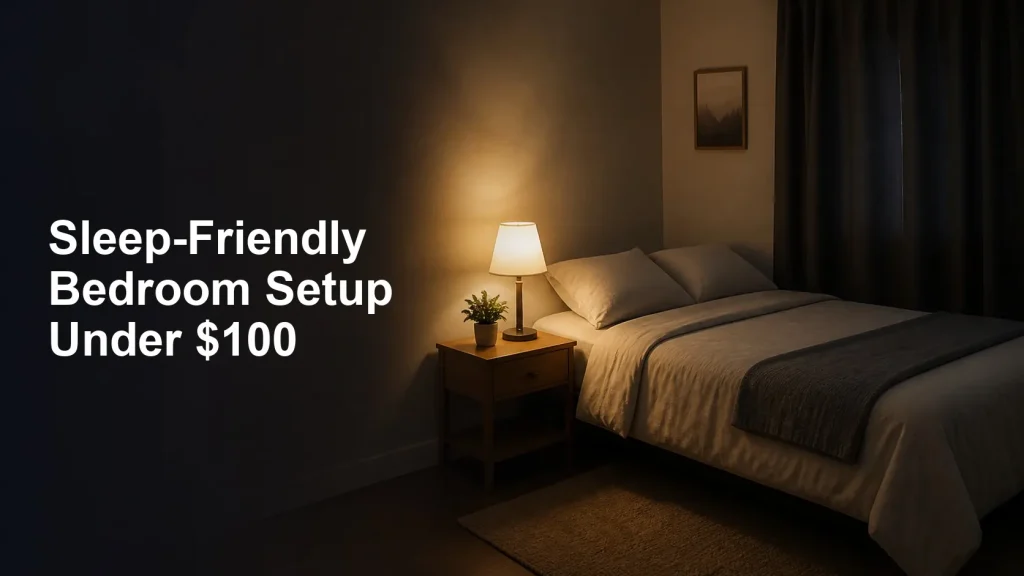
You don’t need a designer bedroom or an expensive mattress to sleep better — a few smart, affordable changes to your room can make a genuine difference. By focusing your budget on the things that matter most (darkness, quiet, temperature, and comfort), you can build a sleep-friendly bedroom for under $100. Here’s how to spend it wisely.
This article contains affiliate links. If you buy through them, we may earn a small commission at no extra cost to you. Prices are approximate and vary.
The Strategy: Spend Where It Counts
Great sleep comes down to a dark, quiet, cool, comfortable, calm room — so that’s where every dollar should go. Some of the biggest wins cost nothing at all, while a handful of cheap products handle the rest. Here’s how to build it up, roughly in order of impact-per-dollar. For a wider look at the underlying science, see published guidance.
1. Block the Light (~$20–40)
Light is one of the biggest sleep disruptors, and darkening your room is the highest-impact upgrade. Affordable blackout curtains (or a blackout liner added to existing curtains) block streetlights and early sun for a fraction of a new mattress. Pair them with a cheap eye mask as a backup, and you’ve solved light for very little.
2. Silence the Noise (~$10–25)
For pennies, a pack of foam or silicone earplugs cuts disruptive noise dramatically. For a bit more, a small fan does double duty — it creates soothing white noise and cools the room. If noise is a big issue, a basic white noise machine is a modest, worthwhile spend.
3. Upgrade Your Pillow (~$30–50)
Your mattress may be a big-ticket item, but a supportive pillow suited to your sleep position is affordable and makes a real difference to comfort and neck pain. If you can only upgrade one comfort item, make it the pillow.
4. Refresh Your Bedding (~$20–50)
You don’t need to replace everything. Breathable cotton percale or bamboo sheets help you sleep cooler, and even swapping in a silk or satin pillowcase (gentle on skin and hair) is a cheap, feel-good upgrade. Clean, breathable bedding instantly makes a bed more inviting.
5. Fix the Lighting (~$10–20)
Harsh, bright light in the evening works against your body’s wind-down. Swap a bedside bulb for a warm, dim (low-color-temperature) bulb, or add a small lamp for soft, cozy light instead of a glaring overhead. This one small change makes the whole room feel calmer at night.
6. Kill the Glowing Lights (Almost Free)
Those little LED lights on chargers, TVs, and power strips add up. Cover them with a bit of electrical tape or blackout stickers — it costs almost nothing and removes surprisingly distracting glow.
7. Declutter and Tidy (Free)
This is the ultimate budget upgrade: free. A tidy, clutter-free bedroom (especially a clear nightstand) feels calmer and more restful, helping your mind settle. Clearing surfaces and keeping the room clean costs nothing and genuinely supports sleep.
8. Add a Touch of Calm (~$10–20, Optional)
If there’s budget left, small soothing touches help — a low-maintenance plant, a calming scent (like a lavender pillow spray), or simple, uncluttered decor in soft, restful tones. These little details turn a functional room into a sanctuary.
The Bottom Line
A sleep-friendly bedroom is about smart priorities, not a big budget. Spend first on darkness (blackout curtains and an eye mask), then quiet (earplugs or a fan), a supportive pillow, and breathable bedding, plus cheap wins like warm dim lighting, covering glowing LEDs, and decluttering (free!). For under $100, you can transform an ordinary bedroom into a dark, quiet, cool, calming space that genuinely helps you sleep better — no expensive overhaul required.
Related reading: the bedroom setup guide and calmer ways to fall asleep.
Frequently Asked Questions
How can I make my bedroom better for sleep on a budget?
Focus on the highest-impact, low-cost changes: block light with affordable blackout curtains and an eye mask, reduce noise with earplugs or a fan, upgrade to a supportive pillow, add breathable bedding, use warm dim lighting, cover glowing LEDs, and declutter (which is free).
What’s the most important budget upgrade for sleep?
Blocking light is usually the biggest bang for your buck, since light strongly disrupts sleep — affordable blackout curtains plus an eye mask go a long way. Decluttering is the best free upgrade, and a supportive pillow is the best-value comfort buy.
Can you improve sleep without buying a new mattress?
Absolutely. While the mattress matters, many affordable changes make a big difference: darkening the room, reducing noise, upgrading your pillow and bedding, improving lighting, and keeping the room cool and tidy. A mattress topper is also a cheaper alternative to a new mattress.
What free changes improve bedroom sleep?
Decluttering and tidying (especially your nightstand), covering or unplugging glowing electronics, dimming or turning off harsh overhead lights, cooling the room, and removing screens from the bedroom all cost nothing and genuinely support better sleep.
How do I make my bedroom cozy for sleep cheaply?
Use warm, dim lighting from a small lamp, add breathable bedding in soft, calming tones, include a small plant or a calming scent, keep the space tidy, and choose soothing colors. These inexpensive touches create a restful, sanctuary-like feel.

Daniel Foster reviews mattresses, pillows, and sleep accessories while sharing practical insights on bedroom comfort and sleep setups. His content focuses on usability, comfort, and everyday user experience to help readers explore different sleep products more confidently. Daniel writes the site's hands-on product reviews, buying guides, and head-to-head comparisons.
All guides by Daniel FosterGeneral guidance, not medical advice. If a sleep problem persists or gets worse, speak to a qualified clinician. Medical disclaimer