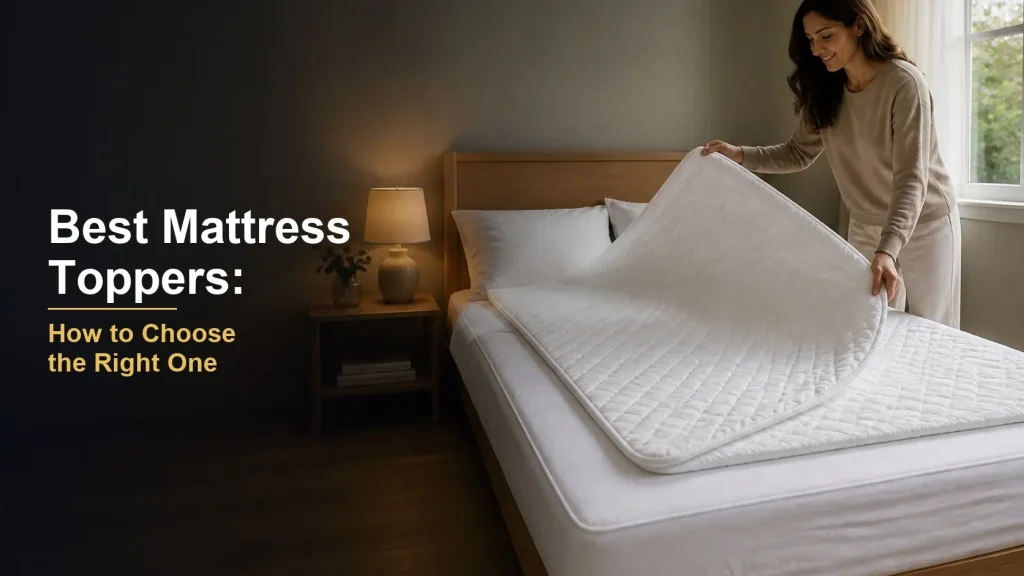
Not ready to buy a whole new mattress? A good mattress topper can transform how your bed feels — softer, firmer, cooler, or just more comfortable — for a fraction of the price. But with several materials and thicknesses to choose from, picking the right one matters. Here’s how to choose the best mattress topper for your sleep.
This article contains affiliate links. If you buy through them, we may earn a small commission at no extra cost to you.
Why Use a Mattress Topper?
A topper is a removable layer you place on top of your mattress, and it’s a budget-friendly way to solve several problems: softening a too-firm bed, adding a little support or comfort to a sagging or aging one, cooling things down if you sleep hot, relieving pressure points for side sleepers, and extending the life of an older mattress. It’s also handy for guest beds. Just note the one thing a topper can’t do: rescue a genuinely worn-out, broken-down mattress — at that point, you need a replacement. For a wider look at the underlying science, see this overview.
The Main Types of Mattress Topper
Memory foam is the most popular. It contours to your body for excellent pressure relief, making it great for side sleepers and achy joints, and softening a firm bed. The classic downside is heat retention, so look for gel-infused or open-cell “cooling” memory foam if you sleep hot.
Latex is supportive and responsive with a springier feel, sleeps cooler than standard memory foam, and is very durable. Natural latex options appeal to those wanting fewer synthetics (though it’s pricier).
Cooling/gel toppers are designed specifically to draw heat away, making them a strong pick for hot sleepers.
Down or feather (featherbed) toppers are plush, soft, and luxurious, adding a cloud-like feel — though they offer less support and aren’t ideal for allergy-prone sleepers.
Down-alternative/polyester toppers are the budget option: soft and affordable, but generally less durable and supportive.
Wool toppers are naturally temperature-regulating (warm in winter, breathable in summer) and a good natural choice.
What to Look For
Start with your goal: do you want the bed softer, firmer/more supportive, or cooler? That points to the material. Then consider thickness (around 2–4 inches — thicker adds more cushioning), quality/density (denser foam lasts longer and supports better), and cooling features if you run hot. Practical details matter too: a secure fit (elastic corner straps or a deep enough design so it doesn’t slide), and ideally a removable, washable cover for easy cleaning.
Who Benefits Most
A topper is especially worthwhile if your bed feels too firm (add memory foam or down for softness), your mattress is starting to sag (a firm, supportive topper can buy you time), you’re a hot sleeper (cooling gel or latex), you’re a side sleeper needing pressure relief, or you want to upgrade a guest bed affordably. It’s one of the best value-for-money sleep upgrades out there.
The Bottom Line
A mattress topper is an affordable way to fine-tune your bed’s comfort, support, and temperature without replacing the whole mattress. Choose based on your goal: memory foam for pressure relief and softening a firm bed (gel-infused if you sleep hot), latex or cooling gel for hot sleepers, and down or down-alternative for a plush, soft feel. Mind the thickness, quality, and fit — and remember a topper enhances a decent mattress, but can’t replace a worn-out one.
A topper cannot fix the wrong pillow height, and it works best as part of the wider bedroom setup.
Frequently Asked Questions
What does a mattress topper do?
A topper is a removable layer on top of your mattress that changes how it feels — softening a firm bed, adding comfort or support to an aging one, cooling things down, relieving pressure points, or extending your mattress’s life. It’s a budget-friendly alternative to a new mattress.
What is the best type of mattress topper?
It depends on your goal. Memory foam is best for pressure relief and softening a firm bed (choose gel-infused if you sleep hot), latex is supportive and cooler, cooling gel suits hot sleepers, and down or down-alternative gives a plush, soft feel. Match the material to what you need.
What’s the best mattress topper for hot sleepers?
Look for cooling gel toppers, gel-infused or open-cell memory foam, or latex, all of which sleep cooler than standard memory foam. Avoid dense standard memory foam, which tends to trap heat. A breathable, washable cover helps too.
How thick should a mattress topper be?
Most toppers are around 2–4 inches. Thicker toppers add more cushioning and a bigger change in feel, while thinner ones offer a subtle adjustment. Choose based on how much you want to alter your mattress and your body weight (heavier sleepers often prefer more thickness).
Can a mattress topper fix an old mattress?
Only to a point. A topper can improve comfort and add support to a mattress that’s aging or a bit too firm or soft, and extend its usable life. But it can’t rescue a genuinely worn-out, sagging, broken-down mattress — at that stage, you need a replacement.

Daniel Foster reviews mattresses, pillows, and sleep accessories while sharing practical insights on bedroom comfort and sleep setups. His content focuses on usability, comfort, and everyday user experience to help readers explore different sleep products more confidently. Daniel writes the site's hands-on product reviews, buying guides, and head-to-head comparisons.
All guides by Daniel FosterGeneral guidance, not medical advice. If a sleep problem persists or gets worse, speak to a qualified clinician. Medical disclaimer