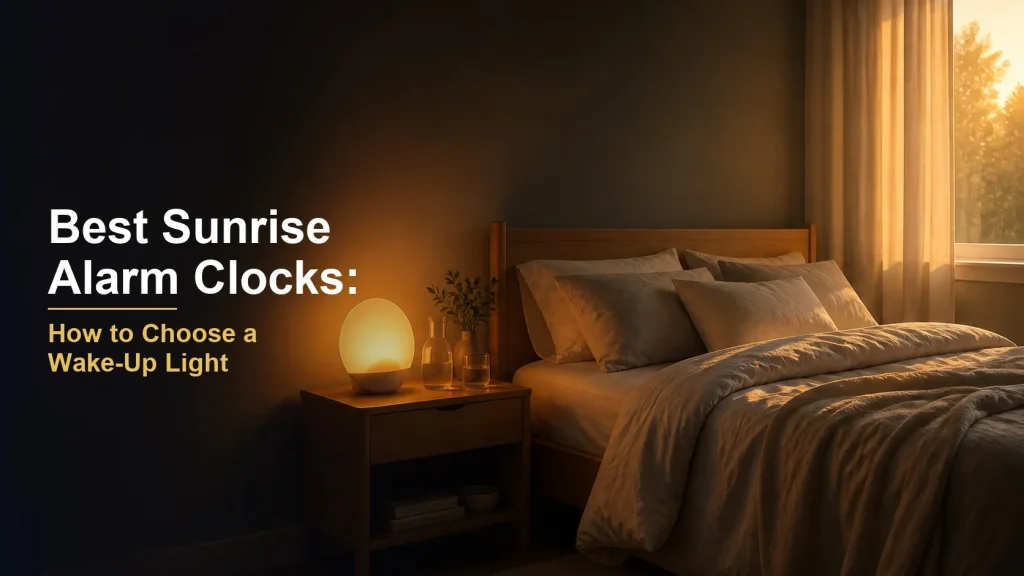
If you dread the harsh buzz of your alarm and wake up groggy and grumpy, a sunrise alarm clock might change your mornings. These “wake-up lights” gradually brighten to simulate a natural dawn, easing you awake gently rather than jolting you out of deep sleep. Here’s how they work, who benefits most, and what to look for when choosing one.
This article contains affiliate links. If you buy through them, we may earn a small commission at no extra cost to you.
What Is a Sunrise Alarm Clock?
A sunrise alarm clock (or wake-up light) is a bedside device that slowly increases in brightness over a set period — usually 20 to 40 minutes — before your wake time, mimicking a natural sunrise. As the light builds, it gently signals your body to stir, so you often wake naturally before any sound even plays. Many also include a backup sound alarm, and a growing number offer a sunset feature that dims to help you wind down at night. For a wider look at the underlying science, see this overview.
Why Sunrise Alarms Work
The magic is in the light. Light is your body’s master wake-up signal — it helps switch off melatonin and cue alertness. A sunrise alarm works with your biology, easing you awake through lighter sleep stages so you feel less groggy and jarred than with a sudden sound alarm (which often blasts you out of deep sleep). Many people find they wake more gently, in a better mood, and with less of that heavy morning fog. It’s an especially welcome upgrade in dark winter mornings, when waking before sunrise leaves you feeling sluggish.
Who Benefits Most From a Wake-Up Light
Sunrise alarms are particularly helpful for heavy sleepers and non-morning people who struggle to get up, anyone who wakes before sunrise (especially in winter), snooze-button addicts looking for a gentler start, and people affected by the winter blues (SAD), since morning light exposure can help lift mood. If jarring alarms and groggy mornings are your nemesis, a wake-up light is well worth trying.
What to Look For
When choosing a sunrise alarm clock, consider: a good brightness range (bright enough to actually wake you, dimmable enough for a dark room), an adjustable sunrise duration (around 20–40 minutes), a warm-to-bright color transition that feels natural, a reliable backup sound alarm (ideally gentle nature sounds), and a sunset/wind-down mode if you’d like help falling asleep too. Extras like tap controls, a snooze function, radio, or a non-glaring display can be nice, and check that the display dims fully at night so it doesn’t light up your room.
Tips for Using One
Place the clock within sight of your bed (on your nightstand facing you) so the light actually reaches you, and set the sunrise to begin around 30 minutes before you need to wake. Pair it with other good morning habits — opening the curtains once you’re up — to reinforce the wake signal. And use the sunset feature, if it has one, as a cue to start your wind-down.
The Bottom Line
A sunrise alarm clock wakes you gently with gradually building light instead of a jarring buzz, working with your body clock so you rise less groggy and in a better mood — a real gift for heavy sleepers, dark winter mornings, and anyone who hates their alarm. Look for a good brightness range, an adjustable sunrise time, a backup sound, and ideally a sunset mode. Place it within view, set it about 30 minutes before wake time, and enjoy calmer, brighter mornings.
Frequently Asked Questions
Do sunrise alarm clocks actually work?
For many people, yes. By gradually brightening before your wake time, they work with your body clock to wake you through lighter sleep stages, so you feel less groggy than with a sudden sound alarm. They’re especially helpful on dark mornings and for heavy sleepers.
How does a sunrise alarm clock work?
It slowly increases in brightness over 20–40 minutes before your set wake time, simulating a natural dawn. The building light helps switch off melatonin and cue alertness, so you often wake gently before any backup sound alarm plays.
Who should use a wake-up light?
They’re great for heavy sleepers, non-morning people, anyone waking before sunrise (especially in winter), snooze-button addicts, and those affected by the winter blues (SAD), since morning light can help mood and alertness.
What should I look for in a sunrise alarm clock?
A good brightness range, an adjustable sunrise duration (around 20–40 minutes), a natural warm-to-bright color transition, a reliable backup sound alarm, a fully dimming night display, and ideally a sunset/wind-down mode to help you fall asleep too.
Where should I place a sunrise alarm clock?
On your nightstand within sight of your bed and facing you, so the light actually reaches your eyes. Set the sunrise to begin around 30 minutes before you need to wake for the gentlest effect.

Daniel Foster reviews mattresses, pillows, and sleep accessories while sharing practical insights on bedroom comfort and sleep setups. His content focuses on usability, comfort, and everyday user experience to help readers explore different sleep products more confidently. Daniel writes the site's hands-on product reviews, buying guides, and head-to-head comparisons.
All guides by Daniel FosterGeneral guidance, not medical advice. If a sleep problem persists or gets worse, speak to a qualified clinician. Medical disclaimer