How to Sleep on the Couch (and Still Wake Up Okay)
Stuck sleeping on the couch during the holidays? Learn how to support your neck and back, block light and set up the sofa so you can still wake up okay.

During the holidays, the couch often becomes a bed. Maybe guests took your room, a child ended up in your bed, or you fell asleep after a movie and never made it down the hall. A sofa can get you through a night. It is rarely set up to do that well.
You can make couch sleep a lot less punishing. The goal is to support your neck and back, stay warm without overheating, and keep the room dark enough that you actually stay asleep after midnight.
Quick Summary
- Set the couch up as a bed before you are too tired to do it well. A fitted sheet, the right pillows and a real blanket matter.
- Protect your neck first. Most couch mornings feel like a pillow problem, not a “soft couch” problem.
- Lie in a supported position, not half sitting. A slumped night on the cushions strains your back.
- Block light and mute the room. Living rooms are brighter and noisier than bedrooms.
- Keep pets, screens and late snacks from turning the sofa into an all-night lounge.
- If you have a real bed available, use the couch only as a last resort. One planned night is better than a week of unplanned ones.
Why Couches Are Hard to Sleep On
A couch is built for sitting. The seat is often too short, the back cushions push your spine into a curve and the armrest is a terrible pillow. You may also be in a living room with more light, more foot traffic and a television that is easier to turn on than off.
That combination leads to a stiff neck, a sore lower back and a night of shallow sleep. It is a close cousin of sleeping on an air mattress: the surface can work for a night if you set it up on purpose, and it will punish you if you do not.
Length is a common issue too. If your feet hang off the end, your back has to compensate. If you curl tightly to fit, your hips and shoulders take the night in an awkward twist. Whenever you can, choose the longest section of the sofa and give your legs somewhere to go.

Build a Flatter, Kinder Sleep Surface
If the sofa has removable back cushions, take them off so you can lie more fully on the seat. Slide the remaining cushions tight so you do not sink into a gap. A fitted sheet or a large folded blanket over the seat keeps you from sticking to the fabric and makes the space feel more like a bed.
If you have a chaise or a long sectional, use the longest stretch and put your head away from the walkway. A folded comforter under your hips and shoulders can soften a seat that is too firm, and a yoga mat or folded quilt under a too-soft cushion can keep you from collapsing in the middle.
If the couch is genuinely too short, a few sturdy chairs at the end, padded with a folded blanket, can give your calves a platform. It looks inelegant. Your back will care more about the straight line than about how it looks at midnight.
Get the Pillow Height Right
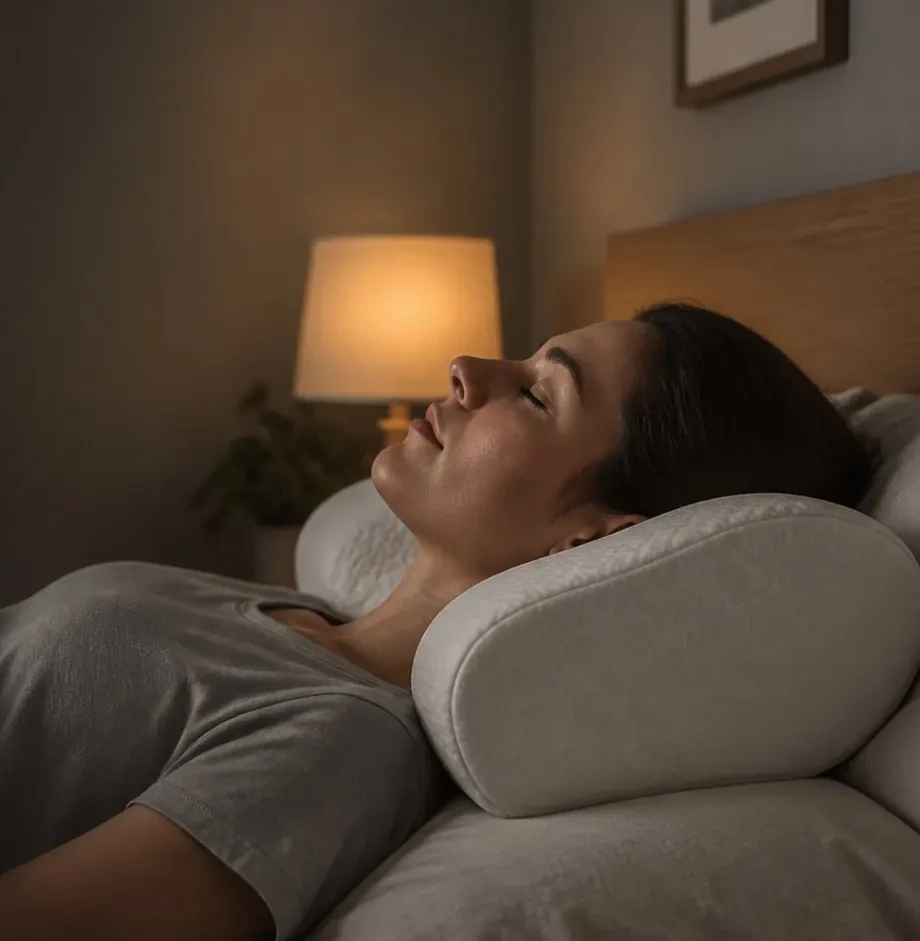
The armrest is almost always too high or too hard. Use a real bed pillow, or two thin pillows, so your neck stays in line with your spine. If you are a side sleeper, fill the space between your neck and the cushion. If you sleep on your back, keep the pillow thinner so your chin does not tip toward your chest.
If neck pain is already a pattern, the same rules from choosing a pillow for neck pain apply on a couch. A small pillow or rolled towel at the waist can also keep a side-sleeper’s spine from sagging. For lower-back discomfort, a supported sleep position is more useful than trying to curl into the corner of the sofa.
Control Light, Noise and Temperature in a Living Room
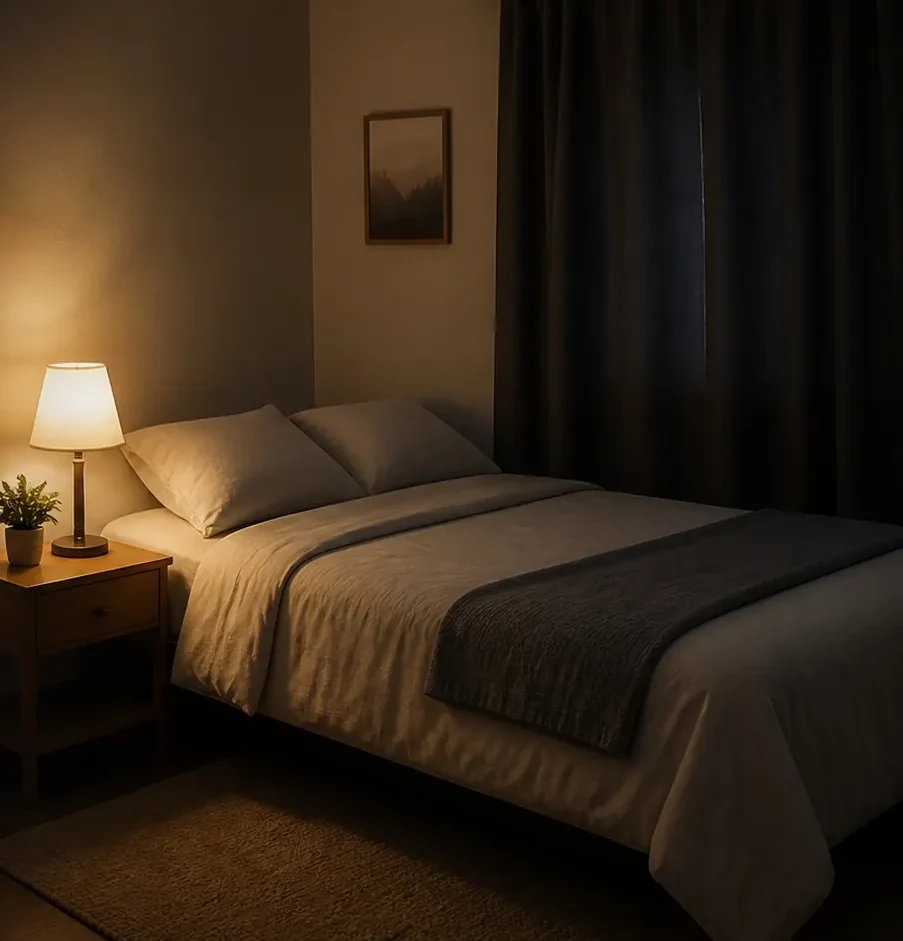
Living rooms are designed to be used at night, which is exactly the problem. Close blinds, turn off decorative lights and cover any bright standby LEDs. If you cannot make the room very dark, an eye mask helps.
Ask early risers and late talkers to keep the space around the couch quiet after lights-out, or move the sleep setup to the quietest corner you have. A fan or a low, steady sound can cover hallway noise.
Temperature is trickier than in a bedroom. You may be closer to a vent, a drafty window or a fireplace that goes cold at 2 a.m. Use a real blanket, not only a decorative throw, and follow the same comfort ideas you would for staying warm in bed or for a sleep-friendly temperature: warm enough to relax, not so hot that you wake up sweaty.
Do Not Turn the Couch Into an All-Night Lounge
The television, a phone and a leftover snack plate make it easy to stay half-awake on the sofa until much too late. Set the space up, finish your wind-down, then treat the couch like a bed: lights down, screens off, alarm placed where you will not knock it off an armrest.
If pets think the couch is theirs at night, give them another spot. A cat on your chest or a dog draped over your feet can be sweet and still wreck the already limited space you have to roll over.
In the Morning, Undo the Stiffness
Get up close to your usual time, stretch your neck and hips slowly, and put the couch back so you are not tempted to take a second unplanned night there. If you will need the sofa again, restock the sheet, pillow and blanket in a basket so the setup takes two minutes instead of twenty.
And if a real bed is free after guests reshuffle, take it. A couch is a backup plan, not a holiday habit. Your neck will remind you if you forget.
A Quick Couch-Sleep Setup
- Clear a full-length space and remove back cushions if you can.
- Add a sheet or smooth blanket, then a supportive pillow for your neck.
- Use a real bedspread or comforter, not only a thin throw.
- Darken the room, mute the TV and keep a water glass and alarm within reach.
- Lie down fully instead of sleeping half sitting against the armrest.
One night on the couch does not have to ruin the next day. A little setup, and a better pillow, is usually the difference between waking up stiff and waking up okay.
General guidance, not medical advice. If a sleep problem persists or gets worse, speak to a qualified clinician. Medical disclaimer