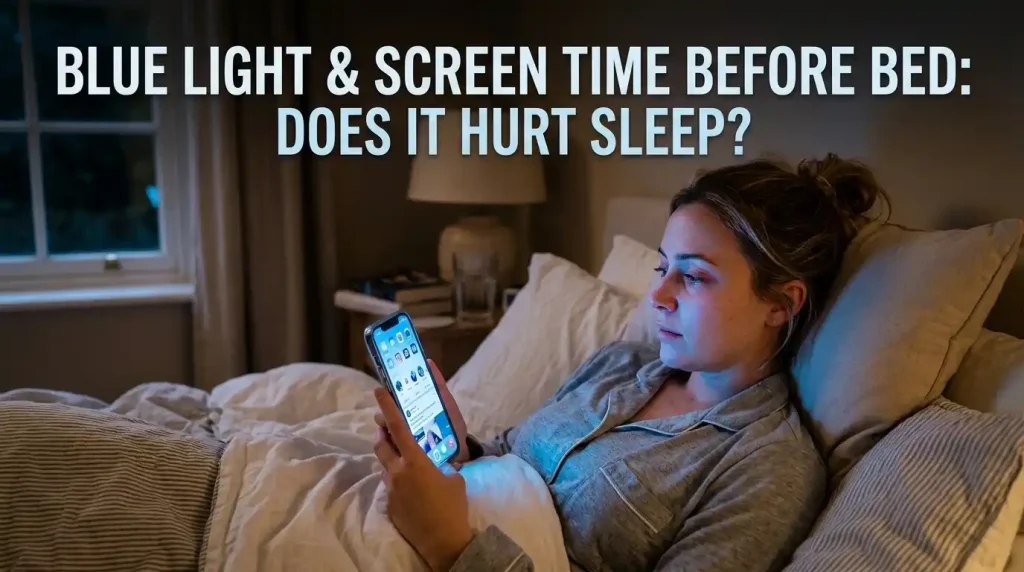
You’ve heard it a hundred times: put the phone down before bed because blue light is wrecking your sleep. It’s become one of the most repeated pieces of sleep advice around. But the real story is more interesting and a little more nuanced than “blue light bad.”
Here’s what screens before bed actually do to your sleep, what the latest research says, whether night mode and blue-light glasses help, and the approach that genuinely makes a difference. For a wider look at the underlying science, see published guidance.
The Two Ways Screens Can Hurt Your Sleep
Screens affect sleep through two separate pathways, and most advice only talks about one.
1. Blue light and melatonin. Screens emit blue-wavelength light, and light is the main signal your body clock uses to decide whether it’s day or night. Bright light in the evening can suppress melatonin your “time for sleep” hormone telling your brain it’s still daytime and delaying sleep.
2. The content keeps your brain switched on. This one gets ignored, but it may matter more. Scrolling social media, checking email, watching one more episode, or reading the news is mentally and emotionally *stimulating*. That cognitive and emotional arousal revs up your brain right when it should be powering down and no light filter can fix that.
What the Research Actually Says
Early lab studies put the blame squarely on blue light: one often-cited study found that two hours of tablet use before bed lowered melatonin by around 22%, and others showed evening blue light shifting the body clock later.
But newer research has complicated that tidy story. A 2026 study from Toronto Metropolitan University found that, among more than 1,000 adults, overall sleep health was broadly similar between nightly screen users and people who didn’t use screens at all. The researchers argued that earlier experiments sometimes “stacked the deck” using artificial, extreme conditions and didn’t account for age, timing, or brightness. Their takeaway: blue light may have been somewhat unfairly blamed, and how, when, and what you use screens for matters as much as the light itself.
The honest summary: evening screens can delay and disrupt sleep, especially with bright screens, long sessions, and use close to bedtime but the effect is smaller and more individual than the headlines suggest, and the stimulating content is a big part of the picture.
Do Night Mode and Blue-Light Glasses Help?
They help a little with the light, not the rest. “Night mode,” warm-tone filters, and amber blue-light glasses do reduce the blue wavelengths reaching your eyes, and some studies show a modest melatonin or sleep-timing benefit. But they do nothing about the arousal from your content: amber glasses won’t calm you down if you’re doom-scrolling.
One underrated tip: simply lowering your screen’s brightness helps regardless of color filtering, because overall light intensity matters too. Think of filters as a small bonus, not a free pass to scroll until lights-out.
So Should You Avoid Screens Before Bed?
For most people, yes but for the right reasons. Cutting evening screens helps less because of some magic property of blue light and more because it removes the bright light and the stimulation, and replaces “just five more minutes” with actual wind-down time. You don’t need to fear your phone; you just need to use it more wisely at night.
How to Handle Screens at Night
A realistic, effective approach:
Aim for a screen curfew devices off about 60 to 90 minutes before bed, which is one of the best-supported sleep habits there is. If you do use a screen, dim the brightness, switch on night mode, and choose low-arousal content (a calm show over breaking news or heated group chats). Keep your phone out of the bedroom or at least across the room, so it’s not the last and first thing you touch. And fill that screen-free window with a genuine wind-down reading a paper book, stretching, a warm shower, or a calming routine.
A Special Note on Kids and Teens
The case is stronger for children and teenagers, whose sleep is both more screen-disrupted and more important for growth and learning. Evening screen use is reliably linked to later bedtimes and lost sleep in this group, and a device curfew screens off an hour or more before bed, charging outside the bedroom is one of the most effective steps parents can take.
The Bottom Line
Blue light and screen time before bed do affect sleep but through two doors, not one: the light nudges your body clock, and the content keeps your mind racing. The latest research suggests blue light alone has been a bit overhyped, while the timing, brightness, and especially the stimulation of what you’re doing matter a lot. So dim your screens, switch to night mode, keep content calm, and ideally power down 60 to 90 minutes before bed. It’s less about fearing blue light and more about giving your brain permission to switch off.
Frequently Asked Questions

Emily Carter writes about sleep routines, nighttime habits, and wellness-focused lifestyle improvements. Her content at The Way We Sleep focuses on practical sleep tips, relaxation methods, and everyday strategies that can help readers create healthier sleep environments. Emily covers nightly routines, relaxation techniques, and the small lifestyle shifts that add up to better rest.
All guides by Emily CarterGeneral guidance, not medical advice. If a sleep problem persists or gets worse, speak to a qualified clinician. Medical disclaimer