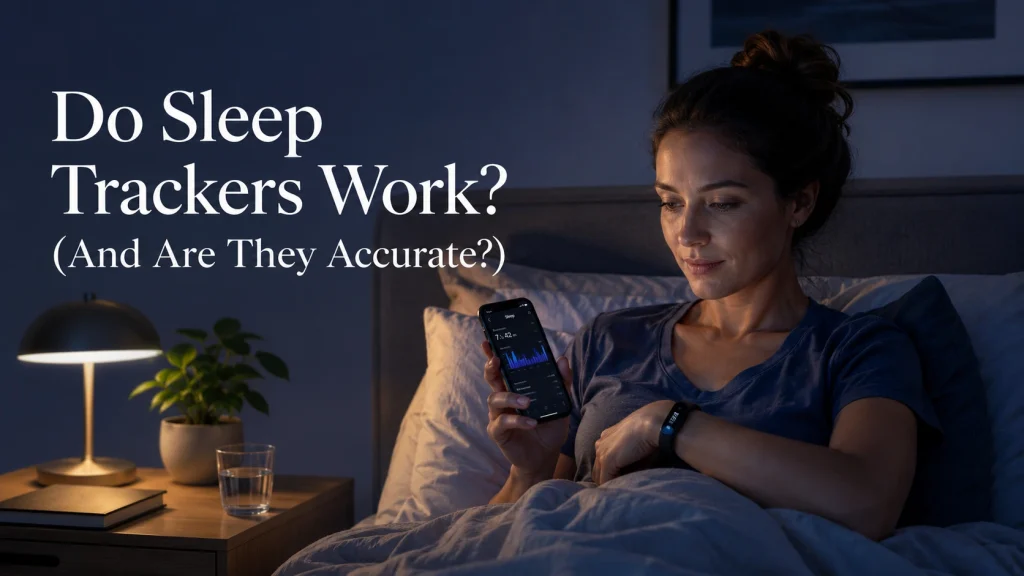
Sleep-tracking rings, watches, and apps have exploded in popularity, promising to reveal exactly how well you slept and hand you a tidy sleep score each morning. But can a gadget on your wrist really measure your sleep and should you trust it? The honest answer is: they’re useful for spotting patterns, but they’re not as precise as they look.
Here’s what sleep trackers actually measure, how accurate they are, and how to use one without driving yourself crazy.
What Sleep Trackers Actually Measure
Most consumer trackers don’t measure sleep directly. Instead, they infer it from movement (via an accelerometer), your heart rate, and often heart rate variability, breathing rate, and skin temperature. From those signals, an algorithm *estimates* when you fell asleep, how long you slept, and how much time you spent in light, deep, and REM sleep. It’s clever, but it’s an educated guess, not a direct reading of your brain.
So How Accurate Are They?
It’s a mixed picture. Trackers are generally good at the big-picture basics total sleep time, when you fell asleep, and when you woke and they’re excellent at spotting trends and consistency over time. Where they struggle is the fine detail: **estimating specific sleep stages** (light, deep, REM) is much harder, and this is where consumer devices are least reliable compared with a clinical sleep study. For a wider look at the underlying science, see this overview.
The gold standard, polysomnography (an overnight lab test measuring brain waves), is far more accurate but impractical for everyday use. Consumer trackers have improved a lot and keep getting better, but no wrist or ring device can yet match a sleep lab for stage-by-stage precision. Treat your nightly stage breakdown as a rough estimate, not gospel.
What They’re Genuinely Useful For
Used the right way, trackers are helpful. They’re great for revealing patterns how your late coffee, that glass of wine, or a screen-filled evening shows up in your sleep the next morning. They help you stay consistent with your schedule, notice trends (are things improving or slipping over weeks?), and build motivation to protect your sleep. As a nudge toward better habits, a tracker can be genuinely valuable.
The Catch: “Orthosomnia”
There’s a real downside worth knowing. Some people become so fixated on their sleep scores that the anxiety itself starts to harm their sleep a phenomenon researchers have nicknamed “orthosomnia.” If you find yourself stressing over a low score, lying awake worrying about your data, or feeling tired *because* the app told you that you slept badly, the tracker is doing more harm than good. Your own felt experience how rested you actually feel matters more than any number.
How to Use a Sleep Tracker Well
Keep perspective. Look at **trends over weeks**, not single nights. Don’t obsess over the exact stage percentages. Use the insights to reinforce good habits consistent schedule, less late caffeine, a proper wind-down — rather than as a verdict on your worth or your day. And crucially, don’t self-diagnose: a tracker flagging “low oxygen” or odd patterns is not a medical diagnosis. If you have real concerns like loud snoring, gasping, or persistent exhaustion, see a doctor for a proper assessment rather than relying on the app.
The Bottom Line
Do sleep trackers work? Yes as pattern-spotters and habit-builders, they’re useful and motivating, and they’re reasonably accurate for how long and when you sleep. But they’re only rough estimators of sleep stages, they can’t replace a clinical test, and obsessing over the numbers can backfire. Use one as a gentle guide, trust how you actually feel, and see a doctor for anything that seems medically off.
Frequently Asked Questions

Daniel Foster reviews mattresses, pillows, and sleep accessories while sharing practical insights on bedroom comfort and sleep setups. His content focuses on usability, comfort, and everyday user experience to help readers explore different sleep products more confidently. Daniel writes the site's hands-on product reviews, buying guides, and head-to-head comparisons.
All guides by Daniel FosterGeneral guidance, not medical advice. If a sleep problem persists or gets worse, speak to a qualified clinician. Medical disclaimer