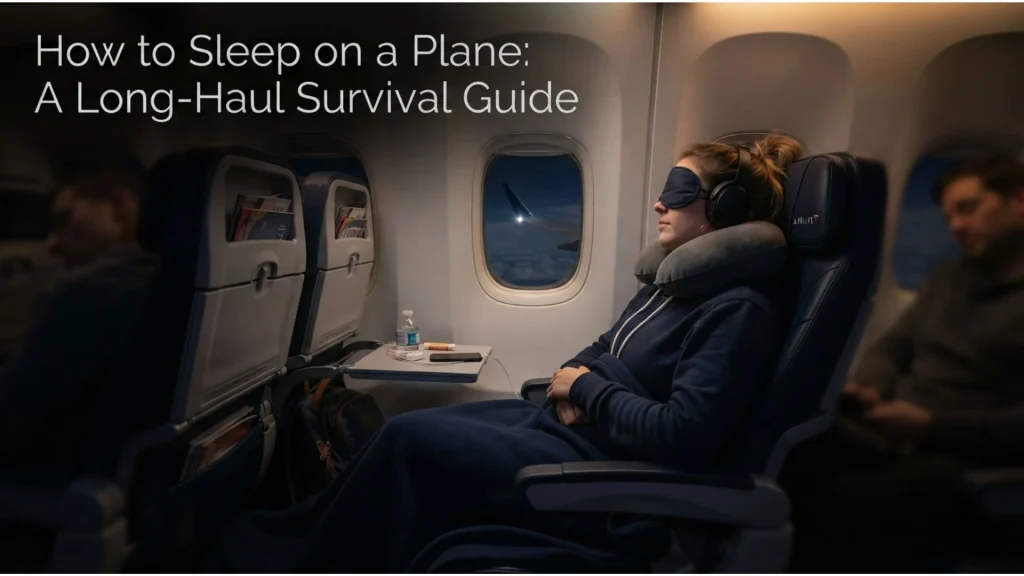
Sleeping on a plane can feel almost impossible cramped seats, engine noise, cabin lights, and the person beside you shuffling to the bathroom every hour. But with the right seat, a little gear, and a few smart habits, you can get real rest at 35,000 feet and arrive feeling far more human.
Here’s how to sleep on a plane.
For a wider look at the underlying science, see published guidance.
Before You Fly: Set Yourself Up
Choose the right seat. A window seat is the sleeper’s best friend you get a wall to lean against and control over the shade, and you won’t be woken by neighbors climbing over you. Try to avoid seats near the galley and bathrooms, where noise and light are constant, and the very back, which tends to be bumpiest.
Dress for sleep. Wear loose, comfortable layers you can add or remove as the cabin temperature swings, and slip-on shoes with cozy socks. Think of it as sophisticated pyjamas.
Get on destination time. If it’s nighttime where you’re headed, commit to sleeping. Setting your watch to your destination as you board helps your mind make the switch (and eases jet lag later).
Pack a Simple Sleep Kit
A few small items make an enormous difference: a supportive neck pillow to stop your head lolling, an eye mask to block cabin and screen light, and earplugs or noise-cancelling headphones to mute the engine drone and chatter. A large scarf or travel blanket adds warmth and comfort. These four things are the core of sleeping well on any flight.
On Board: Get Comfortable
Recline your seat as far as courtesy allows, and if there’s a footrest or you can prop your feet up slightly, do it elevating your legs helps. Support your head against the window or with your neck pillow so it doesn’t drop forward and jolt you awake. Importantly, buckle your seatbelt over your blanket, so the crew can see it and won’t wake you during turbulence checks.
What to Eat, Drink, and Avoid
Stay well hydrated cabin air is very dry but ease off fluids right before you want to sleep to avoid bathroom trips. Skip alcohol and caffeine: both feel tempting but fragment the little sleep you can get and worsen dehydration. A light meal sits better than a heavy one when you’re trying to rest.
Help Your Mind Switch Off
Treat it like bedtime. Dim your screen and put it away well before you want to sleep, then use the same wind-down tricks you’d use at home slow breathing, a calming playlist or white noise, or progressive muscle relaxation. Telling yourself it’s fine to just rest even if you don’t fully sleep takes the pressure off, which ironically makes sleep more likely.
A Note on Sleep Aids
Some travelers use a low dose of melatonin to help sleep on overnight long-haul flights and ease into the new time zone. If you’re considering it or any sleep aid check with your doctor first, especially for the correct timing and dose, and never mix sleep medication with alcohol.
The Bottom Line
To sleep on a plane: book a window seat, dress in comfy layers, and pack a neck pillow, eye mask, and earplugs. On board, recline, support your head, buckle over your blanket, skip the alcohol and caffeine, stay hydrated, and wind down like it’s bedtime. You may not sleep like you do at home, but these steps can turn a miserable red-eye into genuine rest and a much better arrival.

Sophia Bennett specializes in wellness and lifestyle content with a focus on sleep-related topics, stress management, and healthy routines. She creates easy-to-understand articles designed to help readers make more informed sleep and wellness decisions. Sophia covers the wellness side of sleep, stress, mental wellbeing, and the lifestyle changes that make rest more restorative.
All guides by Sophia BennettGeneral guidance, not medical advice. If a sleep problem persists or gets worse, speak to a qualified clinician. Medical disclaimer