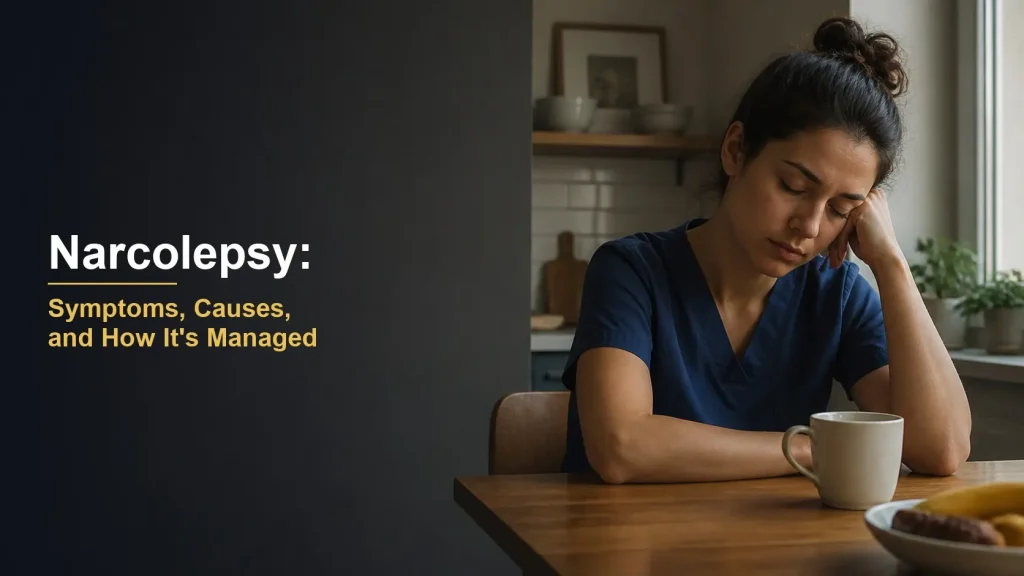
Narcolepsy is often misunderstood as simply “falling asleep at random,” but it’s a genuine, lifelong neurological condition that affects how the brain controls sleep and wakefulness. It’s more common than many realize, frequently goes undiagnosed for years, and — importantly — it’s manageable. Here’s a clear look at the symptoms, causes, and treatment.
This article is general information, not medical advice. Narcolepsy requires diagnosis and treatment from a doctor or sleep specialist.
What Is Narcolepsy?
Narcolepsy is a chronic neurological disorder in which the brain can’t properly regulate the boundaries between sleeping and waking. The result is overwhelming daytime sleepiness and, in some people, sudden intrusions of sleep-related phenomena into waking life. It’s not caused by laziness, poor habits, or simply not sleeping enough at night — it’s a real, physical condition, and people who have it deserve understanding, not judgment. For a wider look at the underlying science, see this overview.
The Main Symptoms
Narcolepsy shows up through several distinctive symptoms:
Excessive daytime sleepiness (EDS). The core symptom — a persistent, powerful urge to sleep during the day, no matter how much you slept at night. This can include “sleep attacks,” where sleep comes on suddenly and is hard to resist.
Cataplexy. A sudden, temporary loss of muscle tone or strength — from slight (drooping eyelids, slurred speech) to a full collapse — usually triggered by strong emotions like laughter or surprise. Cataplexy is a hallmark of one type of narcolepsy.
Sleep paralysis. A temporary inability to move or speak while falling asleep or waking up.
Hypnagogic hallucinations. Vivid, dream-like (and sometimes frightening) experiences as you’re drifting off or waking.
Disrupted nighttime sleep. Ironically, despite the daytime sleepiness, night sleep is often fragmented and broken.
The Two Types
Narcolepsy comes in two forms. Type 1 includes cataplexy and is linked to low levels of a brain chemical called hypocretin (orexin), which helps keep you awake. Type 2 involves excessive daytime sleepiness without cataplexy. Both share the core symptom of overwhelming sleepiness.
What Causes Narcolepsy?
In type 1, the cause is a loss of the brain cells that produce hypocretin (orexin) — the chemical that stabilizes wakefulness. Research strongly suggests this loss is often autoimmune, where the body’s immune system mistakenly attacks those cells, sometimes triggered by genetic factors and certain infections. The exact cause of type 2 is less clear. Narcolepsy isn’t something a person brings on themselves.
How Narcolepsy Is Diagnosed
Because its symptoms overlap with other conditions, narcolepsy is often missed or misdiagnosed for years. Proper diagnosis is done by a doctor or sleep specialist, usually involving a review of your symptoms and sleep studies — an overnight sleep study (polysomnography) followed by a daytime nap test (the multiple sleep latency test) that measures how quickly you fall asleep and enter REM. If you suspect narcolepsy, seeing a specialist is the essential first step.
How Narcolepsy Is Managed
There’s currently no cure, but narcolepsy is very manageable, and most people can lead full, active lives with the right approach. Management typically combines medication (prescribed and monitored by a doctor to improve wakefulness and control cataplexy) with lifestyle strategies: taking short, scheduled naps during the day, keeping a consistent sleep schedule, practicing good sleep habits, and being mindful of safety (for example, around driving until symptoms are controlled). A specialist tailors treatment to the individual.
When to See a Doctor
See a doctor or sleep specialist if you have persistent, overwhelming daytime sleepiness that interferes with your life, episodes of sudden muscle weakness triggered by emotion (cataplexy), or sleep attacks. These deserve proper evaluation — an accurate diagnosis is life-changing, opening the door to effective treatment and support. Don’t dismiss severe daytime sleepiness as normal tiredness.
The Bottom Line
Narcolepsy is a real neurological disorder that disrupts the brain’s control of sleep and wakefulness, causing overwhelming daytime sleepiness and, for some, cataplexy, sleep paralysis, and hallucinations. It’s often underdiagnosed, but with a proper diagnosis from a sleep specialist and a combination of medication and lifestyle strategies, it’s very manageable. If severe daytime sleepiness is affecting your life, please see a doctor — help is available.
Related reading: the bedroom setup guide and calmer ways to fall asleep.
Frequently Asked Questions
What is narcolepsy?
Narcolepsy is a chronic neurological disorder in which the brain can’t properly regulate sleep and wakefulness, causing overwhelming daytime sleepiness and sometimes sudden sleep attacks. It’s a physical condition, not a result of laziness or poor sleep habits.
What are the symptoms of narcolepsy?
The main symptom is excessive daytime sleepiness. Others include cataplexy (sudden muscle weakness triggered by emotion), sleep paralysis, vivid hallucinations while falling asleep or waking, and fragmented nighttime sleep.
What causes narcolepsy?
Type 1 narcolepsy is caused by the loss of brain cells that produce hypocretin (orexin), a chemical that keeps you awake — a loss often thought to be autoimmune, involving genetic and environmental triggers. The cause of type 2 is less well understood.
How is narcolepsy diagnosed?
A doctor or sleep specialist diagnoses it through a symptom review and sleep studies — typically an overnight polysomnography followed by a daytime multiple sleep latency test that measures how quickly you fall asleep and enter REM sleep.
Can narcolepsy be cured?
There’s no cure yet, but narcolepsy is very manageable. A combination of doctor-prescribed medication and lifestyle strategies — like scheduled naps and a consistent schedule — allows most people to lead full, active lives.

Emily Carter writes about sleep routines, nighttime habits, and wellness-focused lifestyle improvements. Her content at The Way We Sleep focuses on practical sleep tips, relaxation methods, and everyday strategies that can help readers create healthier sleep environments. Emily covers nightly routines, relaxation techniques, and the small lifestyle shifts that add up to better rest.
All guides by Emily CarterGeneral guidance, not medical advice. If a sleep problem persists or gets worse, speak to a qualified clinician. Medical disclaimer