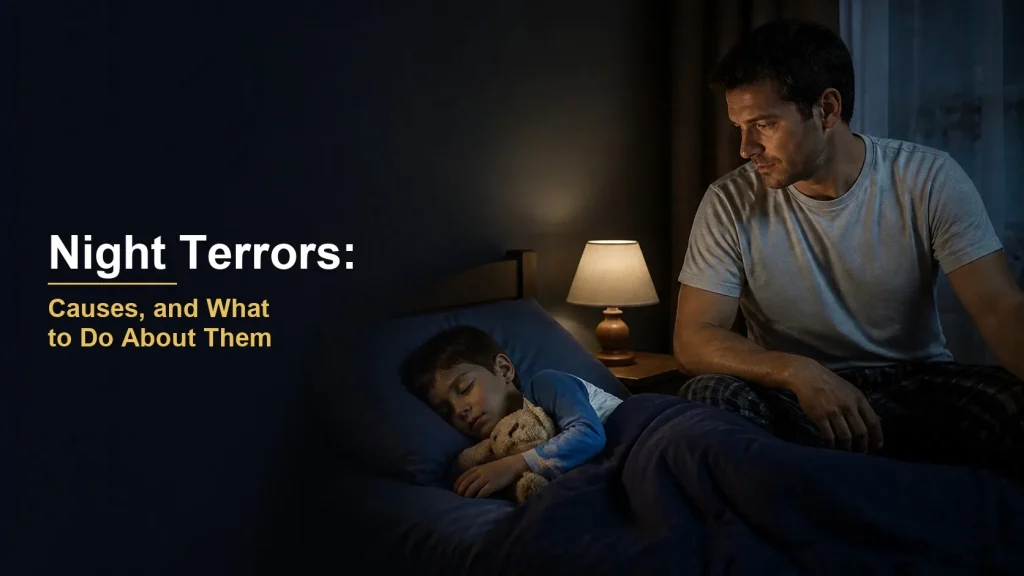
Watching your child suddenly sit up screaming, wide-eyed and inconsolable — yet with no memory of it in the morning — is genuinely frightening. Night terrors can be alarming to witness (and to experience as an adult), but they’re usually harmless. Here’s what night terrors are, how they differ from nightmares, and what to do about them.
What Are Night Terrors?
A night terror is an episode of intense fear, screaming, thrashing, or panic that happens during deep sleep, usually in the first few hours of the night. The person may sit up, cry out, look terrified, sweat, and have a racing heart — yet they’re not fully awake and usually don’t remember the episode afterward. Night terrors belong to a group of sleep behaviors called parasomnias (the same family as sleepwalking). For a wider look at the underlying science, see this overview.
They’re most common in children, typically between ages three and eight, and most kids simply grow out of them. They can occur in adults too, though it’s less common.
Night Terrors vs. Nightmares: The Key Difference
People often confuse the two, but they’re quite different. Nightmares are frightening dreams that happen during REM sleep (usually later in the night); the person wakes up fully and often remembers the dream vividly. Night terrors happen during deep non-REM sleep (usually early in the night); the person does not fully wake, is hard to console, and remembers nothing the next day. In short: nightmares are remembered bad dreams; night terrors are un-remembered episodes of panic.
What Causes Night Terrors?
Night terrors are more likely when deep sleep is disrupted or intensified. Common triggers include sleep deprivation and being overtired, an irregular sleep schedule, stress or anxiety, fever or illness (especially in children), a full bladder, certain medications, and disrupted sleep from other sleep disorders. There’s often a genetic component, so they can run in families alongside sleepwalking.
What to Do During a Night Terror
This is the most important part, and it’s counterintuitive: don’t try to wake the person. During a night terror, waking them is difficult and tends to leave them more confused, frightened, or agitated. Instead:
Stay calm and keep them safe — gently guide them back to bed and remove anything they could bump into or knock over. Don’t restrain them unless they’re at risk of hurting themselves. Speak softly and reassuringly, but don’t expect a response. And simply wait it out — most episodes pass on their own within a few minutes, and the person settles back into sleep with no memory of it.
How to Reduce Night Terrors
Since being overtired and stressed are key triggers, prevention centers on protecting sleep:
Make sure your child (or you) gets enough sleep on a consistent schedule, since overtiredness is a major trigger. Reduce stress with a calming bedtime routine. Keep the sleep environment safe in case of thrashing or sleepwalking, and treat any illness or fever promptly. For a child with frequent night terrors that happen at a predictable time, a technique called scheduled awakenings — gently rousing them briefly about 15 minutes before the usual episode — can help break the pattern (a doctor can guide this).
When to See a Doctor
Occasional night terrors, especially in children, are usually harmless and outgrown. But see a doctor if they’re frequent, violent, or risk injury, if they begin or persist into adulthood (which is less common and worth evaluating), if they cause significant daytime sleepiness, or if they’re clearly distressing. A doctor can check for underlying triggers or sleep disorders and advise on management.
The Bottom Line
Night terrors are episodes of panic during deep sleep — dramatic to witness but usually harmless, most common in children, and typically outgrown. Unlike nightmares, they aren’t remembered and the person doesn’t fully wake. The best response is not to wake them, but to keep them safe and wait it out. Protect against them with enough consistent sleep and low stress, and see a doctor if they’re frequent, injurious, or persist into adulthood.
Frequently Asked Questions
What are night terrors?
Night terrors are episodes of intense fear, screaming, or thrashing during deep sleep, usually early in the night. The person isn’t fully awake, is hard to console, and typically doesn’t remember it afterward. They’re a parasomnia, most common in children.
What’s the difference between night terrors and nightmares?
Nightmares are frightening dreams during REM sleep that you wake from and remember. Night terrors happen during deep non-REM sleep, the person doesn’t fully wake or remember them, and they’re much harder to console. The key differences are timing, awareness, and memory.
What causes night terrors?
Common triggers include being overtired, an irregular sleep schedule, stress, fever or illness, a full bladder, certain medications, and other sleep disruptions. They often run in families, and are most common in children aged three to eight.
Should you wake someone having a night terror?
No. Waking them is difficult and usually leaves them more confused and frightened. Instead, stay calm, keep them safe from injury, gently guide them back to bed, and wait it out — most episodes pass within minutes on their own.
When should I worry about night terrors?
See a doctor if they’re frequent, violent, or risk injury, if they begin or continue into adulthood, if they cause daytime sleepiness, or if they’re very distressing. Occasional night terrors in children are usually harmless and outgrown.

Sophia Bennett specializes in wellness and lifestyle content with a focus on sleep-related topics, stress management, and healthy routines. She creates easy-to-understand articles designed to help readers make more informed sleep and wellness decisions. Sophia covers the wellness side of sleep, stress, mental wellbeing, and the lifestyle changes that make rest more restorative.
All guides by Sophia BennettGeneral guidance, not medical advice. If a sleep problem persists or gets worse, speak to a qualified clinician. Medical disclaimer