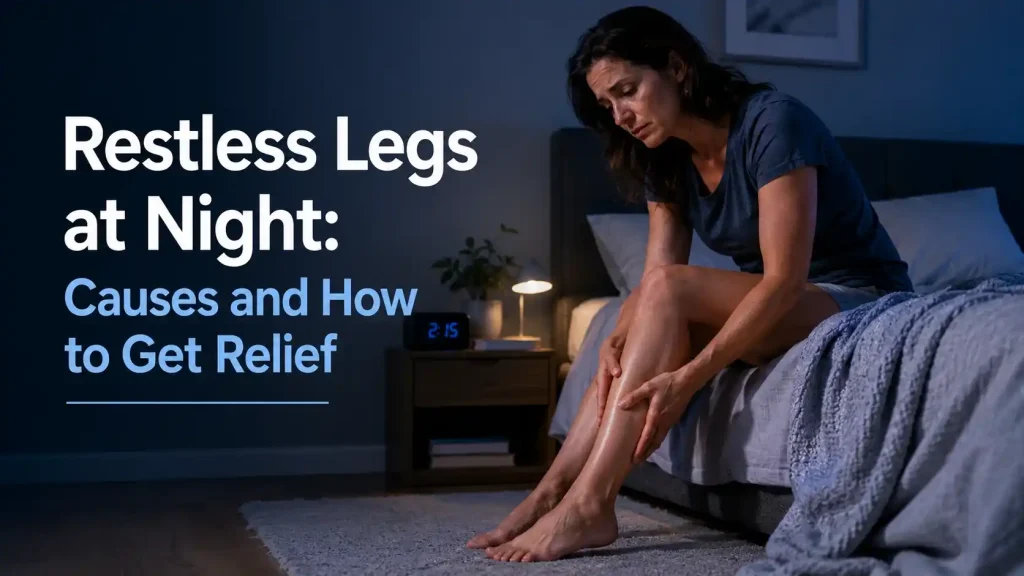
You finally lie down to sleep and your legs start up. That crawling, tingling, achy, have-to-move-them feeling that eases the second you get up and walk, only to return the moment you settle again. It’s maddening, and it’s a real, recognized condition. Here’s what causes restless legs at night and how to find relief.
This article is general information, not medical advice. For diagnosis and treatment, please see a doctor.
What Is Restless Legs Syndrome?
Restless legs syndrome (RLS), also called Willis-Ekbom disease, is a neurological condition that creates an overwhelming urge to move your legs, usually paired with uncomfortable sensations — crawling, tingling, aching, or pulling. Its defining features are that it’s worse when you’re at rest, worse in the evening and at night, and temporarily relieved by movement. Because it strikes exactly when you’re trying to relax and sleep, it’s a notorious sleep-wrecker. It’s also common, affecting a meaningful slice of adults.
What Causes Restless Legs at Night?
Often there’s no single obvious cause (and it can run in families), but several factors are commonly involved:
Low iron. This is one of the most important and treatable links low iron levels in the brain are strongly associated with RLS, even when regular blood tests look normal. Dopamine signaling in the brain also plays a role, which is why symptoms follow a daily rhythm. For a wider look at the underlying science, see this overview.
Certain conditions. Pregnancy (especially the third trimester), kidney disease, diabetes, and nerve issues can trigger or worsen RLS. Some medications including certain antihistamines, anti-nausea drugs, and some antidepressants can aggravate it too. And caffeine, alcohol, and nicotine frequently make symptoms worse, particularly in the evening.
How to Find Relief
Many people ease milder restless legs with lifestyle steps:
Move and soothe in the moment. Walking, stretching, or massaging your legs relieves the urge. A warm bath, or applying a warm or cool pack, can calm the sensations before bed.
Stretch and move regularly. Gentle leg stretches and yoga before bed help, and regular moderate exercise during the day is linked to fewer symptoms — just avoid intense workouts late at night, which can backfire.
Cut the common triggers. Reducing caffeine, alcohol, and nicotine, especially in the evening, makes a real difference for many people.
Keep good sleep habits. A consistent schedule and solid sleep hygiene help, since being overtired can worsen RLS.
Ask about your iron but don’t self-treat. Because low iron is such a common driver, it’s worth asking your doctor to check your levels (including ferritin). Importantly, don’t start iron supplements on your own too much iron is harmful, and this should be guided by testing and a doctor.
When to See a Doctor
See a doctor if restless legs are frequent, disrupt your sleep, or affect your daily life. RLS is very treatable: a doctor can check for low iron or other underlying causes, review any medications that might be contributing, and discuss effective treatments. Persistent restless legs aren’t something you have to simply endure getting them properly assessed can make a huge difference to your sleep.
The Bottom Line
Restless legs at night that irresistible urge to move paired with uncomfortable sensations, worse at rest and relieved by movement is a real condition that can seriously disrupt sleep. Ease milder cases with movement, stretching, warm baths, and cutting evening caffeine and alcohol, and keep a steady sleep routine. Because low iron is a common, treatable cause, see a doctor to check your levels and rule out other factors rather than self-treating. Relief is genuinely achievable.
Frequently Asked Questions

Emily Carter writes about sleep routines, nighttime habits, and wellness-focused lifestyle improvements. Her content at The Way We Sleep focuses on practical sleep tips, relaxation methods, and everyday strategies that can help readers create healthier sleep environments. Emily covers nightly routines, relaxation techniques, and the small lifestyle shifts that add up to better rest.
All guides by Emily CarterGeneral guidance, not medical advice. If a sleep problem persists or gets worse, speak to a qualified clinician. Medical disclaimer