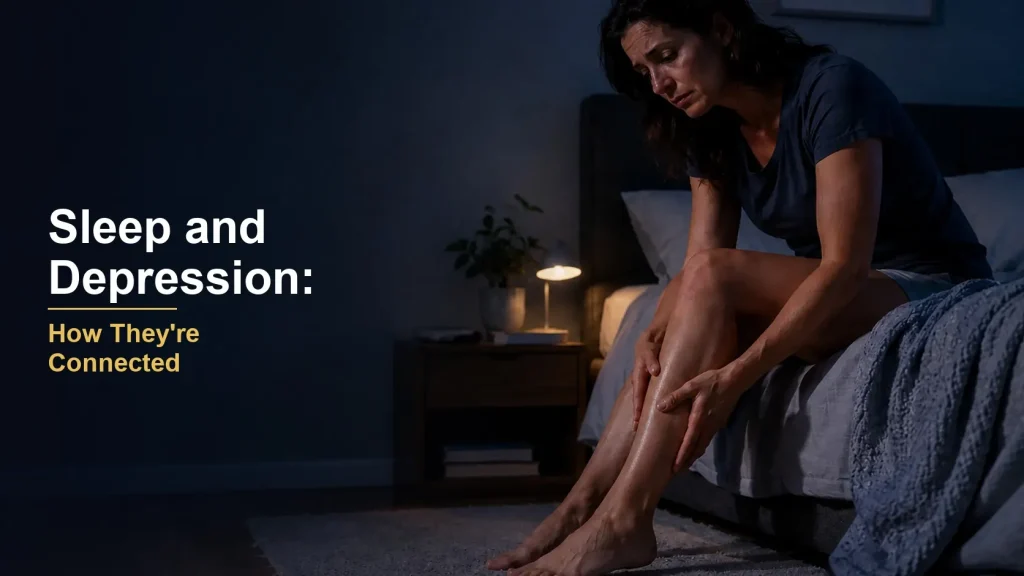
Sleep and mood are deeply intertwined. Anyone who has struggled with depression knows how tangled it can get with sleep — lying awake at night, waking far too early, or feeling unable to get out of bed at all. The relationship runs both ways, and understanding it matters, because it also points toward hope and help. Here’s how sleep and depression connect.
This article is general information, not medical advice, and it can’t replace professional care. If you’re struggling, please reach out to a doctor or mental health professional — support is available and effective.
A Two-Way Relationship
Sleep problems and depression feed into each other. Depression very commonly disrupts sleep — sleep difficulties are one of its most frequent symptoms. At the same time, ongoing poor sleep can worsen mood and contribute to depression, and chronic insomnia is a recognized risk factor for developing it. This creates a difficult loop, where low mood harms sleep and lost sleep deepens low mood. The encouraging flip side: because they’re connected, improving one can genuinely help the other. For a wider look at the underlying science, see this overview.
How Depression Affects Sleep
Depression can disrupt sleep in more than one way. Many people experience insomnia — trouble falling asleep, staying asleep, or waking very early in the morning and being unable to drift off again, which is especially characteristic. Others experience the opposite: hypersomnia, sleeping too much yet still feeling exhausted and unrefreshed. Either way, sleep stops being restorative, which makes the emotional weight of depression even harder to carry.
Why They’re So Linked
Sleep and mood share a lot of the same machinery. They involve overlapping brain chemistry (like serotonin), the body’s stress-response system, and your circadian rhythm — so when one is disrupted, the other often follows. Depression can throw off the body clock and the balance of sleep stages, while poor sleep raises stress hormones and dampens emotional regulation. It’s not a personal failing or lack of willpower; it’s biology.
The Hopeful Part: Help Works
Here’s the most important message: this loop can be broken, and both sleep and mood can improve with the right support. Treating sleep problems can meaningfully ease depression symptoms, and treating depression often restores healthy sleep. Cognitive behavioral therapy for insomnia (CBT-I) has been shown to help with both. Alongside professional treatment — which may include therapy and, for some, other medical care — good sleep habits can be a genuinely supportive part of recovery. You don’t have to untangle this alone.
Sleep Habits That Can Support Your Mood
While they’re not a substitute for professional help, healthy sleep habits can be a meaningful support: keeping a consistent sleep and wake time, getting morning light and some daytime activity (both good for mood and your body clock), building a calming wind-down, and easing off alcohol, which worsens both sleep and mood. Small, gentle steps — and self-compassion while you take them — go a long way.
Please Reach Out
If low mood, hopelessness, or sleep problems are affecting your daily life, please talk to a doctor or mental health professional. Depression is common and very treatable, and reaching out is a sign of strength. And if you’re ever having thoughts of harming yourself or feel you’re in crisis, contact a doctor, a crisis line, or emergency services right away, or reach out to someone you trust — you deserve support, and help is there.
The Bottom Line
Sleep and depression are closely linked, each able to worsen the other — depression often brings insomnia, early waking, or oversleeping, while chronic poor sleep can deepen low mood. But that connection cuts both ways: with professional help and supportive sleep habits, both can improve. If you’re struggling, please reach out. You’re not alone, and things can get better.
Frequently Asked Questions
Does depression affect sleep?
Yes, very commonly. Sleep problems are among the most frequent symptoms of depression, including insomnia, waking very early and being unable to fall back asleep, or oversleeping yet still feeling exhausted. Sleep often stops feeling restorative.
Can lack of sleep cause depression?
Poor sleep doesn’t simply “cause” depression, but chronic insomnia is a recognized risk factor and can worsen or contribute to low mood. Sleep and mood affect each other in both directions, which is why addressing sleep can help.
Why are sleep and depression connected?
They share overlapping brain chemistry, the stress-response system, and the circadian rhythm, so disruption in one often affects the other. Depression can disturb the body clock and sleep stages, while poor sleep raises stress hormones and impairs emotional regulation.
Can improving my sleep help my depression?
It can help. Treating sleep problems — including with cognitive behavioral therapy for insomnia (CBT-I) — has been shown to ease depression symptoms, and good sleep habits support recovery. It works best alongside professional treatment, not as a replacement for it.
When should I get help for depression and sleep problems?
If low mood, hopelessness, or sleep difficulties are affecting your daily life, reach out to a doctor or mental health professional. Depression is very treatable. If you ever have thoughts of harming yourself, contact a doctor, crisis line, or emergency services right away.

Sophia Bennett specializes in wellness and lifestyle content with a focus on sleep-related topics, stress management, and healthy routines. She creates easy-to-understand articles designed to help readers make more informed sleep and wellness decisions. Sophia covers the wellness side of sleep, stress, mental wellbeing, and the lifestyle changes that make rest more restorative.
All guides by Sophia BennettGeneral guidance, not medical advice. If a sleep problem persists or gets worse, speak to a qualified clinician. Medical disclaimer