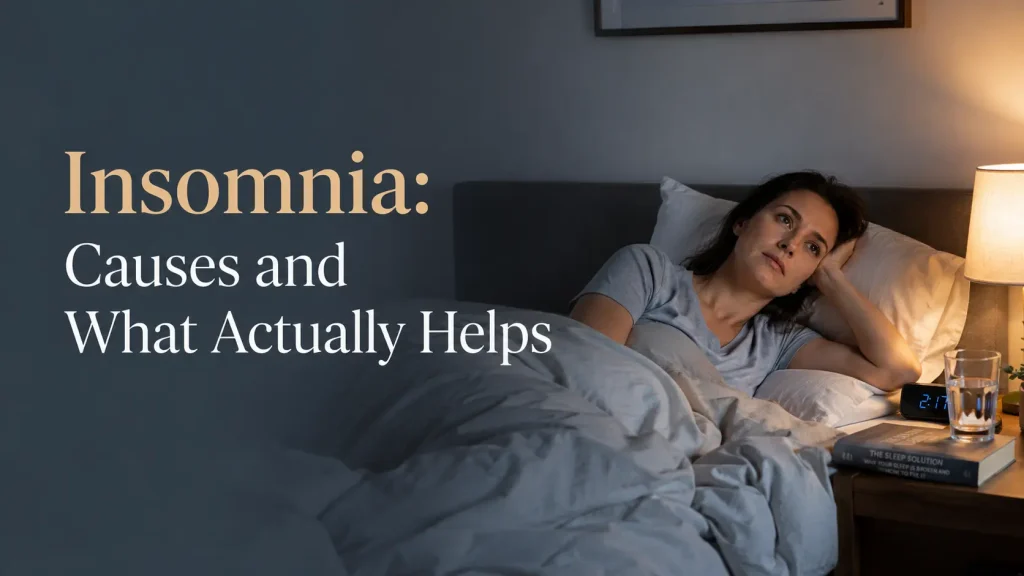
If you regularly lie awake unable to fall asleep, wake through the night, or stir too early and can’t drift off again — all while feeling wrecked the next day you may be dealing with insomnia. It’s the most common sleep complaint there is, and the frustrating truth is that trying harder to sleep usually makes it worse. Here’s a clear look at what causes insomnia and, more importantly, what genuinely helps.
What Is Insomnia?
Insomnia is difficulty falling asleep, staying asleep, or getting good-quality sleep despite having the chance to to the point that it affects how you feel and function during the day. It comes in two broad forms: short-term (acute) insomnia, often triggered by a specific stressor and lasting days or weeks, and chronic insomnia, defined as trouble sleeping at least three nights a week for three months or more. Knowing which you’re facing helps guide the fix.
Common Causes of Insomnia
Insomnia usually has a driver often more than one:
Stress and anxiety are the biggest, keeping the mind racing at bedtime. Poor sleep habits an irregular schedule, screens in bed, naps, or a stimulating evening quietly feed it. Caffeine, alcohol, and nicotine all disrupt sleep. So can an uncomfortable sleep environment, shift work or jet lag, and medical or mental health conditions like pain, depression, anxiety, or sleep apnea. Some medications list insomnia as a side effect, and sleep also naturally becomes lighter with age. Often, a stressful trigger starts it and anxious habits keep it going long after.
What Actually Helps
The encouraging news: most insomnia responds well to the right approach. For a wider look at the underlying science, see this overview.
Nail the fundamentals. Consistent sleep and wake times, a calm wind-down, a cool dark room, morning light, and cutting late caffeine and alcohol form the foundation. These sleep-hygiene basics resolve a lot of short-term insomnia on their own.
Try CBT-I — the gold standard. For chronic insomnia, the most effective, evidence-based treatment isn’t a pill it’s cognitive behavioral therapy for insomnia (CBT-I). It retrains your sleep through techniques like stimulus control (using the bed only for sleep), gently limiting time in bed to rebuild sleep drive, and reworking the anxious thoughts that fuel wakefulness. It’s recommended as the first-line treatment and works for most people, often better than medication in the long run.
Use relaxation tools. Slow breathing, progressive muscle relaxation, and meditation calm the nervous system and quiet a busy mind at bedtime.
Don’t fight it in bed. If you’re wide awake after about 20 minutes, get up, keep the lights dim, and do something calm until you feel sleepy lying there frustrated only trains your brain to associate bed with wakefulness.
Be cautious with sleeping pills. Over-the-counter and prescription sleep aids may help briefly, but they don’t fix the root cause, can cause next-day grogginess, and some carry a risk of dependence. Use them only short-term and under a doctor’s guidance, not as a long-term solution.
When to See a Doctor
See a doctor if your insomnia is chronic (three or more nights a week for three months), is seriously affecting your mood, focus, or daily life, or comes with signs of another condition loud snoring or gasping (possible sleep apnea), restless legs, or low mood. A doctor can rule out underlying causes and connect you with effective help, including CBT-I. You don’t have to just push through it.
The Bottom Line
Insomnia is common, usually driven by stress and habits, and highly treatable. Start with the fundamentals a consistent schedule, a calm wind-down, and a good sleep environment lean on relaxation techniques, and don’t lie in bed battling it. For chronic insomnia, CBT-I is the gold-standard fix, and a doctor can help you access it and rule out other causes. Trying to force sleep rarely works; building the right conditions for it does.
Frequently Asked Questions

Emily Carter writes about sleep routines, nighttime habits, and wellness-focused lifestyle improvements. Her content at The Way We Sleep focuses on practical sleep tips, relaxation methods, and everyday strategies that can help readers create healthier sleep environments. Emily covers nightly routines, relaxation techniques, and the small lifestyle shifts that add up to better rest.
All guides by Emily CarterGeneral guidance, not medical advice. If a sleep problem persists or gets worse, speak to a qualified clinician. Medical disclaimer