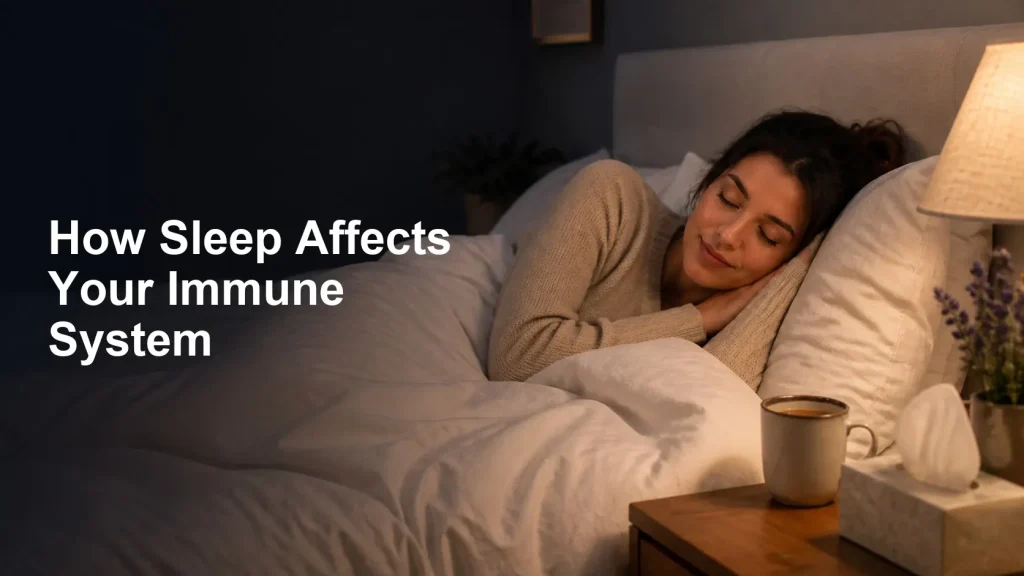
Ever noticed you’re more likely to catch a cold when you’ve been run-down and sleep-deprived? That’s no coincidence. Sleep is one of the pillars of a healthy immune system — while you rest, your body does much of its defensive and repair work. Here’s how sleep strengthens your immunity, and why skimping on it leaves you more vulnerable.
How Sleep Powers Your Immune System
During sleep, your immune system gets to work in ways it can’t while you’re busy and awake. Your body produces and releases proteins called cytokines, some of which are essential for fighting infection and controlling inflammation. Sleep also helps produce and redistribute key immune cells (like T-cells) and strengthens immune memory — the system that lets your body recognize and respond faster to threats it’s seen before. In short, sleep is when your immune defenses are built and maintained. For a wider look at the underlying science, see this overview.
The Evidence: Poor Sleep Makes You More Likely to Get Sick
This isn’t just theory. Research has repeatedly shown that people who sleep too little are significantly more likely to catch a cold when exposed to a virus than those who sleep well. Sleep deprivation weakens your immune response across the board, leaving you more susceptible to infections and slower to recover from them. When you’re short on sleep, your body’s front-line defenses simply don’t work as well.
Why You Sleep More When You’re Ill
Have you noticed you feel exhausted and sleep more when you’re fighting something off? That’s your body being smart. When you’re ill, your immune system ramps up and your body prioritizes sleep to direct energy toward fighting the infection and repairing itself. Resting when sick isn’t laziness — it’s an active part of getting better, which is why “get plenty of rest” is such enduring advice.
Sleep and Vaccines
Here’s a striking example of the sleep-immunity link: studies have found that people who are sleep-deprived around the time of a vaccination can produce a weaker antibody response, meaning less protection. Getting good sleep before and after a vaccine helps your immune system respond as strongly as it should — a small but meaningful reason to prioritize rest around that time.
The Long-Term Cost of Chronic Poor Sleep
The effects go beyond catching more colds. Ongoing sleep deprivation is linked to chronic, low-grade inflammation in the body, which over time is associated with a higher risk of serious conditions like heart disease and type 2 diabetes. Consistently good sleep helps keep your immune system balanced — active enough to defend you, but not stuck in a harmful state of constant low-level inflammation.
How to Support Your Immunity Through Sleep
The takeaway is simple: protect your sleep, especially when you need your defenses most. Aim for enough good-quality sleep on a consistent schedule (most adults need seven to nine hours). Prioritize rest when you’re fighting an illness, going through a stressful period, or around a vaccination. Pair it with the other immune basics — nourishing food, activity, and stress management — and you give your body its best shot at staying well.
The Bottom Line
Sleep is a cornerstone of a strong immune system: while you rest, your body produces infection-fighting proteins, deploys immune cells, and builds immune memory. Too little sleep leaves you more likely to get sick, slower to recover, and, over time, more prone to chronic inflammation. So when you want to stay healthy — or bounce back from illness — getting enough good sleep is one of the most powerful, and easiest, things you can do.
Related reading: the bedroom setup guide and calmer ways to fall asleep.
Frequently Asked Questions
Does sleep boost your immune system?
Yes. During sleep your body produces infection-fighting proteins (cytokines), deploys immune cells, and strengthens immune memory. Good sleep helps your immune system work effectively, while too little weakens your defenses.
Can lack of sleep make you sick?
It can. Research shows people who sleep too little are significantly more likely to catch a cold when exposed to a virus, and they tend to recover more slowly. Sleep deprivation weakens your immune response and leaves you more vulnerable to infection.
Why do I sleep so much when I’m sick?
When you’re ill, your immune system ramps up and your body prioritizes sleep to channel energy into fighting the infection and repairing itself. Sleeping more is an active part of recovery, which is why rest is such important advice when you’re unwell.
Does sleep affect how well vaccines work?
Yes. Studies show that being sleep-deprived around the time of a vaccination can lead to a weaker antibody response, meaning less protection. Getting good sleep before and after helps your immune system respond fully.
How much sleep do I need for a healthy immune system?
Most adults need seven to nine hours of good-quality sleep on a consistent schedule. It’s especially important to prioritize sleep when you’re fighting an illness, under stress, or around a vaccination.

Michael Reeves covers topics related to sleep quality, bedroom comfort, and modern lifestyle habits. He enjoys researching sleep products, recovery routines, and productivity-focused wellness practices to create informative and reader-friendly content. Michael writes about bedroom setup, recovery, and the connection between sleep quality and how you feel during the day.
All guides by Michael ReevesGeneral guidance, not medical advice. If a sleep problem persists or gets worse, speak to a qualified clinician. Medical disclaimer