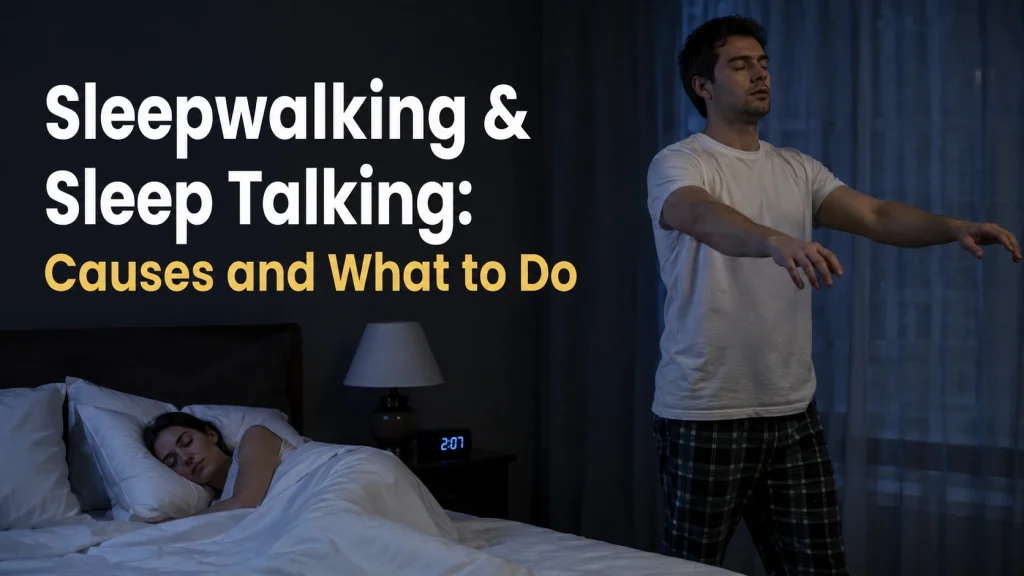
Wandering the house, holding a mumbled conversation, even eating, all while fast asleep and with no memory of it. Sleepwalking and sleep talking are among the most curious things the sleeping brain does. They belong to a group of sleep behaviors called parasomnias, and while they can be unnerving, they’re usually harmless. Here’s what causes them and what to do.
What Are Sleepwalking and Sleep Talking?
Both are parasomnias, unusual behaviors that happen during sleep.
Sleepwalking involves getting up and moving around, or performing activities, while still asleep. It typically happens during deep (slow wave) sleep in the first third of the night, when the brain is caught partway between deep sleep and waking. Sleepwalkers usually have their eyes open but a blank expression, are hard to wake, and remember nothing in the morning. For a wider look at the underlying science, see this overview.
Sleep talking is exactly what it sounds like, talking during sleep, from mumbles to full (if nonsensical) sentences. It can happen in any sleep stage, is very common, and is almost always harmless.
Who Gets Them?
Both are most common in children, and most kids simply grow out of sleepwalking as they get older. They can occur in adults too, sometimes running in families. A strong genetic thread means if your parents sleepwalked, you’re more likely to.
What Causes Sleepwalking and Sleep Talking?
Several things make these behaviors more likely, mostly by disrupting deep sleep:
Sleep deprivation is one of the biggest triggers, as is an irregular sleep schedule. Stress and anxiety, fever or illness (especially in children), and alcohol can all provoke episodes. So can certain medications and other sleep disorders like sleep apnea or restless legs, which fragment sleep and can set off a parasomnia. Being overtired is a common thread through most of these.
Are They Dangerous?
Sleep talking is essentially harmless. Sleepwalking is usually harmless too, but it carries a risk of injury. A sleepwalker might trip, fall down stairs, or leave the house. So while the behavior itself isn’t dangerous, the surroundings can be, which is why safety matters.
Should You Wake a Sleepwalker?
Here’s a popular myth cleared up: it’s not dangerous to wake a sleepwalker. That old warning isn’t true. However, waking them can leave them confused, startled, or disoriented, since they’re surfacing abruptly from deep sleep.
The gentler, recommended approach is to calmly guide them back to bed without necessarily fully waking them. If you do need to rouse them, do it softly.
How to Reduce Sleepwalking and Sleep Talking
Since being overtired and stressed are key triggers, prevention centers on solid sleep.
Get enough sleep and keep a consistent schedule so you’re not sleep deprived. Manage stress with a calming wind down routine. Limit alcohol, especially in the evening.
And if episodes are frequent, make the environment safe. Lock doors and windows, put a gate at the top of stairs, remove trip hazards and sharp objects, and keep car keys out of easy reach. Treating any underlying sleep disorder helps too.
When to See a Doctor
Occasional sleep talking or childhood sleepwalking rarely needs medical attention. But see a doctor if episodes are frequent, violent, or risk injury, if sleepwalking begins in adulthood, which is less common and worth checking, or if there’s excessive daytime sleepiness that might point to an underlying sleep disorder like apnea.
A doctor can identify triggers and, if needed, discuss treatment.
The Bottom Line
Sleepwalking and sleep talking are parasomnias, usually harmless quirks of the sleeping brain, most common in children and often triggered by being overtired or stressed.
Sleep talking needs little more than reassurance. For sleepwalking, gently guide the person back to bed. Waking them isn’t dangerous but can disorient them, so making the home safe is important.
Prioritize enough consistent sleep, and see a doctor if episodes are frequent, risky, or new in adulthood.
Frequently Asked Questions

Emily Carter writes about sleep routines, nighttime habits, and wellness-focused lifestyle improvements. Her content at The Way We Sleep focuses on practical sleep tips, relaxation methods, and everyday strategies that can help readers create healthier sleep environments. Emily covers nightly routines, relaxation techniques, and the small lifestyle shifts that add up to better rest.
All guides by Emily CarterGeneral guidance, not medical advice. If a sleep problem persists or gets worse, speak to a qualified clinician. Medical disclaimer