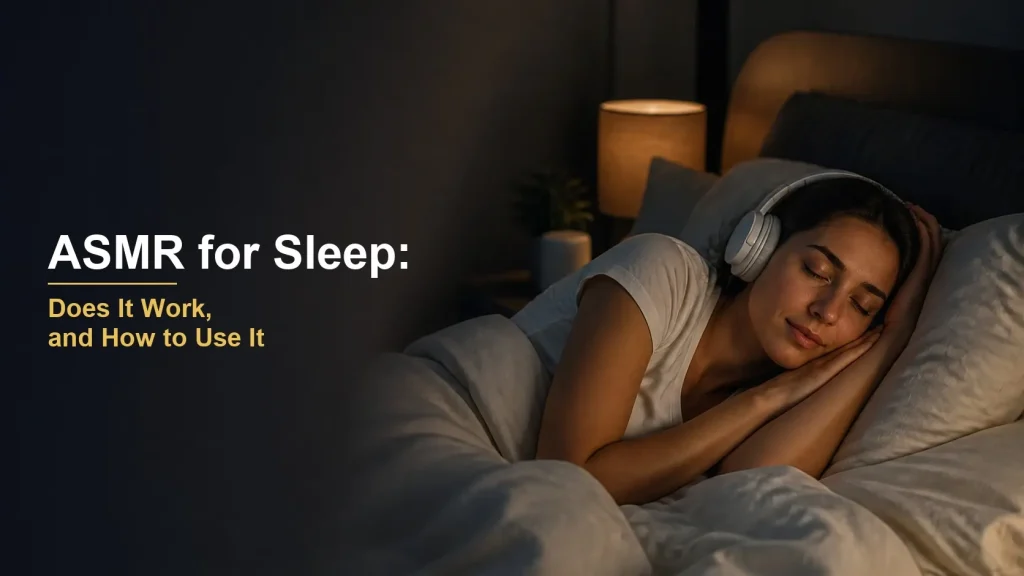
Whispered voices, gentle tapping, the soft crinkle of paper — ASMR videos rack up millions of views from people using them to relax and drift off. If you’ve ever felt a wave of calm (or tingles) from certain quiet sounds, you already understand the appeal. But does ASMR actually help you sleep? Here’s what it is, why it works for so many, and how to use it.
What Is ASMR?
ASMR stands for Autonomous Sensory Meridian Response — a tingling, deeply relaxing sensation that often starts on the scalp and travels down the neck and spine, triggered by certain gentle sounds or visuals. People describe it as a soothing, brain-tingling calm. It’s typically set off by things like soft whispering, tapping, crinkling, slow hand movements, or a sense of quiet personal attention. For a wider look at the underlying science, see this overview.
One important note: not everyone experiences the tingles. ASMR sensitivity varies a lot from person to person — some feel it intensely, others not at all. But even people who don’t get “tingles” often still find the sounds calming, which is what matters for sleep.
Does ASMR Actually Help You Sleep?
For many people, yes. ASMR promotes sleep by triggering relaxation: research on those who experience it has found it can lower heart rate and increase feelings of calm and sleepiness. It works on a few levels — the gentle, repetitive sounds soothe your nervous system, and they give your busy mind something calm and pleasant to focus on, crowding out the racing thoughts that keep you awake. The science is still young and effects vary, but plenty of people find it a genuinely helpful wind-down tool.
Common ASMR Triggers and Types
ASMR comes in many styles, so it’s worth exploring to find what relaxes you:
Whispering and soft speaking — gentle, close-up voices. Tapping and scratching — fingernails on various surfaces. Crinkling — paper, plastic, or packaging. Personal-attention roleplay — simulated haircuts, spa treatments, or someone “taking care of you.” Nature and ambient sounds — rain, fireplace crackle, soft rustling. Mouth sounds and eating sounds (which some love and others find off-putting). Trying a few types quickly reveals which triggers work for you — and which don’t.
How to Use ASMR for Better Sleep
To make ASMR part of your wind-down:
Find your triggers. Experiment with different creators and sound types until you find what reliably relaxes you.
Go audio-first. Since screens and blue light can hinder sleep, use audio-only ASMR (or listen with your eyes closed) rather than watching a bright video as you’re trying to drift off. Comfortable earbuds or a soft speaker work well.
Set a sleep timer. Use a timer so the audio fades out after you’ve fallen asleep, rather than playing all night.
Make it a ritual. Pair it with the rest of your wind-down — dim lights, comfy bed — so it becomes a consistent cue that it’s time to sleep.
If ASMR Isn’t for You
ASMR is wonderful for some and does nothing for others — and that’s completely normal. If the tingles never come or the sounds don’t relax you (or even irritate you), don’t force it. Plenty of other wind-down tools work just as well, from white or brown noise and sleep meditations to calming music and breathing exercises. The best sleep aid is whatever genuinely soothes you.
The Bottom Line
ASMR can be a lovely, natural way to relax into sleep — its gentle, repetitive sounds calm your nervous system and quiet a racing mind, and many people find it eases them into rest. Explore different triggers, keep it audio-first with a sleep timer, and fold it into your wind-down. It’s not universal, so if it doesn’t click for you, no worries — but for the millions it helps, it’s a soothing, free path to sleep.
Frequently Asked Questions
What is ASMR?
ASMR (Autonomous Sensory Meridian Response) is a tingling, deeply relaxing sensation, often starting on the scalp and moving down the neck and spine, triggered by gentle sounds or visuals like whispering, tapping, or crinkling. Not everyone experiences the tingles, but many find the sounds calming.
Does ASMR really help you sleep?
For many people, yes. Research on those who experience ASMR shows it can lower heart rate and boost calm and sleepiness. The soothing, repetitive sounds relax your nervous system and give your mind a calm focus, which helps you fall asleep. Effects vary by person.
What are the most common ASMR triggers?
Popular triggers include whispering and soft speaking, tapping and scratching, crinkling sounds, personal-attention roleplay (like simulated haircuts or spa treatments), and ambient nature sounds. Trying different types helps you find what relaxes you.
How do I use ASMR to fall asleep?
Find triggers that relax you, use audio-only ASMR or listen with your eyes closed to avoid screen light, set a sleep timer so it fades out, and make it part of a consistent wind-down routine with dim lights.
Why doesn’t ASMR work for me?
ASMR sensitivity varies a lot — some people feel strong tingles, others none at all, and some find the sounds irritating. That’s completely normal. If ASMR doesn’t relax you, other tools like white noise, sleep meditation, or calming music may work better.

Michael Reeves covers topics related to sleep quality, bedroom comfort, and modern lifestyle habits. He enjoys researching sleep products, recovery routines, and productivity-focused wellness practices to create informative and reader-friendly content. Michael writes about bedroom setup, recovery, and the connection between sleep quality and how you feel during the day.
All guides by Michael ReevesGeneral guidance, not medical advice. If a sleep problem persists or gets worse, speak to a qualified clinician. Medical disclaimer