How to Keep Kids on a Sleep Schedule During the Holidays
Keep kids on a sleep schedule during the holidays with a short portable bedtime routine, wake times close to normal, and a plan for travel and late nights.
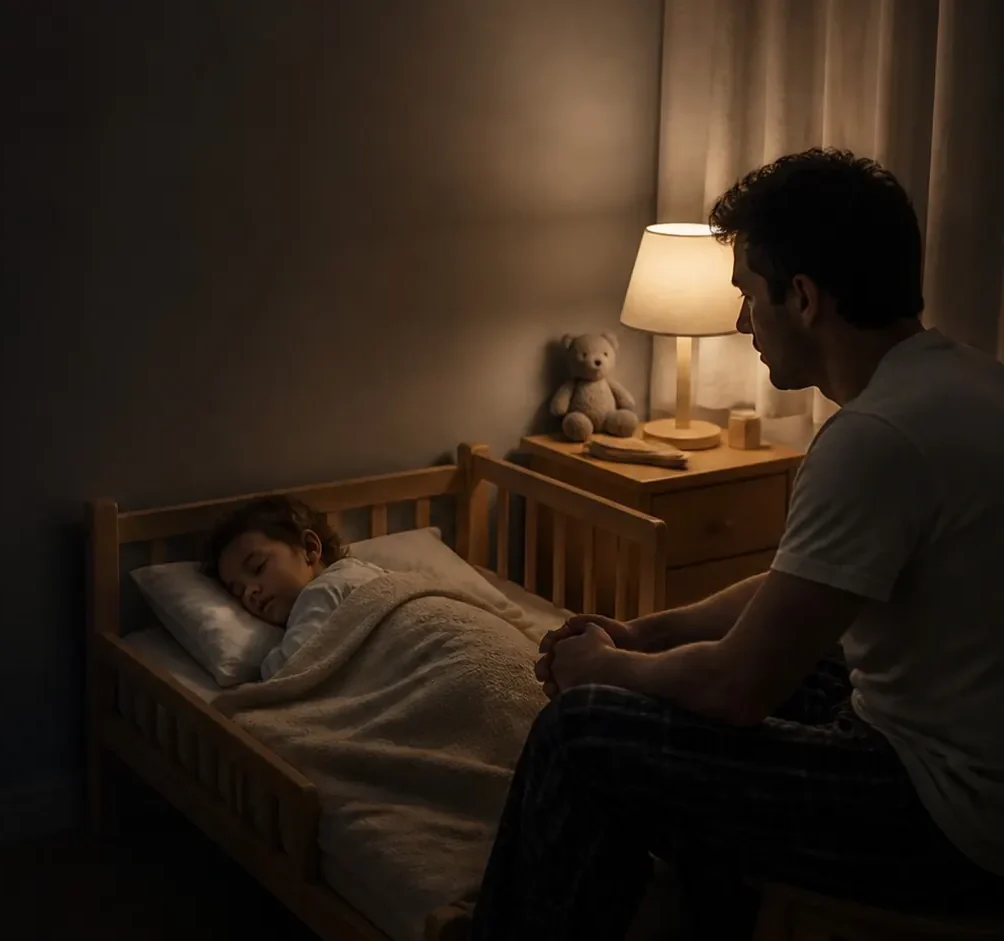
School nights have a structure that holidays cheerfully ignore. Dinner runs late, cousins stay over, grandparents offer “just one more movie,” and the whole house is still lit up at 10 p.m. A few loose nights will not harm a well-rested child. A two-week slide in bedtime and wake time, though, can make the return to school miserable, and it can leave kids more irritable, more accident-prone, and harder to get to sleep even during the break.
This is a full plan for keeping kids on a sleep schedule during the holidays, from Thanksgiving week through the winter break. It goes deeper than the short note in our holiday sleep tips, with practical ways to handle travel, new houses, late parties, and the week before school starts again.
Quick Summary
- Kids still need the same amount of sleep on vacation as they do during the school year. The American Academy of Sleep Medicine ranges, endorsed by the AAP, are a useful target.
- Protect the wake-up time more than a perfectly fixed bedtime. HealthyChildren.org (from the American Academy of Pediatrics) suggests keeping weekend wake-ups within about an hour of the usual time.
- Bring a short, portable bedtime routine you can run at a relative’s house: dim lights, wash up, one book, lights out.
- Plan the late nights. One later evening is easier to recover from than a string of them, especially if the next morning is not a long sleep-in.
How Much Sleep Kids Still Need on Vacation
The schedule can flex. The sleep need usually cannot. The American Academy of Sleep Medicine recommends these 24-hour totals, including naps where they still apply, and the American Academy of Pediatrics has endorsed the same ranges:
- Ages 1 to 2 years: 11 to 14 hours
- Ages 3 to 5 years: 10 to 13 hours
- Ages 6 to 12 years: 9 to 12 hours
- Ages 13 to 18 years: 8 to 10 hours
If you want the full chart, including adults, see our guide to how much sleep you need by age. For younger children, our toddler sleep schedule and bedtime routine for kids cover the everyday version of this plan.
A child who usually sleeps 10 hours and suddenly goes to bed two hours late, then wakes at the usual time to drive to a grandparent’s house, is simply short on sleep. The holiday fun does not cancel that math.
Protect Wake Time, Then Work Backward
The most useful rule is not “never stay up late.” It is “don’t let wake time drift too far.” HealthyChildren.org notes that if a school-age child sleeps very late, even for a few days, a vulnerable child can shift their sleep phase enough that getting back on schedule is hard and school days start in a fog.
A good holiday range is a bedtime and wake time within about 30 to 60 minutes of your usual times, with an occasional later night when a special event is worth it. If bedtime does move later, try not to let the morning stretch by the same amount every day. Morning light, breakfast, and getting dressed still happen at a familiar hour.
Teens will push for later nights, and their body clocks already trend later in adolescence. They still need 8 to 10 hours. A midnight movie with a 10 a.m. wake-up can work. A 2 a.m. night plus a noon wake-up, repeated for a week, is how Christmas break ends with a teenager who cannot fall asleep before midnight on Sunday.
Pack a Bedtime Routine You Can Do Anywhere
HealthyChildren.org recommends a regular daily routine and a bedtime pattern you can use anywhere, so your child can get to sleep in a new place. “Brush, book, bed” is enough. You do not need the full at-home bath-and-playlist production.
A portable version looks like this:
- Give a 15- to 20-minute warning, even if the grown-ups are still in the living room.
- Dim the lights in the sleep space. Ask the host if you can turn off an overhead light or close a door.
- Wash face and hands, brush teeth, use the bathroom.
- Put on familiar pajamas, and offer a regular comfort object for toddlers and preschoolers (nothing with loose parts that could be a choking hazard).
- Read one short book or tell one quiet story. Then lights out.
Keep the routine to about 30 minutes. The AAP’s advice for school-age children is to avoid letting the routine stretch on with endless book requests and last-minute questions. One choice (“this book or that book”) works better than an open-ended negotiation.
If you want a longer at-home template, use our step-by-step bedtime routine for kids and shrink it to the three or four steps you can repeat on the road.
Sleeping at a Grandparent’s House or in a New Room
A new place is stimulating, and some kids get a burst of late-night energy just when you want the opposite. Arrive, if you can, with enough time for them to see the sleep space in daylight. Let them put a stuffed animal on the bed, and walk the path to the bathroom.
Make the room as boring and dark as you can at night. A hallway night light is fine for safety; a bright lamp in the room is not. If a relative wants the TV on in the same room, an eye mask will not solve much for a young child. Ask for a quieter corner, even if it is a pack-and-play in a bedroom instead of a sofa in the den.
For infants, follow safe-sleep rules wherever you stay: a crib, bassinet, or play yard, baby on their back, no loose blankets or pillows. Do not put a baby down on an adult bed, a couch, or an air mattress. Our guide to sleeping in a new place is written for adults, but the same idea applies: keep as many cues as possible the same.
If two families are sharing a room, agree on a lights-out time and put phones away. A teenager scrolling in the next bed will keep a younger sibling awake. Our article on blue light and screen time before bed explains why this matters, and the AAP recommends keeping screens out of bedrooms and turning them off at least an hour before bed.
How to Handle Late Parties and Special Nights
You do not have to skip the candlelight service, the late dinner, or New Year’s Eve. You do have to plan the recovery.
- Pick the events that are worth a later night, and keep the other evenings closer to normal.
- Offer a quiet rest or an earlier nap for younger children on the day of a late event, without turning the afternoon into a three-hour sleep that then delays bedtime even more.
- After a late night, keep the next morning from slipping too far. A slightly later wake-up (30 to 60 minutes) is a reasonable catch-up; sleeping until noon makes that night’s bedtime harder.
- Watch the sugar and caffeine. Chocolate, soda, and iced tea at 8 p.m. are a hidden reason kids “just aren’t tired.”
- Build in downtime. HealthyChildren.org notes that evening activities and overscheduling are a common barrier to healthy sleep, even when everyone means well.
If a child is wound up after a party, a short wind-down in a dim room still helps: quiet voices, a snack that is not a heavy dessert if they are actually hungry, then the usual routine, even if it starts later than usual.
Getting Back on Schedule Before School
Start shifting two or three nights before the first school morning, not the night before. Move bedtime and wake time earlier by 15 to 30 minutes a day, get morning light at the new wake time, and keep a slightly earlier dinner. Our guide to resetting a sleep schedule uses the same idea for adults.
If the break was chaotic and you only have one day, prioritize wake time and morning light, keep the last evening calm and screen-free, and accept that the first school day may feel rusty. That is still better than another very late night.

The Bottom Line
Kids can enjoy the holidays without giving up sleep. Aim for the same sleep totals they need during the school year, keep wake-ups within about an hour of normal, and travel with a short routine you can run in any house. Save the truly late nights for a few special events, turn screens off an hour before bed, and start easing back toward school times a few days before the alarm clock returns. A loose routine is not a joyless one. It is what lets kids enjoy the next day too.
FAQ: Kids’ Sleep During the Holidays
How late can kids stay up during winter break?
An occasional night 30 to 60 minutes later than usual is reasonable for most children, and a special event can run later if the next morning does not become a long sleep-in. A pattern of very late nights and noon wake-ups is what makes the return to school hard.
Should I let my child sleep in on vacation?
A little, yes. HealthyChildren.org suggests keeping weekend wake-ups within about an hour of the usual time, especially for children who have a hard time shifting back. Sleeping in for several hours, several days in a row, can push bedtime later.
How do I get my child to sleep at a relative’s house?
Show them the sleep space early, bring the usual pajamas and comfort object, dim the room, and run the same short routine you use at home. A door that closes and a room that is not the party’s overflow space will help more than a perfect guest bed.
Do kids need less sleep when they are off from school?
No. The AAP-endorsed ranges still apply. They may be more active during the day, which can help them fall asleep, but they do not suddenly need two hours less at night.
When should I talk to a doctor about my child’s holiday sleep?
If your child snores loudly, gasps, has frequent night terrors, is extremely hard to wake, or has sleep problems that were already present and got much worse, talk with their pediatrician. A few off nights during a busy week are common and usually settle once the routine returns.
This article is for general information only and isn’t a substitute for medical advice. If you have concerns about your child’s sleep, development, or a possible sleep disorder, talk with their pediatrician. Follow current safe-sleep guidance for infants: a crib, bassinet, or play yard, baby on their back, and no loose bedding.
General guidance, not medical advice. If a sleep problem persists or gets worse, speak to a qualified clinician. Medical disclaimer