How to Sleep With Sciatica: Best Positions, Pillows, and Mattress Tips
How to sleep with sciatica: the best sleeping positions, where to put pillows, what mattress helps, and the warning signs that need care right away.
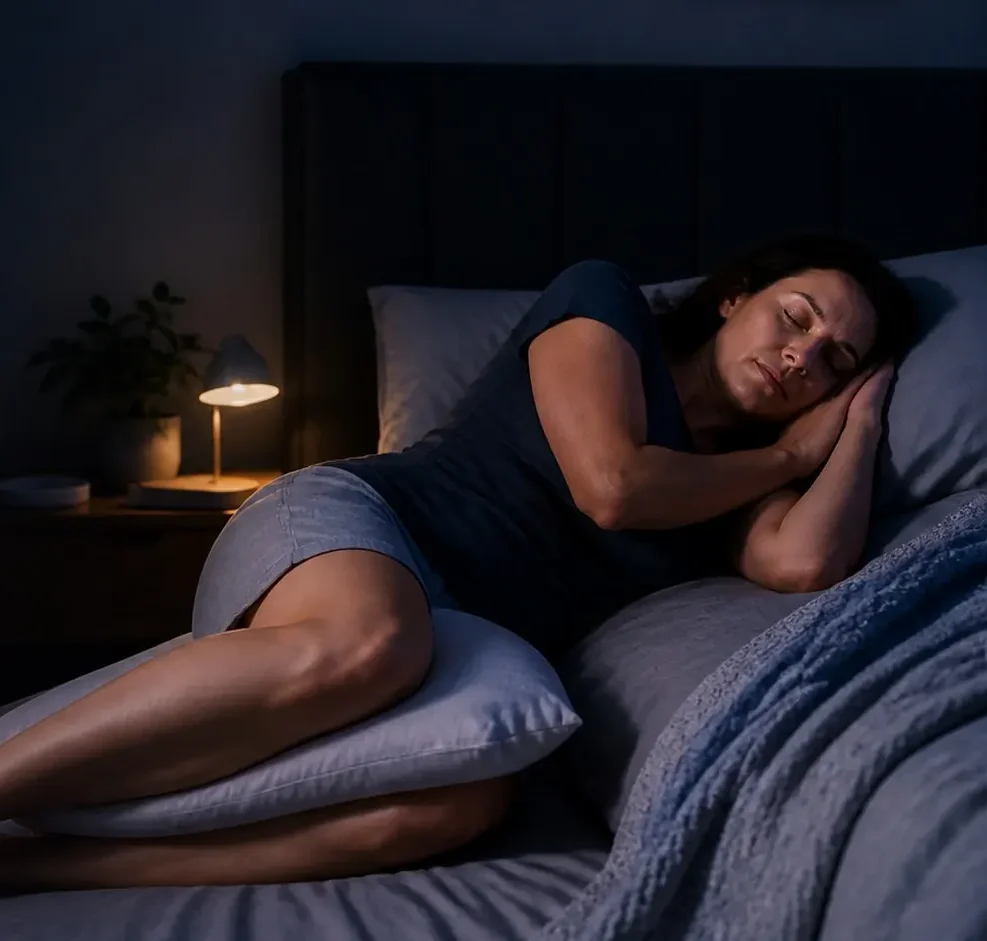
Sciatica has a cruel sense of timing. You might get through the day by moving around, but the moment you lie down, the ache in your lower back flares, or a burning, electric pain runs down the back of your leg. Rolling over wakes you up. Getting out of bed in the morning feels like a project.
The good news is that most sciatica gets better with time, and the way you set up your body at night can take a lot of pressure off the irritated nerve. This guide covers the best sleeping positions for sciatica, how to use pillows, what kind of mattress helps, and the warning signs that mean you need care right away.
Quick Summary
- Sleep on your side with a pillow between your knees, or on your back with a pillow under your knees. Both keep your spine and pelvis in a more neutral line.
- Most sciatica improves. The American Academy of Orthopaedic Surgeons says 80 to 90% of people get better over time without surgery.
- Stay active during the day and try gentle heat or cold before bed. Long bed rest is not recommended.
- Get emergency care for trouble controlling your bladder or bowels, or sudden numbness or weakness in a leg, as Mayo Clinic advises.
What Sciatica Is (and Why Nights Are Hard)
Sciatica is pain that travels along the path of the sciatic nerve, from the lower back through the buttock and down the back of the leg. According to Mayo Clinic, it most often happens when a herniated disk or a bone spur puts pressure on nerve roots in the lower spine. It usually affects one side of the body and can feel like a mild ache, a sharp burn, or an electric jolt, sometimes with numbness or tingling.
Cleveland Clinic notes that the pain may get worse when you cough, sneeze, bend, or lift your legs while lying on your back. That’s why the wrong position in bed can make the night so long. Lying flat with straight legs, twisting your spine, or sinking into a saggy mattress can all add tension to an already irritated nerve.
The Best Sleeping Positions for Sciatica
There’s no single perfect position. The best one is the one that keeps your spine in a neutral line and lets you sleep with the least pain. Start with these and adjust.
Side Sleeping With a Pillow Between Your Knees
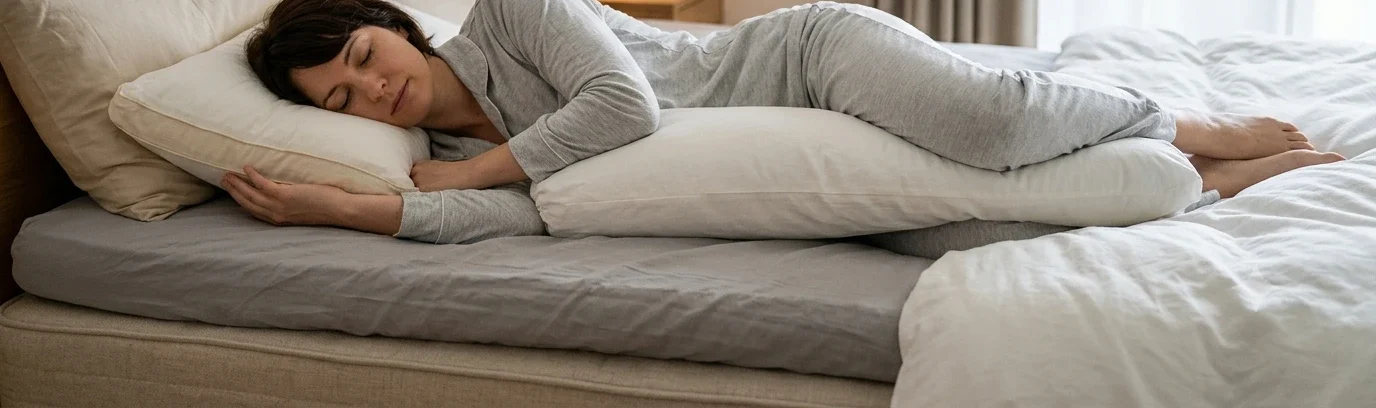
This is the go-to for many people with sciatica. Lie on your side with your knees slightly bent and a firm pillow between your knees and ankles. The pillow keeps your top leg from dragging your pelvis forward and twisting your lower back.
Most people find lying on the pain-free side more comfortable, but try both. A small pillow or rolled towel under your waist can help if there’s a gap between your side and the mattress.
Back Sleeping With a Pillow Under Your Knees
If you sleep on your back, put a pillow or two under your knees. Bending your knees slightly takes stretch off the nerve and lets your lower back relax into the mattress. Some people also like a small rolled towel under the small of the back.
Fetal Position
Curling up gently on your side with your knees drawn toward your chest opens the spaces between the vertebrae a little. Some people, especially those whose sciatica comes from spinal stenosis, find this eases leg pain. Don’t curl so tightly that your back feels strained.
Stomach Sleeping, Only With Support
Stomach sleeping tends to arch the lower back and twist the neck, so it’s usually the least helpful position. If it’s the only way you can sleep, put a thin pillow under your hips and lower belly, and use a flat pillow, or none, under your head.
For a broader look at positions, see our guide to the best sleep position for back pain.
Use Pillows as Tools, Not Just for Your Head
Pillows are the cheapest sciatica aids you own. A few that help:
- A firm knee pillow for side sleeping, so it doesn’t flatten during the night
- A body pillow you can hug and tuck between your knees, which also keeps you from rolling onto your stomach
- A wedge or stacked pillows under the knees for back sleeping
- A supportive head pillow at the right height to keep your neck in line with your spine. Our guide to choosing the best pillow explains heights for side and back sleepers.
What Kind of Mattress Helps Sciatica
A mattress that’s too soft lets your hips sink and bends your spine. One that’s very hard can create pressure points at the hips and shoulders. For back pain in general, medium-firm tends to be a good middle ground. A well-known 2003 trial in The Lancet found that people with chronic low back pain did better on a medium-firm mattress than on a firm one. That study didn’t include people with leg pain, so treat it as a guide, not a rule for sciatica.
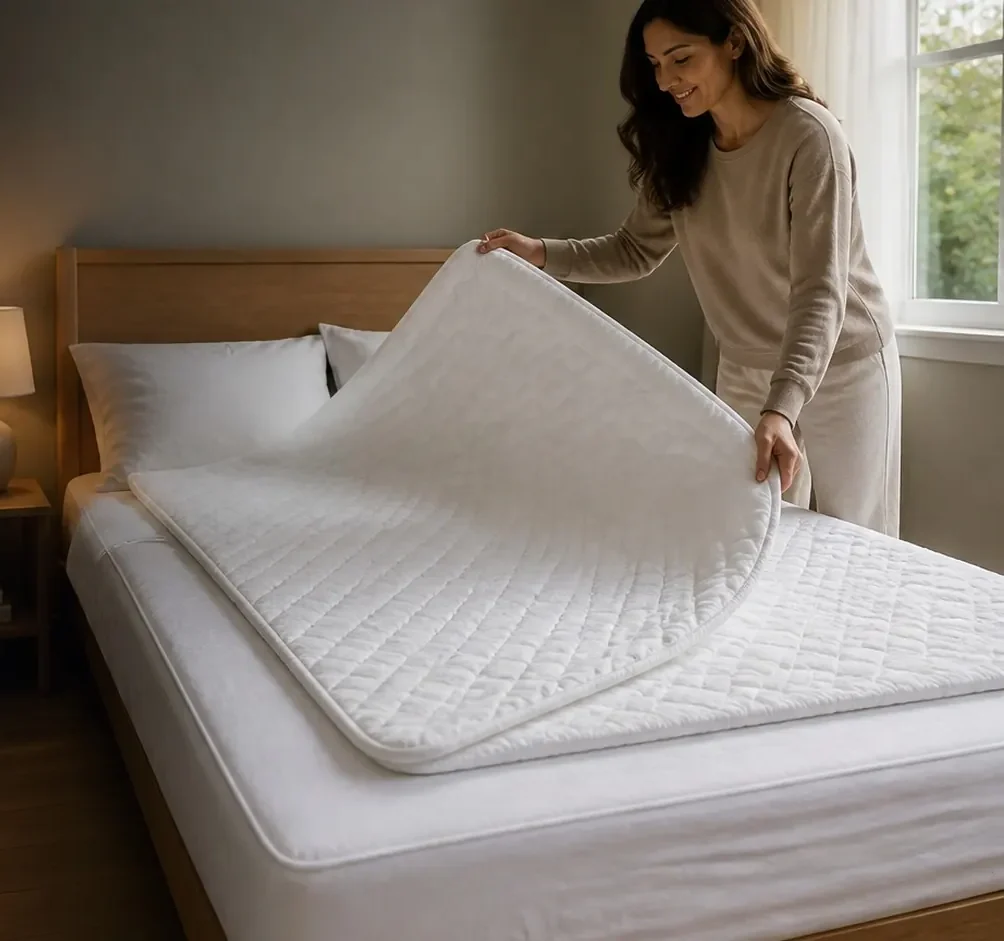
If your mattress is sagging but you can’t replace it yet, a firm mattress topper can add support. If you’re shopping, see our guide on how to choose a mattress.
Ease the Pain Before Bed
What you do in the hour before bed can make lying down easier.
- Try gentle heat or cold. The AAOS says gentle heat or cold on painful muscles can be soothing. Many people use ice for 15 to 20 minutes in the first few days and heat after that. Always use a cloth layer, and never fall asleep on a heating pad.
- Do a few gentle movements. Cleveland Clinic describes physical therapy exercises like bridges and cat-cow. Only do moves that don’t worsen leg pain, and ask a physical therapist for a routine that fits your cause. Our guide to bedtime stretches has easy in-bed options.
- Take a short evening walk. The AAOS advises staying as active as you can rather than staying in bed, because too much rest can cause other parts of the body to feel discomfort.
- Time your pain reliever. Over-the-counter anti-inflammatories can help some people. Ask your doctor or pharmacist about timing and whether they’re safe for you.
- Avoid long sitting before bed. Mayo Clinic notes that sciatica can get worse with long periods of sitting. Break up a long evening on the couch.

Getting In and Out of Bed
Twisting and sitting straight up are hard on an irritated nerve. Use the “log roll”:
- To get up, bend your knees and roll onto your side as one unit, keeping your shoulders and hips together.
- Drop your legs over the edge of the bed while you push up with your arms.
- Sit for a moment, then stand by pushing through your legs.
Reverse the steps to lie down. It feels slow at first, but it keeps your spine from twisting.
If Pain Wakes You Up at Night
If you wake up hurting, change one thing at a time: shift the knee pillow, switch sides, or move from your back to your side. Breathe slowly and let your muscles soften. If you’re still awake and uncomfortable after a while, get up, walk gently for a few minutes, then go back to bed. Lying stiff and frustrated tends to make both pain and sleep worse. Our guide to waking up in the middle of the night has more ideas.
When to See a Doctor
Mild sciatica often goes away over time. Mayo Clinic advises calling your doctor if self-care doesn’t ease symptoms, or if pain lasts longer than a week, is severe, or keeps getting worse. Cleveland Clinic notes that many cases improve within four to six weeks.
Get immediate medical care if you have:
- Sudden numbness or muscle weakness in a leg
- Pain after a violent injury, such as a car accident
- Trouble controlling your bladder or bowels
These can be signs of serious nerve compression that needs urgent treatment.
The Bottom Line
To sleep with sciatica, find a position that keeps your spine neutral: on your side with a pillow between your knees, on your back with a pillow under your knees, or curled gently if that eases your leg. Pair a supportive, medium-firm surface with gentle heat or cold and light movement during the day. Most sciatica improves within weeks, but see a doctor if pain lasts, worsens, or comes with weakness or bladder or bowel changes.
For more on pain-free nights, see our guide to the best sleeping position for pain-free sleep.
FAQ: How to Sleep With Sciatica
What is the best sleeping position for sciatica?
For many people, side sleeping with a firm pillow between the knees works best. Back sleeping with a pillow under the knees is a good alternative. Use whichever keeps your spine neutral and your pain lowest.
Should I sleep on the side that hurts with sciatica?
Most people are more comfortable lying on the pain-free side, with the painful leg on top and a pillow between the knees. Try both and go with what feels better.
Is a firm or soft mattress better for sciatica?
Usually something in between. A medium-firm mattress supports your spine without creating pressure points. A topper can help if your current mattress sags.
Why is my sciatica worse at night?
Lying flat with straight legs, twisting in your sleep, or a mattress that lets your hips sink can all put more stretch on the nerve. Less movement at night can also make you feel stiff.
Should I stay in bed if I have sciatica?
No. The AAOS advises staying as active as possible and finding comfortable positions rather than resting in bed, since long rest can make other parts of the body hurt.
This article is for general information only and isn’t a substitute for medical advice. If you have sciatica that lasts more than a week, is severe, or keeps getting worse, talk with a healthcare provider. Seek emergency care for loss of bladder or bowel control, or sudden numbness or weakness in a leg.
General guidance, not medical advice. If a sleep problem persists or gets worse, speak to a qualified clinician. Medical disclaimer