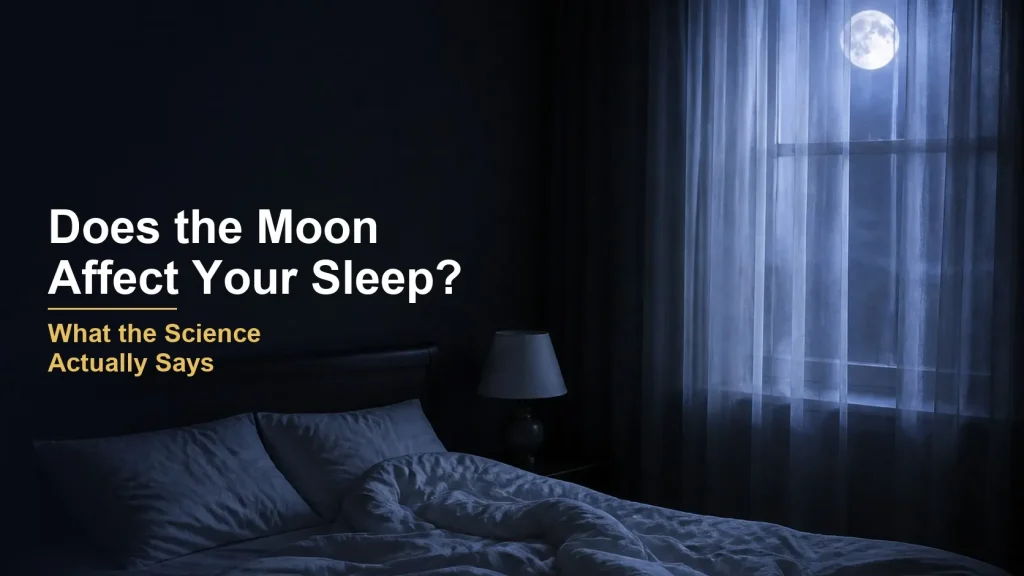
Plenty of people swear they sleep worse when the moon is full — tossing, turning, and waking more than usual. It’s an old belief, but is there any truth to it, or is it pure folklore? Science has actually taken a look, and the answer is more interesting (and more nuanced) than you’d expect. Here’s what we know.
The Belief Is Ancient — and Widespread
The idea that the full moon disturbs sleep and behavior goes back centuries; the word “lunatic” even comes from luna, the Latin for moon. Many people are genuinely convinced their sleep suffers around the full moon. For a long time, this was dismissed as superstition — but a handful of modern studies have given the idea a second look. For a wider look at the underlying science, see this overview.
What the Research Suggests
Some intriguing studies have found small effects. In one well-known controlled study, participants took a bit longer to fall asleep, slept for a shorter time, and had less deep sleep around the full moon — even in a lab with no windows, where they couldn’t see the moon at all. Other research, including studies tracking people’s sleep across lunar cycles, has found that people tend to go to bed later and sleep less in the nights leading up to a full moon.
That said, the overall evidence is mixed and far from settled. Several large studies have found no meaningful link at all, and the effects reported in others are generally small. So while there may be something to it for some people, the moon is not a powerful sleep disruptor for most.
Why Might the Moon Affect Sleep?
If there is a real effect, why? A few theories exist. One is that humans may have a subtle internal rhythm loosely synced to the lunar cycle — a leftover from a time before artificial light, when the brighter nights before a full moon meant more light and possibly more nighttime activity. The extra brightness of a full moon could also nudge sleep in those exposed to it. And of course, there’s the psychological factor: if you believe the full moon disrupts your sleep, that expectation alone can make you more restless and more likely to notice a bad night.
What This Means for You
The practical takeaway is reassuring: even if the full moon nudges your sleep, the effect is small, and the fundamentals still matter far more. If you find yourself sleeping poorly around the full moon, the fixes are the same as always — keep your room dark (blackout curtains easily counter any extra moonlight), stick to a consistent schedule, wind down properly, and manage stress. In other words, don’t blame the moon for a restless night when a bright bedroom or a late coffee is the more likely culprit.
The Bottom Line
Does the moon affect your sleep? Possibly a little, for some people — a few studies suggest slightly lighter, shorter sleep around the full moon, though the evidence is mixed and any effect is small. Whether it’s a subtle biological rhythm, extra light, or simply expectation, it’s not something to lose sleep over. Focus on the basics — a dark room, a steady routine, and good sleep habits — and you’ll sleep well through every phase of the moon.
Related reading: the bedroom setup guide and calmer ways to fall asleep.
Frequently Asked Questions
Does the full moon really affect your sleep?
Possibly, but only slightly and not for everyone. Some studies found people took longer to fall asleep and slept a bit less around the full moon, even without seeing it. However, the overall evidence is mixed, with other large studies finding no real link.
Why can’t I sleep during a full moon?
It could be a subtle internal rhythm, the extra brightness of the moon, or simply expectation — believing the full moon affects your sleep can make you more restless. For many people, a bright room, stress, or caffeine is a more likely cause than the moon itself.
Is there science behind the moon affecting sleep?
Yes, some. A few controlled studies have reported small reductions in sleep time and deep sleep around the full moon, and others found people sleep less in the nights before it. But the research is mixed and any effect is generally minor.
How can I sleep better during a full moon?
Use the same good sleep habits as always: keep your room dark with blackout curtains (which block any extra moonlight), stick to a consistent schedule, wind down before bed, limit late caffeine, and manage stress.
Does the moon affect anything else about sleep or mood?
Beyond small possible effects on sleep timing and depth, there’s little solid scientific support for the moon strongly influencing mood or behavior. Many claimed “full moon effects” haven’t held up in careful research.

Michael Reeves covers topics related to sleep quality, bedroom comfort, and modern lifestyle habits. He enjoys researching sleep products, recovery routines, and productivity-focused wellness practices to create informative and reader-friendly content. Michael writes about bedroom setup, recovery, and the connection between sleep quality and how you feel during the day.
All guides by Michael ReevesGeneral guidance, not medical advice. If a sleep problem persists or gets worse, speak to a qualified clinician. Medical disclaimer