How to Sleep After a Big Meal: 8 Tips for Thanksgiving and Holiday Feasts
How to sleep after a big meal: wait 2 to 3 hours, take a gentle walk, skip the nightcap, raise your head and sleep on your left side to avoid heartburn.

Thanksgiving dinner, a holiday party buffet, a late birthday feast: some nights you eat a lot more than usual, and then it’s suddenly time for bed. You feel heavy, a little too warm, maybe a bit of heartburn is starting. Lying down feels like the right move, but it often turns into tossing, turning, and a sour taste in your throat at 2 a.m.
The good news is that one big meal doesn’t have to wreck your night. A few simple moves in the two to three hours after you eat can help your stomach settle so you can actually sleep. Here’s what happens in your body after a heavy meal and what to do about it.
Quick Summary
- Wait before lying down. Sleep experts suggest leaving about 2 to 4 hours between a full meal and bedtime.
- Stay upright and move gently. A short, easy walk and sitting up help your stomach empty and keep acid where it belongs.
- Raise your head and sleep on your left side if you get heartburn at night.
- Go easy on the nightcap. Alcohol relaxes the valve at the top of your stomach and breaks up sleep later in the night.
- Keep the room cool and skip the long couch nap so you’re actually sleepy at bedtime.
Why a Big Meal Makes Sleep Harder
It seems like a full stomach should make you sleepy, and for a little while it does. But a heavy meal right before bed tends to backfire for a few reasons.
First, there’s reflux. When you lie flat with a full stomach, its contents can press against the lower esophageal sphincter, the ring of muscle that keeps acid in your stomach. According to the Sleep Foundation, eating close to bedtime is linked with acid reflux and heartburn, and experts advise against lying down right after eating.
Second, rich holiday foods are often high in fat, which takes longer to digest. Fried foods, creamy sides, gravy, and desserts are the same foods the Sleep Foundation lists as common reflux triggers at night.
Third, digestion produces warmth, and your body naturally cools down to fall asleep. A big meal, a warm house full of people, and a glass of wine can leave you feeling flushed when you need to be cooling off.
If you’re wondering whether the turkey is to blame for that heavy, drowsy feeling, we break that down in does turkey make you sleepy. Spoiler: it’s mostly the size of the meal, not the bird.
How Long to Wait After Eating Before Bed
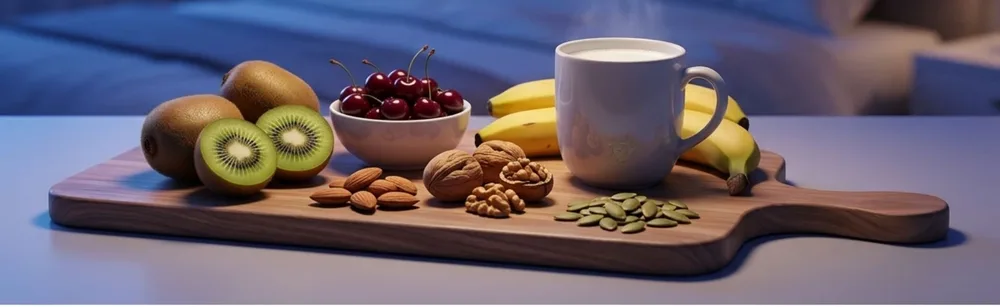
The simplest rule is time. The Sleep Foundation says experts advise people to avoid eating a full meal within two to four hours of bedtime. The National Sleep Foundation suggests a light dinner two to three hours before bed, and the National Institute of Diabetes and Digestive and Kidney Diseases (NIDDK) says people with nighttime reflux may feel better if they finish meals at least 3 hours before lying down or going to bed.
So if the big dinner ends at 7 p.m., aim for lights out around 10 p.m. If dinner runs late, it’s better to go to bed a little later than to lie down on a stuffed stomach.
8 Ways to Sleep Better After a Big Meal
1. Take a short, easy walk
Ten to fifteen minutes of gentle walking after dinner keeps you upright and moving while your stomach starts to empty. Keep it easy. A slow lap around the block or a stroll to look at holiday lights is perfect. Hard exercise right after a heavy meal can make reflux worse.
2. Stay upright for a while
Sit at the table, play a board game, or do the dishes instead of sprawling on the couch. Gravity helps keep stomach acid where it belongs. Slouching on a soft sofa can squeeze your stomach almost as much as lying down.
3. Loosen up
Tight waistbands press on a full stomach, which can push contents upward. Changing into something with a soft, loose waistband after dinner isn’t just cozy, it takes pressure off your middle while you digest.
4. Sip water, not more wine
A glass of water helps digestion and keeps you from waking up thirsty. Don’t overdo it, though, or you’ll be up for the bathroom. Our guide on how much water to drink before bed has the details.
Alcohol is the bigger problem. It may help you nod off, but the Sleep Foundation explains that it disrupts sleep later in the night and can worsen reflux and snoring. If you’re drinking at a holiday dinner, try to stop a few hours before bed and alternate with water. More in our article on alcohol and sleep.
5. Skip the second dessert and the late snack
Leftover pie at 11 p.m. restarts the whole digestion process. If you’re truly hungry later, keep it small and plain, like a banana or a few crackers. Rich, spicy, and fried foods are the most likely to cause trouble.
6. Prop up your head
If heartburn tends to find you at night, raise your head and upper body. The NIDDK suggests using a foam wedge or extra pillows under your head and upper back so your head is raised 6 to 8 inches off the bed. A wedge that lifts your whole upper body works better than bending just your neck.
7. Sleep on your left side
Lying on your left side puts your stomach below your esophagus, which may make it harder for acid to flow back up. The Sleep Foundation notes that left-side sleeping is often recommended for people with nighttime reflux. For more positions and tips, see how to sleep with heartburn.
8. Keep the bedroom cool
A cool, dark room helps offset the extra warmth from a heavy meal and a busy evening. Most people sleep best somewhere in the mid 60s Fahrenheit. Our guide to the best temperature for sleep explains why.
What About the After-Dinner Nap?
The urge to sleep on the couch after a feast is hard to fight. A short rest is fine. But a long, deep nap late in the day uses up some of the sleep pressure you need to fall asleep at night, and lying flat on a full stomach invites reflux.
If you need to rest, sit up in a recliner or prop yourself up on the sofa, set a timer for 20 minutes, and try to keep it well before the evening. Our guide on how long a nap should be explains why short naps work better.
A Simple After-Feast Timeline
| Time after dinner | What to do |
|---|---|
| 0 to 30 minutes | Stay seated or standing, loosen tight clothes, sip water |
| 30 to 60 minutes | Take a gentle 10 to 15 minute walk or tidy the kitchen |
| 1 to 2 hours | Relax upright, skip more dessert or alcohol, dim the lights |
| 2 to 3 hours | Start your wind-down routine and get the bedroom cool |
| 3 hours or more | Lie down, left side if you get heartburn, head slightly raised |
Planning Ahead for a Holiday Feast
If you know a big meal is coming, a little planning makes bedtime easier:
- Eat earlier if you can. An afternoon Thanksgiving dinner gives you plenty of time to digest before bed.
- Don’t skip breakfast and lunch to save room. Arriving starving makes it easy to overeat fast.
- Use a smaller plate and go back for seconds slowly. It takes time for your brain to notice you’re full.
- Keep your usual bedtime as much as possible. Our holiday sleep tips can help you stay on track all season.
When to Talk to a Doctor
Occasional heartburn after a holiday feast is common. But if you get heartburn more than twice a week, wake up coughing or choking, have trouble swallowing, or have chest pain, talk to a doctor. The NIDDK notes that frequent reflux can be a sign of GERD, which is treatable. Chest pain can also be a sign of a heart problem, so never assume it’s just indigestion.
The Bottom Line
You can enjoy the feast and still sleep well. Give your stomach two to three hours before you lie down, stay upright and move a little after dinner, go easy on alcohol and late desserts, and sleep on your left side with your head slightly raised if heartburn is a problem. A cool, dark bedroom and your normal bedtime do the rest.
FAQ: Sleeping After a Big Meal
Is it bad to go to sleep right after eating a big meal?
It isn’t dangerous for most people, but it often leads to heartburn and lighter, more broken sleep. Experts suggest waiting two to four hours after a full meal before going to bed.
What is the best sleeping position after eating a lot?
Your left side, with your head and upper body slightly raised. This position may help keep stomach acid from flowing back into your esophagus.
Does walking after dinner help digestion?
A gentle walk keeps you upright and moving, which many people find helps them feel less full and bloated. Keep it easy rather than intense.
Why do I feel so tired after a big meal but can’t sleep later?
A heavy meal can make you drowsy in the early evening, especially if you nap. Then reflux, extra warmth, alcohol, and a late nap can make it hard to fall and stay asleep at bedtime.
This article is for general information only and isn’t medical advice. If you have frequent heartburn, trouble swallowing, or chest pain, talk to a doctor. Call 911 for chest pain that could be a heart problem.
General guidance, not medical advice. If a sleep problem persists or gets worse, speak to a qualified clinician. Medical disclaimer