How to Stay Warm in Bed: Cozy Winter Tips That Are Safe All Night
How to stay warm in bed on cold nights: warm your feet, layer flannel and wool, pre-warm the sheets, and use space heaters and electric blankets safely.

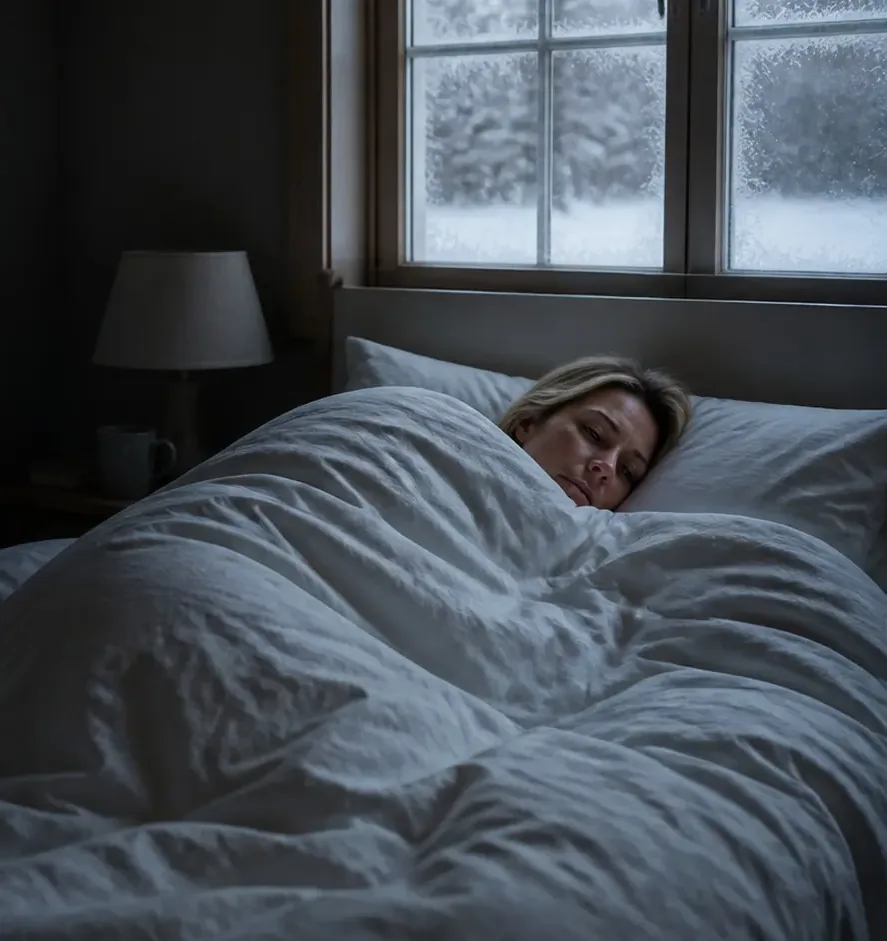
The first truly cold nights of the year have a way of sneaking up on you. You crawl under the covers, your feet feel like ice, the sheets are freezing, and you lie there curled in a ball waiting to warm up. It’s hard to fall asleep when your body is busy trying not to shiver.
The fix isn’t cranking the thermostat to 75. A slightly cool bedroom is still best for sleep, as long as you stay warm under the covers. Below, we cover practical, budget-friendly ways to stay warm in bed this winter, which heat sources are safe overnight, and when a cold bedroom becomes a health risk.
Quick Summary
- Keep the room cool but your bed warm. The Sleep Foundation puts the best sleep temperature around 65°F for most adults.
- Warm your feet and layer your bedding. Socks, flannel sheets, and a few lighter layers trap heat better than one thin blanket.
- Pre-warm the bed, then switch heat off. The U.S. Fire Administration says to turn space heaters off when you go to bed.
- Older adults need a warmer home. The National Institute on Aging recommends setting the heat to at least 68°F.
Why a Cool Room Still Beats a Hot One
Your body temperature naturally drops in the evening as part of your sleep cycle. The Sleep Foundation explains that a cooler room makes it easier to fall and stay asleep, and suggests about 65°F, with most doctors recommending a range of roughly 65 to 68°F. Our guide to the best temperature for sleep goes deeper on why.
So the goal in winter is a warm, cozy pocket under the covers, not a hot bedroom. When the whole room is too warm, you tend to wake up sweaty and kick off the blankets later in the night. If that sounds familiar, see how to stop overheating at night.
Start With Your Feet
Cold feet are one of the most common reasons people can’t fall asleep in winter. There’s a reason for that. A classic study in Nature found that the widening of blood vessels in the hands and feet, which warms them and helps the body release heat, was the best physiological predictor of how quickly people fell asleep.
Easy ways to warm your feet:
- Wear loose, soft socks to bed. Wool or a cotton blend works well. Avoid tight cuffs that dig into your ankles.
- Tuck a throw blanket over the foot of the bed for an extra layer where you need it most.
- Warm your feet with a short soak, or put on slippers an hour before bed so they don’t start out cold.
Our full guide to sleeping with socks on covers the research, the best socks for bed, and who should skip them.
Layer Your Bedding the Smart Way
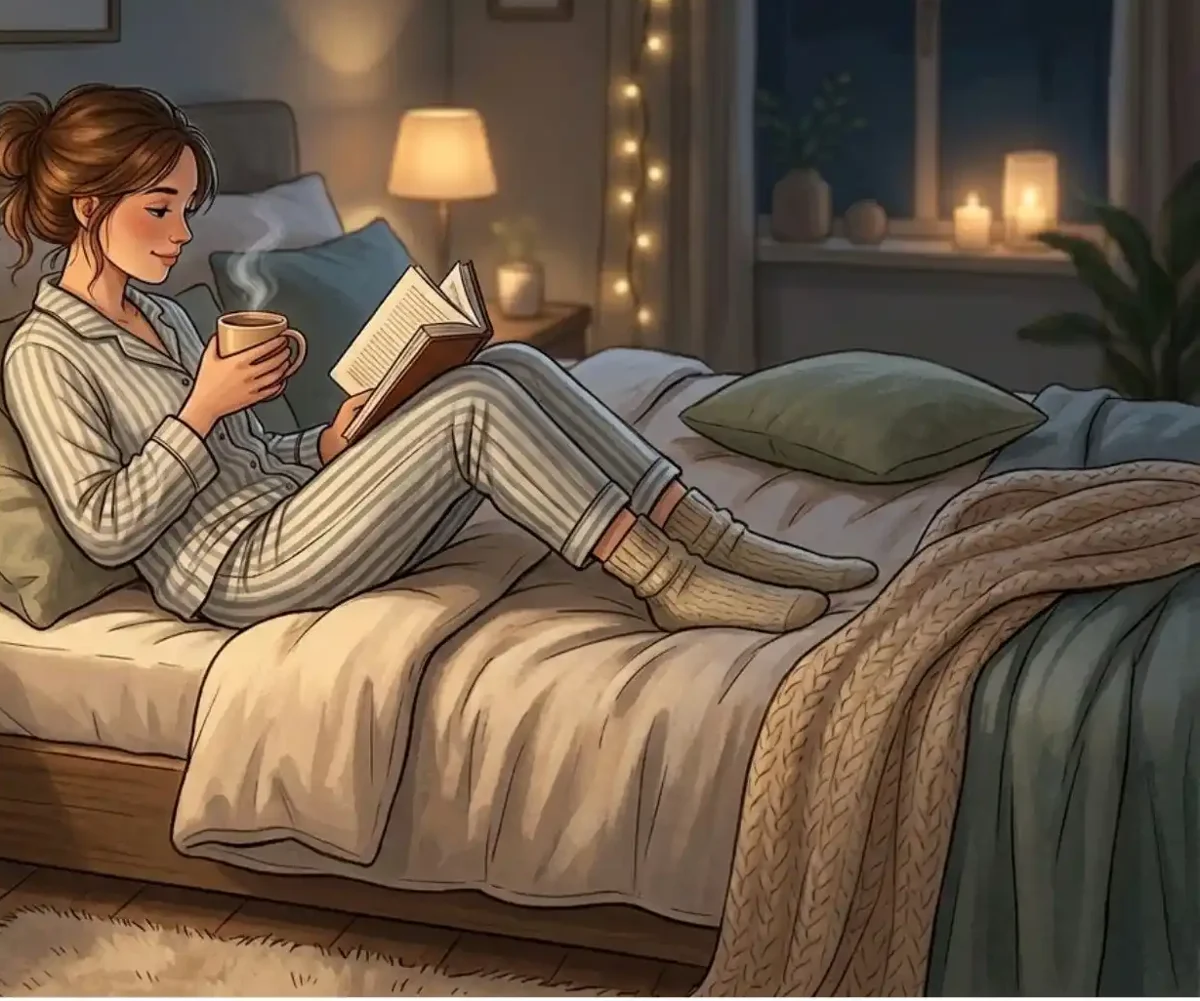
Several lighter layers trap more warm air than one heavy blanket, and they let you adjust during the night. A simple winter setup looks like this:
- Flannel or jersey sheets. They feel warm the moment you get in, unlike crisp percale. Our guide to the best sheets and bedding explains the fabrics.
- A light blanket or quilt. Wool, fleece, or a cotton thermal blanket adds warmth without much weight.
- A thick comforter or duvet on top. Down or a down alternative traps heat well.
- A throw at the foot of the bed. Pull it up if you wake up cold.
Don’t forget what’s underneath you. A thin mattress or an air mattress can pull heat from your body all night. A wool or fleece mattress pad, or a mattress topper, adds insulation from below. If you have guests sleeping on an inflatable bed this season, our guide to sleeping on an air mattress has more tips.
Pre-Warm the Bed, Then Turn the Heat Off
Getting into cold sheets is the worst part. You can fix it without running heat all night:
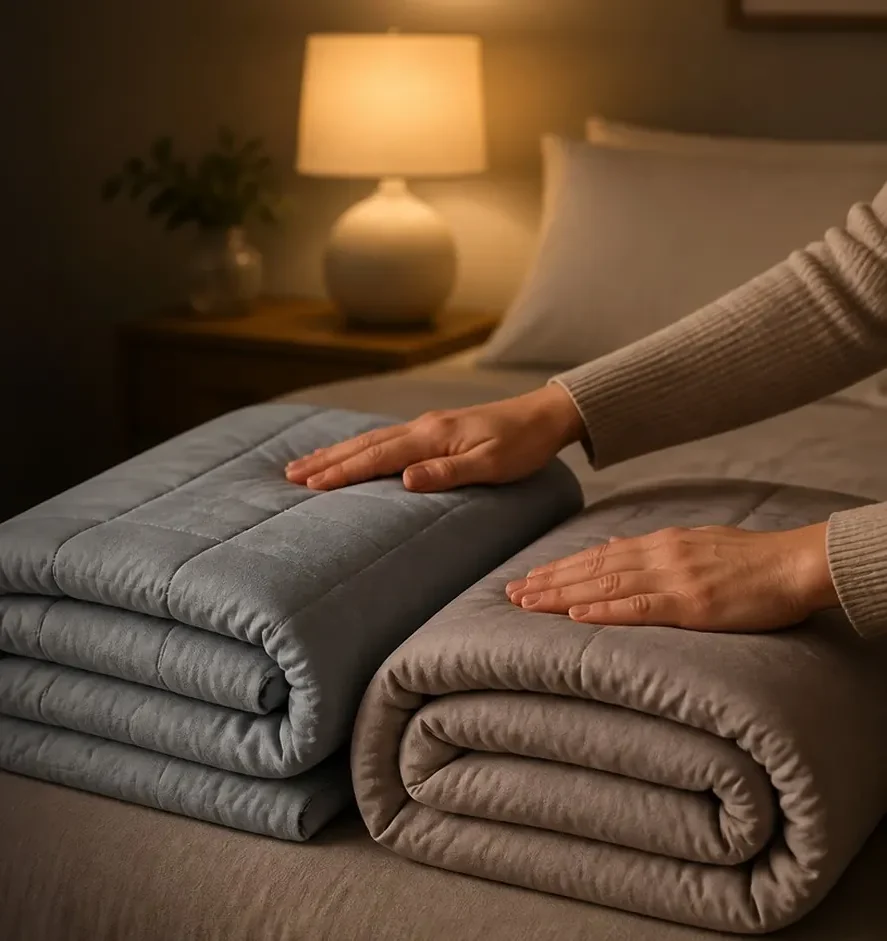
- Electric blanket or heated mattress pad: Turn it on 20 to 30 minutes before bed, then switch it off or to the lowest setting with an auto shutoff when you get in. Read our guide to sleeping with an electric blanket for the safety rules, including who should avoid one.
- Hot water bottle: Fill it with hot tap water, not boiling water, use the cover, and move it away from your skin before you fall asleep.
- Warm shower or bath: A 2019 review found that a warm shower or bath of about 104 to 108°F, taken one to two hours before bed, was linked with falling asleep faster and better sleep quality. Our guide to cold vs. warm showers before bed explains the timing.
Space Heater Safety
If you use a space heater to take the chill off, use it before bed and turn it off when you go to sleep. The U.S. Fire Administration says to keep anything that can burn at least 3 feet from heat sources, including space heaters, and to turn space heaters off when leaving the room or going to bed. It also reports that portable heaters were only about 3% of home heating fires in 2017 to 2019 but accounted for 41% of fatal heating fires. Never use an oven to heat your home.
Dress Warm for Bed, Not Bundled
What you wear matters as much as your blankets. The National Institute on Aging suggests extra covers, long underwear under your pajamas, and a head covering for cold nights. Good options:
- Flannel or fleece pajamas, or thermal long johns under lighter pajamas
- Loose socks
- A soft knit cap if your head gets cold, especially in a drafty room
Skip heavy sweatshirts or layers that make you sweat. Damp clothing actually makes you colder, so it’s better to be comfortably warm than overheated.
Stop the Drafts
A drafty bedroom can make even a good setup feel cold. A few low-cost fixes:
- Keep blinds and curtains closed at night. Heavier or thermal curtains help most.
- Place a rolled towel along the bottom of the bedroom door, a tip from the National Institute on Aging.
- Seal gaps around windows with weatherstripping or caulk.
- Move the bed away from an outside wall or a cold window if you can.
Heated, dry winter air can also dry out your nose and skin overnight. If you wake up with a scratchy throat, see our guide to sleeping with a humidifier.
Warm Habits Before Bed
A few small habits help your body feel warm when you climb in:
- Have a warm, caffeine-free drink like herbal tea or warm milk.
- Do some gentle movement, like a few bedtime stretches, to get blood flowing without revving you up.
- Skip the “warming” nightcap. Alcohol can make you feel warm at first, but it also disrupts sleep later in the night. See alcohol and sleep.
- Eat enough during the day. The National Institute on Aging notes that eating enough food helps your body stay warm.
When a Cold Bedroom Is a Health Risk
For most healthy adults, a cool bedroom is just uncomfortable. For older adults and some people with health conditions, it can be dangerous. The National Institute on Aging warns that even mildly cool homes of 60 to 65°F can lead to hypothermia in older adults, and recommends setting the heat to at least 68°F. Hypothermia happens when body temperature drops below 95°F and is a medical emergency.
Check on older relatives and neighbors during cold snaps. If paying for heat is a struggle, the National Energy Assistance Referral line (866-674-6327) can point you to local help, according to the NIA.
Babies are different too. Don’t use extra blankets, heated pads, or hot water bottles in a baby’s sleep space. Dress infants in a sleep sack instead, and follow your pediatrician’s advice.
The Bottom Line
To stay warm in bed, keep the room cool, around 65°F for most adults, and build warmth under the covers: warm feet, flannel sheets, layered blankets, and insulation underneath you. Pre-warm the bed with an electric blanket or hot water bottle, then turn the heat source off before you sleep. Use space heaters only while you’re awake, keep them 3 feet from anything that can burn, and keep older adults’ homes at 68°F or warmer.
For more cold-season tips, see why you sleep more in winter and our holiday sleep tips.
FAQ: How to Stay Warm in Bed
What is the fastest way to warm up in bed?
Warm your feet and pre-warm the sheets. Put on socks, use an electric blanket or hot water bottle for a few minutes before you get in, and pull a throw over the foot of the bed.
Is it better to sleep in a cold room with blankets?
For most adults, yes. A room around 65°F with warm bedding usually leads to better sleep than a hot room, because your body temperature naturally drops at night. Older adults should keep the home at least 68°F.
Is it safe to sleep with a space heater on?
No. The U.S. Fire Administration says to turn space heaters off when you leave the room or go to bed, and to keep anything that can burn at least 3 feet away.
What sheets keep you warmest?
Flannel and jersey knit sheets feel warmer than crisp percale. Pair them with a wool or fleece blanket and a thick comforter.
Why are my feet always cold in bed?
Cold feet are common in winter, especially in a drafty room. Socks, a footwarmer throw, and a warm bath earlier in the evening can help. If your feet are often cold, numb, or change color, talk with a healthcare provider.
This article is for general information only and isn’t a substitute for medical advice. Follow the manufacturer’s instructions for electric blankets, heated pads, and space heaters, and keep smoke and carbon monoxide alarms working. If someone shows signs of hypothermia, such as confusion, slurred speech, or very cold skin, call 911.
General guidance, not medical advice. If a sleep problem persists or gets worse, speak to a qualified clinician. Medical disclaimer