How to Sleep on an Air Mattress: Setup Tips for Guest Season
How to sleep on an air mattress without waking up sore and cold: inflate it firmly, insulate the floor, add a topper, and never put an infant to sleep on one.
Holiday travel has a way of turning the living room floor into a bedroom. An air mattress is cheap, portable, and easy to store, which is why so many guest setups rely on one. It can also leave you stiff, cold, and wide awake at 2 a.m. if you treat it like a regular bed.
You can sleep much better on an air mattress with a few setup changes: a firm inflate, insulation from the floor, a real topper and sheets, and a plan for the slow leak that happens overnight. There is also one safety rule that matters more than comfort: an air mattress is not a safe sleep space for an infant.
Quick Summary
- Never put an infant to sleep on an air mattress. The U.S. Consumer Product Safety Commission (CPSC) warns that air mattresses are too soft, and babies can suffocate or become trapped in gaps.
- Inflate the mattress firmly, then add a mattress topper, real sheets, and a layer between the bed and a cold floor.
- Expect it to soften overnight. A top-off before bed, and again if you wake up sunk in the middle, keeps your spine better supported.
- Treat it like a real sleep space: dark, quiet, cool, and away from high-traffic rooms if you can.
First, a Safety Rule You Should Not Skip
If a baby is in the house, do not use an air mattress as their crib, “just for a nap,” or as a co-sleeping surface. The CPSC has warned families, especially during the holiday guest season, that generic twin, full, or queen inflatable mattresses are intended for adults and older children. Even a properly inflated air mattress is usually too soft for an infant to keep a clear airway. Air leaks and under-inflation make the risk worse.
The CPSC has also reported deaths of infants who suffocated face down on an air mattress or became trapped in the gap between the mattress and a bed frame, wall, or nearby furniture. Use a crib, bassinet, or play yard that meets current standards, with a firm, tight-fitting mattress and a fitted sheet only. Place the baby on their back. For more on newborn nights, see our guide to sleeping with a newborn and the new mom sleep survival guide.
Toddlers and older kids are a judgment call and should only use an air mattress that is fully inflated, on the floor rather than a raised frame, and away from walls or furniture that could create a gap. If you have any doubt, a pack-and-play or a proper guest bed is the safer choice.
Why an Air Mattress Feels So Different
A regular mattress sits on a platform or box spring and holds its shape. An air mattress is a cushion of air over a hard, often cold floor. Three things usually ruin the night:
- Softness in the middle. As air cools and tiny leaks add up, you sink, and your hips drop below your shoulders.
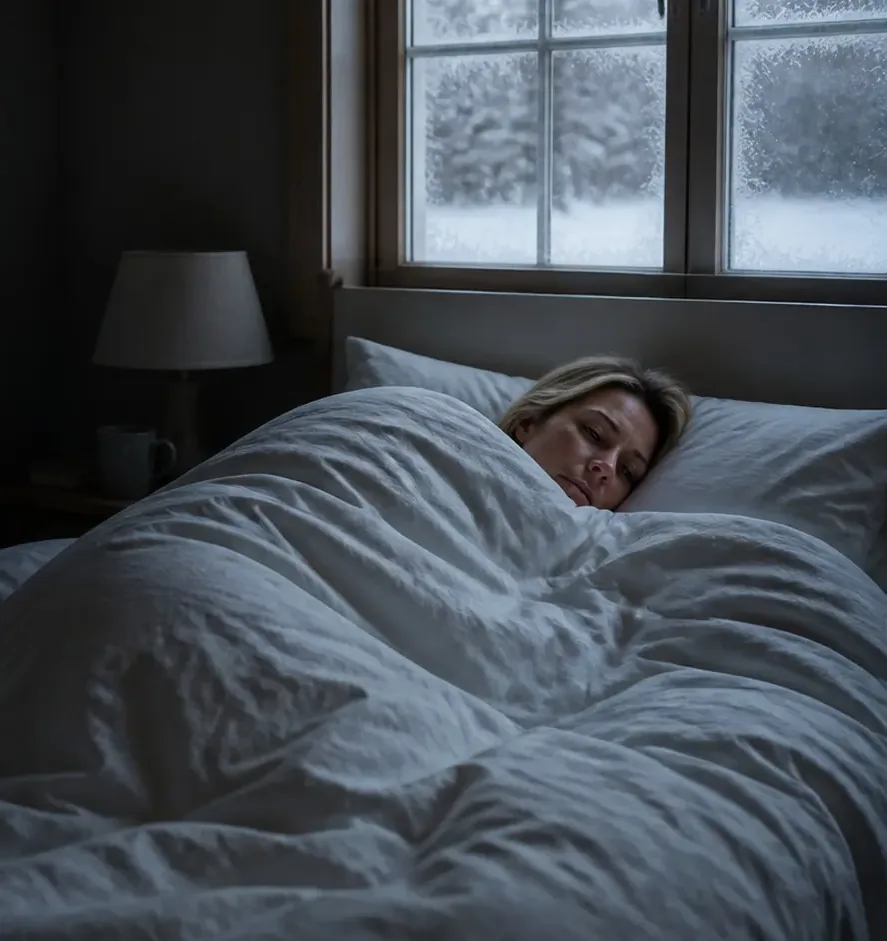
- The cold floor. In winter especially, heat leaves your body into the floor faster than it would on a regular bed. A snowy week in a guest room makes this worse. Our article on the best temperature for sleep still applies, but you may need an extra layer underneath, not just on top.
- The room itself. Air mattresses often end up in living rooms, playrooms, or basements with lights, foot traffic, and a TV. That is a new-place sleep problem on top of a less comfortable bed.
How to Set Up an Air Mattress for Actual Sleep
Give the setup 15 minutes. It pays off at 2 a.m.
- Pick the right spot. A carpeted bedroom or quiet office is better than a tiled living room in the middle of the house. Keep the mattress away from sharp furniture legs, pet claws, fireplaces, and heaters. If you are a guest, ask if there is a spare room with a door you can close.
- Put a layer on the floor first. A folded quilt, a yoga mat, a moving blanket, or even a rug under the mattress adds insulation and protects against punctures. This single step is the difference between a cold back and a tolerable one in November and December.
- Inflate it firmly, then wait. Fill it until the surface feels taut and your hand does not sink easily. Many mattresses lose a little air as the material stretches and the room cools, so a firm start is better than a “comfortable” soft start. Wait 10 to 15 minutes and top it off before you put bedding on.
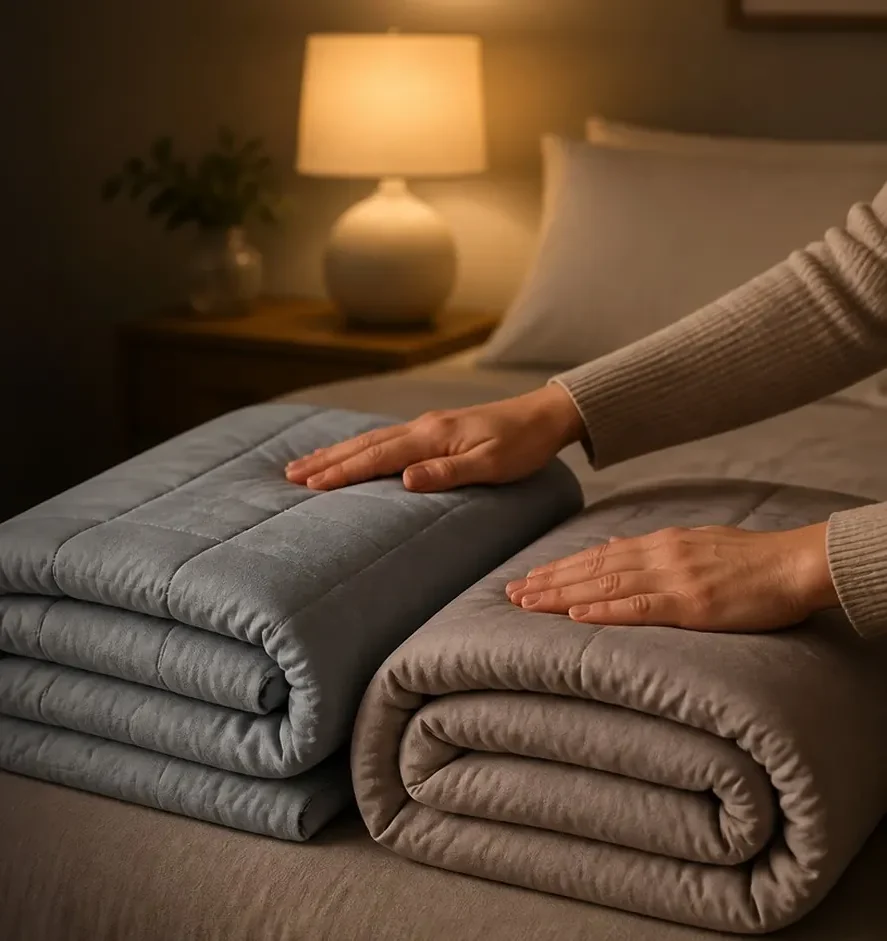
- Add a mattress topper. A 2- or 3-inch foam topper, or even a folded comforter, evens out the surface and keeps you from feeling every shift in the air chambers. If you host often, a dedicated topper is worth packing with the pump.
- Make it like a real bed. Use a fitted sheet, a flat sheet, and enough blankets. Bare vinyl feels clammy and slides around. Our notes on sheets and bedding apply here too: breathable fabric is more comfortable than a sleeping bag zipped to your chin all night.
- Keep the pump nearby. If you wake up in a hammock-shaped dip, add air for a minute rather than toughing it out. A built-in pump is quieter and easier than a hunt through the hall closet at midnight.
Get the Room on Your Side
Once the bed itself is tolerable, use the same sleep habits you would in a hotel. Close the door if there is one. Ask about a lamp you can turn off, or pack a small eye mask. If the air mattress is in a busy room, a fan, sleep earbuds, or a compact white noise machine can cover footsteps and early kitchen sounds. See our guides to sleeping in a noisy environment and white noise machines. An eye mask helps if a hallway light stays on; our article on sleeping with the lights on explains why darkness matters.
Keep the room on the cool side, then add blankets rather than cranking the heat and waking up sweaty. If you usually sleep with socks on, this is a good night for them, especially on a floor-level bed.
Stick to your normal wind-down as much as you can: same phone cutoff, same simple routine. The first night in a new place is already harder on sleep. A familiar routine is one of the few things you can bring with you. Our tips for sleeping better in a hotel transfer well to a relative’s guest room.

Host Tips If You Are the One Offering the Air Mattress
If guests are coming for Thanksgiving or a winter weekend, set the mattress up before they arrive, fully inflated, made with real bedding, and tested so you know it holds air. Put it in the quietest room you can spare, leave a pump, a spare blanket, a water glass, and a way to control the light. A regular bed is always more comfortable; if you have one, offer it and take the air mattress yourself.
A folded quilt at the foot of the bed and a clear path to the bathroom at night will be appreciated more than a perfect matching sheet set.
The Bottom Line
An air mattress will never feel like a great hotel bed, but it does not have to ruin the trip. Inflate it firmly, insulate it from the floor, add a topper and real sheets, and top off the air if you sink overnight. Make the room dark, quiet, and cool, and keep infants in a crib, bassinet, or play yard, never on the inflatable bed. A little setup before bedtime is the difference between surviving the night and actually sleeping.
FAQ: Sleeping on an Air Mattress
Is it safe to sleep on an air mattress every night?
For a healthy adult, the occasional night or a short visit is the typical use. If an air mattress is your only bed, choose a thicker model, use a proper topper, keep it well inflated, and consider a real mattress as soon as you can. Comfort and support are harder to maintain on air over months.
Why do I get so cold on an air mattress?
The mattress sits close to the floor, and a thin layer of air does not insulate well. Put a blanket, rug, or mat underneath, add a topper, and use enough bedding. Socks and a warm (not overhot) room help too.
Why does my air mattress go soft by morning?
Air cools and contracts, and most inflatable beds lose a little air through seams and valves. Inflate it firmly, wait, top it off at bedtime, and keep the pump nearby for a quick refill if you wake up in a dip.
Can a toddler sleep on an air mattress?
Infants should not. For older toddlers, only a fully inflated mattress placed on the floor, away from walls and furniture gaps, with close supervision and no extra soft bedding that could cover the face, is a possible short-term option. A pack-and-play or crib is safer.
What should I pack if I know I will be on an air mattress?
A compact foam topper or folded blanket, fitted sheets if you are not sure your host has them, an eye mask, earplugs or a small white noise option, and socks. If you are the host, set everything up before guests arrive.
This article is for general information only and isn’t a substitute for medical or product-safety advice. Never place an infant to sleep on an air mattress. If you have pain, a sleep disorder, or questions about a safe sleep setup for a child, talk with a healthcare provider and follow current CPSC and pediatric safe-sleep guidance.
General guidance, not medical advice. If a sleep problem persists or gets worse, speak to a qualified clinician. Medical disclaimer