Sleeping With the Lights On: Is It Bad for You?
Is sleeping with the lights on bad for you? See what studies say about light, heart rate, weight, and blood sugar, plus how to make your bedroom darker.
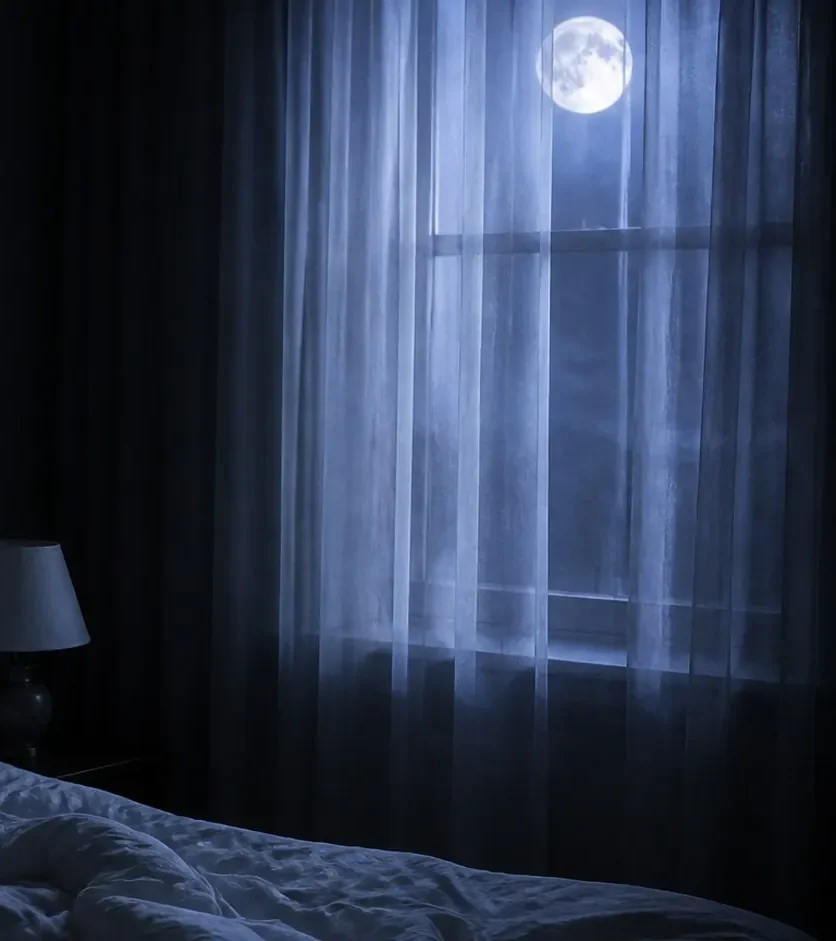
Maybe you fall asleep with the TV on. Maybe a hallway light stays on for the kids, or a streetlight glows through thin curtains all night. Sleeping with the lights on is more common than you might think. According to Northwestern Medicine researchers, up to 40% of people sleep with a bedside lamp or a light on in the bedroom, or keep the television on.
So is it actually bad for you? The research so far points in one direction: your body does better in the dark. Below, we break down what studies have found, which kinds of light matter most, and how to make your room darker without giving up the comfort of a night light if you need one.
Quick Summary
- Light during sleep can affect your body even when you don’t wake up. In one lab study, a single night with the overhead light on raised heart rate during sleep and increased insulin resistance the next morning.
- Larger studies link light at night with weight gain, obesity, diabetes, and high blood pressure, though they can’t prove light is the cause.
- A small, dim night light is a different story from a lamp or TV. Keep it low, warm-colored, and away from your face.
- Blackout curtains, an eye mask, and a screen-free bedroom are the easiest fixes.
Is It Bad to Sleep With the Lights On?
For most people, the honest answer is yes, it’s better to turn them off. Light is the strongest signal your internal clock uses to tell day from night. As Harvard Health explains, light suppresses the secretion of melatonin, a hormone that influences circadian rhythms, and even dim light can interfere with this process. Harvard notes that a mere 8 lux, a level exceeded by most table lamps and about twice that of a night light, has an effect.
If you want a refresher on how that internal clock works, our guide to your circadian rhythm covers the basics. The short version: darkness at night helps your body settle into sleep mode, and light works against it.
What the Research Says About Light While You Sleep
One night of room light raised heart rate and insulin resistance
In a 2022 study published in PNAS, researchers at Northwestern had 20 healthy young adults sleep in a lab. One group slept in dim light (under 3 lux) for two nights. The other group slept one night in dim light and one night with overhead room lighting at 100 lux.
Compared with the dim-light group, people who slept with the room light on had a higher heart rate during the night and higher insulin resistance the next morning. The National Heart, Lung, and Blood Institute (NHLBI), which helped fund the study, summarized it this way: sleeping with even a small amount of light in the room can harm the heart and increase blood insulin levels.
Interestingly, the participants weren’t aware of these changes. “But the brain senses it,” one of the researchers told Northwestern Now. The team believes light pushed the body into a more alert state, known as sympathetic activation, even while people were asleep. The study also found that people spent proportionately less time in deep (slow-wave) and REM sleep on the lit night.
Light at night was linked to obesity, diabetes, and high blood pressure in older adults
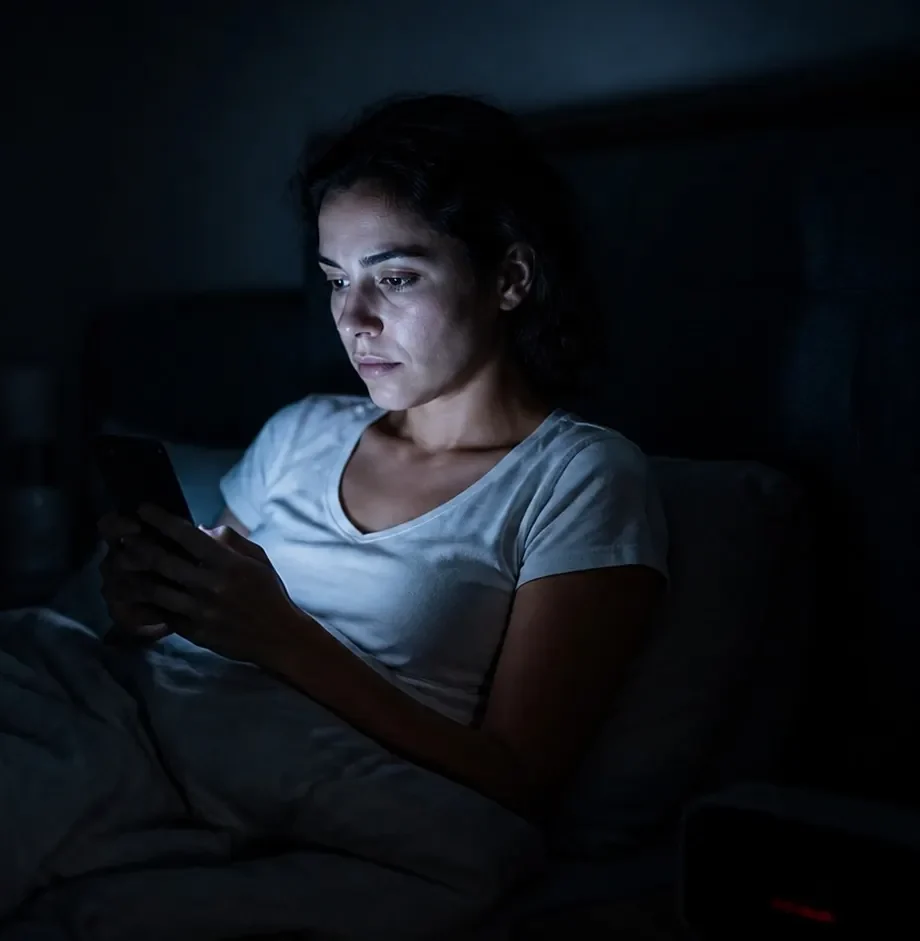
A follow-up study in the journal Sleep tracked light exposure in 552 adults ages 63 to 84 using wrist devices for a week. Older adults who had any light during their darkest five hours of the night were more likely to have obesity, diabetes, and high blood pressure than those who slept in true darkness.
According to Northwestern, less than half of the participants consistently got a five-hour period of complete darkness each day. Because this was a cross-sectional study, it shows a link, not cause and effect.
Sleeping with a light or TV on was tied to weight gain in women
In a 2019 analysis of 43,722 women in the Sister Study, NIH researchers found that women who slept with a light or television on in the room were 17% more likely to gain about 11 pounds (5 kilograms) or more over roughly five years than women who slept in the dark.
Here’s the reassuring part: using a small night light was not associated with weight gain, and light coming from outside the room had a more modest link. The authors noted that other factors could explain the results, and the study didn’t include men. Still, it lines up with the lab findings above. If you’re curious about how sleep and metabolism connect, see our articles on sleep and blood sugar and sleep and heart health.
Night Light vs. Lamp vs. TV: Does the Type of Light Matter?
- Brightness: A bedside lamp or overhead light is far brighter than a small plug-in night light. Northwestern sleep specialist Dr. Phyllis Zee offers a simple test: “If you’re able to see things really well, it’s probably too light.”
- Color: Harvard Health reports that blue light suppressed melatonin for about twice as long as green light of similar brightness in one experiment. Its advice is to use dim red lights for night lights, since red light is less likely to shift your circadian rhythm. Northwestern’s tips also favor amber or red/orange light over white or blue.
- Position: A low light near the floor and far from your bed reaches your eyes far less than a lamp on the nightstand or a TV facing the bed.
- Screens: Phones and TVs combine bright, blue-rich light with content that keeps your brain engaged. Our guide to blue light and screen time before bed goes deeper.
When a Night Light Makes Sense
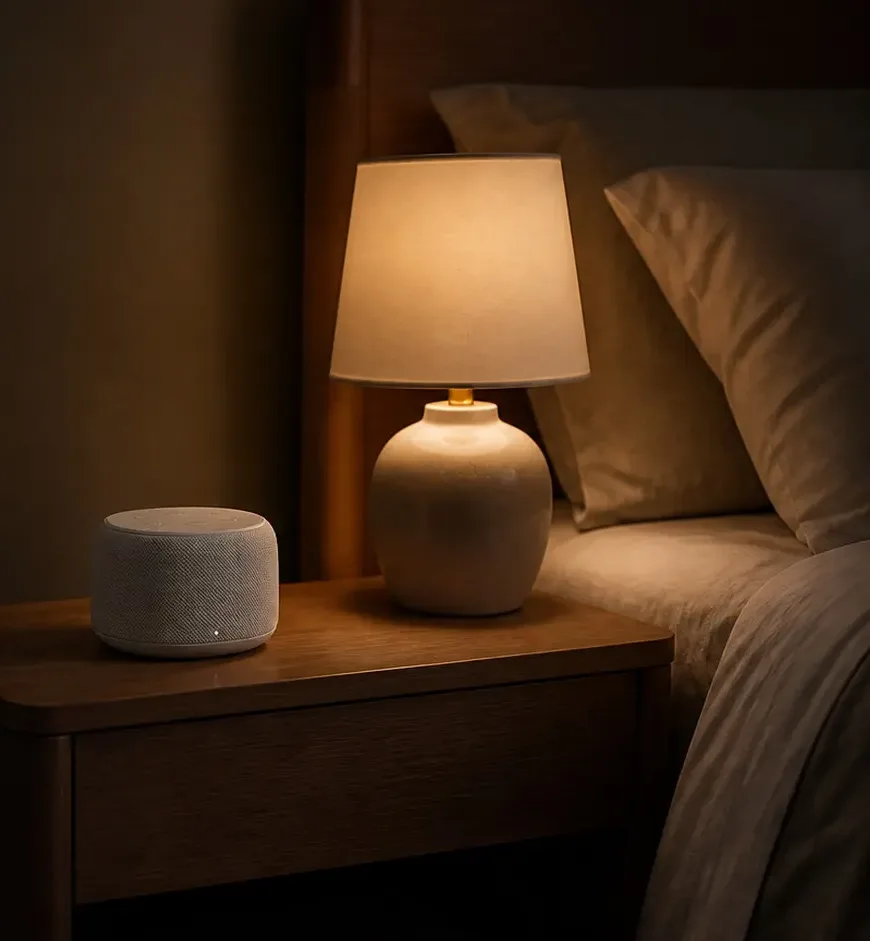
There are good reasons to keep some light on. Falls at night are a real risk for older adults, and the NHLBI notes that researchers recommend a small, warm-colored night light, like red or amber, for older people to reduce the chance of falls. Some kids and adults also feel calmer with a little light.
The Sleep Foundation suggests a few ways to get comfort and safety without flooding the room with light:
- Use a dim night light with a warm hue and position it away from your bed.
- Put it on a timer so it turns off after you fall asleep and most of the night is spent in darkness.
- Try motion-activated lights in the hallway or bathroom so light comes on only when you need it.
- Clear the path to the bathroom of rugs and cords so you can move safely in low light.
If fear of the dark or bedtime worry keeps you up regularly, the Sleep Foundation recommends talking with a mental health professional. Our tips on how to sleep with anxiety may also help.
How to Make Your Bedroom Darker
You don’t need a full renovation to cut light at night. Start with the biggest sources first.
- Turn off overhead lights and lamps once you’re ready to sleep. Northwestern’s first tip is simply: don’t turn lights on.
- Block outdoor light. Blackout curtains or shades help with streetlights and early sunrises. If you can’t control outdoor light, move your bed so it isn’t shining on your face.
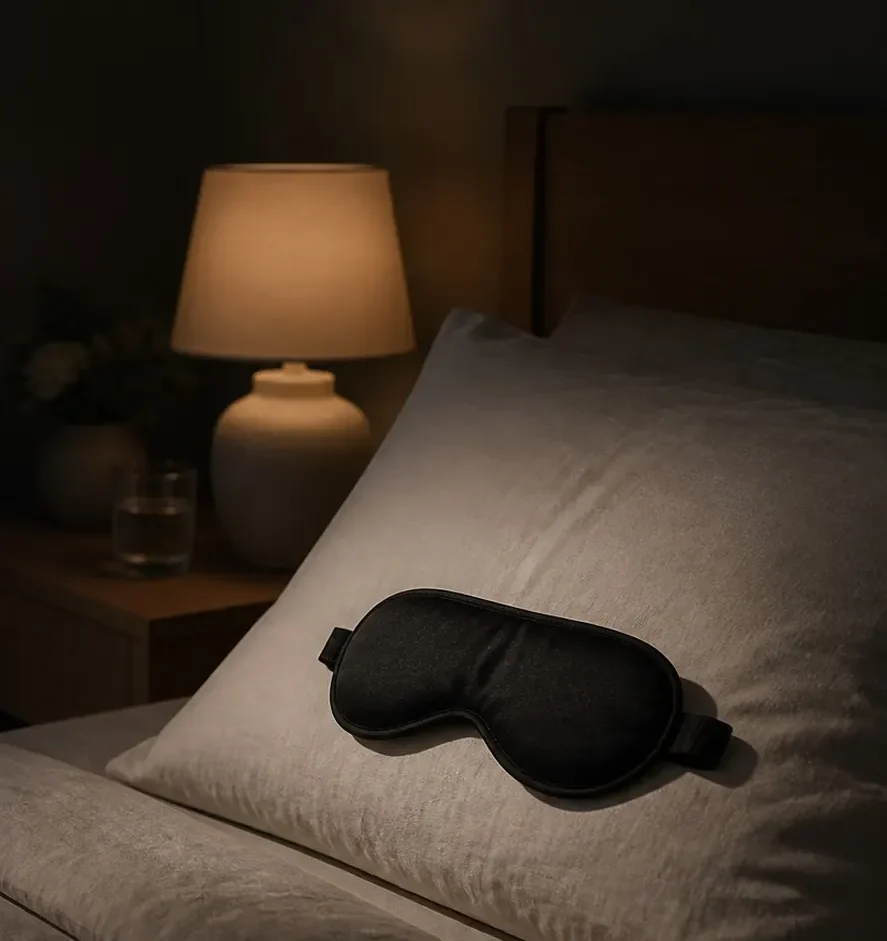
- Wear an eye mask. This is the quickest fix when a partner wants the TV or a light on, or when you’re in a hotel. See our guide to the best eye masks for sleep.
- Turn off the TV. Use a sleep timer if you like falling asleep to a show. If someone insists on keeping it on, the Sleep Foundation suggests the lowest brightness setting.
- Cover small LEDs. Chargers, modems, and clocks can add up. Turn displays away from the bed or cover them.
- Put your phone away. Charge it across the room so notifications don’t light up the dark.
For a full room makeover, our guide to creating the perfect sleep environment covers light, noise, and temperature together, and our sleep-friendly bedroom setup under $100 shows how to do it on a budget.
Don’t Forget Daytime Light
Darkness at night is only half of the equation. Marishka Brown, Ph.D., director of the NHLBI’s National Center on Sleep Disorders Research, notes that getting natural sunlight during the day is just as important for your heart and sleep health as limiting artificial light at night, especially early morning sunlight. Opening the blinds or taking a short walk soon after you wake up helps your body clock tell day from night.
The Bottom Line
Sleeping with the lights on probably won’t ruin your health overnight, but the research consistently shows that darker is better. Light during sleep has been linked to a higher heart rate, higher insulin resistance, and, in larger studies, weight gain, obesity, diabetes, and high blood pressure. If you need a light for safety or comfort, keep it small, dim, warm-toned, low, and away from your face. For everything else, blackout curtains, an eye mask, and a screen-free bedroom go a long way.
FAQ: Sleeping With the Lights On
Is it bad to sleep with the lights on?
For most people, yes. Studies have linked light during sleep with a higher heart rate during the night, higher insulin resistance the next morning, and greater odds of weight gain, obesity, diabetes, and high blood pressure. The larger studies show associations rather than proof of cause, but sleeping in the dark is the safer choice.
Is a night light OK for sleep?
A small, dim night light is very different from a lamp or TV. In the NIH Sister Study analysis, using a small night light was not associated with weight gain. Choose a warm color like amber or red, keep it low and away from your bed, and consider a timer or motion sensor.
Is it bad to fall asleep with the TV on?
In the NIH study, women who slept with a light or TV on in the room were more likely to gain weight over time. Use a sleep timer so the TV turns off after you fall asleep, or swap it for audio like a podcast or white noise.
This article is for general information only and isn’t a substitute for medical advice. If you have ongoing trouble sleeping, symptoms of a sleep disorder, or concerns about your heart or blood sugar, talk with a healthcare provider.
General guidance, not medical advice. If a sleep problem persists or gets worse, speak to a qualified clinician. Medical disclaimer