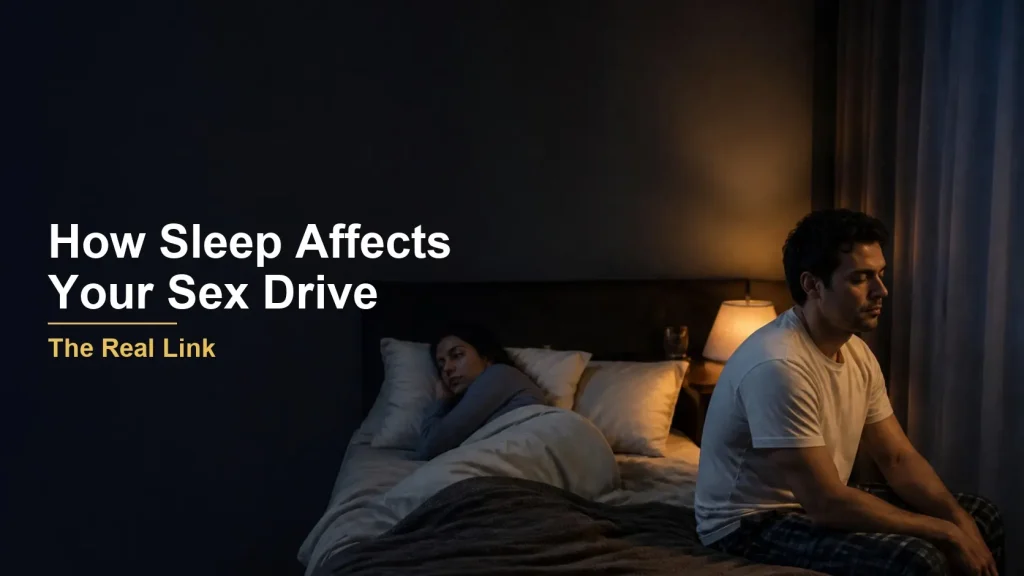
When your libido dips, you might blame stress, age, or your relationship — but there’s a quieter, often-overlooked factor at play: your sleep. The connection between rest and desire is real and well-supported by research, and it works in both directions. Here’s how sleep affects your sex drive, and why good rest matters for a healthy love life.
This article is general information, not medical advice. For ongoing concerns about libido or sexual health, please talk to a doctor.
The Sleep–Libido Connection
Sleep influences desire through several intertwined pathways: hormones, energy, mood, and stress. When any of these are thrown off by poor sleep, your libido often follows. It’s not a sign that something is wrong with you or your relationship — frequently, it’s simply a tired body and brain unable to prioritize desire. For a wider look at the underlying science, see this overview.
How Poor Sleep Lowers Your Sex Drive
It disrupts your hormones. This is a big one. In men, testosterone — central to libido — is largely produced during sleep, and studies show that even a week of short sleep can significantly lower testosterone levels. Sleep also helps regulate the hormones involved in desire and arousal in women. Skimp on sleep, and this hormonal foundation for desire weakens.
It drains your energy. Desire needs energy, and exhaustion leaves little to spare. When you’re running on empty, intimacy often feels like one more demand rather than a pleasure.
It raises stress and dampens mood. Poor sleep increases stress hormones like cortisol and worsens mood, anxiety, and irritability — none of which are friends of desire. A stressed, low mood makes it hard to feel connected and interested.
What the Research Shows
The evidence is compelling. Studies link sleep deprivation to lower testosterone and reduced sexual desire in men. In women, research has found that longer sleep is associated with greater sexual desire and arousal the next day — one study found each extra hour of sleep raised the likelihood of sexual activity the following day. Across the board, better sleep tends to mean a healthier libido.
It’s a Two-Way Street
Interestingly, the relationship runs both ways. Just as good sleep supports a healthy sex drive, intimacy can support sleep — sex can promote the release of relaxation and bonding hormones like oxytocin (and, after orgasm, prolactin), which help many people feel calm and drowsy afterward. So rest and intimacy can form a positive, self-reinforcing cycle.
The Sleep Apnea Factor
It’s worth knowing that sleep apnea — the disorder where breathing repeatedly stops during sleep — is linked to reduced libido and, in men, to erectile difficulties, partly through its effects on sleep quality and hormones. If low desire comes alongside loud snoring, gasping, and daytime exhaustion, treating an underlying sleep disorder can make a real difference.
The Bottom Line
Your sex drive and your sleep are more connected than most people realize. Poor sleep lowers key hormones like testosterone, drains your energy, and worsens stress and mood — all of which dampen desire, while good sleep supports a healthy libido (and intimacy can help you sleep in return). If you want to look after your love life, protecting your sleep is a genuinely important, often-overlooked step. And if low libido persists despite good rest, see a doctor, since it can have treatable medical causes.
Related reading: the bedroom setup guide and calmer ways to fall asleep.
Frequently Asked Questions
Does lack of sleep affect your sex drive?
Yes. Poor sleep lowers libido by disrupting hormones (including testosterone, which is largely produced during sleep), draining your energy, and raising stress while worsening mood. Research links sleep deprivation to reduced sexual desire in both men and women.
How does sleep affect testosterone?
Testosterone is largely produced during sleep, so insufficient or poor-quality sleep can significantly lower it. Studies have found that even about a week of restricted sleep can noticeably reduce testosterone levels, which in turn affects libido and energy.
Can better sleep improve your libido?
Often, yes. Better sleep supports the hormones, energy, and mood that underpin desire. Research has found that longer sleep is associated with greater sexual desire and arousal the following day, so prioritizing rest can help a flagging libido.
Is there a link between sleep apnea and low sex drive?
Yes. Sleep apnea is associated with reduced libido and, in men, erectile difficulties, largely due to its effects on sleep quality and hormones. If low desire comes with loud snoring and daytime exhaustion, getting checked for apnea is worthwhile.
When should I see a doctor about low libido?
If low libido persists despite good sleep and general health, see a doctor. Reduced desire and erectile difficulties can have treatable medical causes — hormonal, psychological, or related to sleep or other conditions — that a doctor can assess.

Michael Reeves covers topics related to sleep quality, bedroom comfort, and modern lifestyle habits. He enjoys researching sleep products, recovery routines, and productivity-focused wellness practices to create informative and reader-friendly content. Michael writes about bedroom setup, recovery, and the connection between sleep quality and how you feel during the day.
All guides by Michael ReevesGeneral guidance, not medical advice. If a sleep problem persists or gets worse, speak to a qualified clinician. Medical disclaimer